

Your Professional Refractory Brick Supplier for Industrial Kilns and Furnaces
Refractory bricks serve as essential lining materials for high-temperature industrial equipment. They are widely used in all types of kilns and thermal processing units, offering superior resistance to high temperatures, chemical erosion, excellent thermal insulation, and strong structural support.
Shandong Luming New Materials Technology Co., LTD is a modern comprehensive enterprise integrating research and development, production, design, construction, and technical services of refractory materials. Fireclay brick,High Alumina Brick,Phosphate Bonded Brick,Corundum brick,Magnesium Brick,Silica brick,Andalusite Brick,Cordierite brick,zircon brick and mullite brick can be offered.And They can be manufactured as standard bricks, shaped bricks, special-shaped bricks, and functional bricks (such as anchor bricks or slag stoppers). The design of these shapes aims to meet the requirements of complex masonry structures.
-
![Steel Ladle Nozzle Brick]() Steel Ladle Nozzle BrickSteel Ladle Nozzle Bricks are critical functional refractories installed in the bottom of steel ladles to control molten steel flow during tapping and continuous casting. They work together with...view more
Steel Ladle Nozzle BrickSteel Ladle Nozzle Bricks are critical functional refractories installed in the bottom of steel ladles to control molten steel flow during tapping and continuous casting. They work together with...view more -
![Steel Casting Brick]() Steel Casting BrickSteel Casting Brick is a critical component used in molten steel pouring zones such as tundish, ladle, and casting flow systems. It is specifically engineered to withstand extreme temperatures,...view more
Steel Casting BrickSteel Casting Brick is a critical component used in molten steel pouring zones such as tundish, ladle, and casting flow systems. It is specifically engineered to withstand extreme temperatures,...view more -
![Refractory High Alumina Brick]() Refractory High Alumina BrickRefractory High alumina brick is refractory material made from high-quality bauxite and sintered at high temperatures. There is excellent refractoriness, thermal shock resistance, and corrosion...view more
Refractory High Alumina BrickRefractory High alumina brick is refractory material made from high-quality bauxite and sintered at high temperatures. There is excellent refractoriness, thermal shock resistance, and corrosion...view more -
![Phosphate-bonded High Alumina Brick]() Phosphate-bonded High Alumina BrickPhosphate bonded alumina brick is an important type of refractory material. They are primarily made from high alumina bauxite as the main raw material and use phosphoric acid or phosphates as...view more
Phosphate-bonded High Alumina BrickPhosphate bonded alumina brick is an important type of refractory material. They are primarily made from high alumina bauxite as the main raw material and use phosphoric acid or phosphates as...view more -
![Low-porosity Fireclay Brick]() Low-porosity Fireclay BrickLow porosity fire clay brick is made of high quality hard clay, which is formed by high pressure and sintered at high temperature.It has the characteristics of low porosity, high erosion...view more
Low-porosity Fireclay BrickLow porosity fire clay brick is made of high quality hard clay, which is formed by high pressure and sintered at high temperature.It has the characteristics of low porosity, high erosion...view more -
![Ceramic Brick]() Ceramic BrickCeramic brick is minimum 85% alumina phosphated bonded fired ceramic anchor brick.Its primary purpose is to secure monolithic refractory materials in roof and wall construction.Its feature is high...view more
Ceramic BrickCeramic brick is minimum 85% alumina phosphated bonded fired ceramic anchor brick.Its primary purpose is to secure monolithic refractory materials in roof and wall construction.Its feature is high...view more -
![Phosphate-bonded Composite Brick]() Phosphate-bonded Composite BrickPhosphate Bonded Composite Brick is advanced refractory materials that combine phosphate chemical bonding technology with composite material design concepts, achieving comprehensive performance...view more
Phosphate-bonded Composite BrickPhosphate Bonded Composite Brick is advanced refractory materials that combine phosphate chemical bonding technology with composite material design concepts, achieving comprehensive performance...view more -
![Fire Clay Brick]() Fire Clay BrickFire clay brick is shaped refractory materials made primarily from fire clay through forming, drying, and high-temperature firing processes. It is the most widely used refractory materials with...view more
Fire Clay BrickFire clay brick is shaped refractory materials made primarily from fire clay through forming, drying, and high-temperature firing processes. It is the most widely used refractory materials with...view more -
![Fire Clay Tile]() Fire Clay TileFire clay tile is refractory products made from fire clay, designed for use in high-temperature environments such as fireplaces, industrial furnaces, kilns, and other thermal equipment. They are...view more
Fire Clay TileFire clay tile is refractory products made from fire clay, designed for use in high-temperature environments such as fireplaces, industrial furnaces, kilns, and other thermal equipment. They are...view more -
![Fire Clay Block]() Fire Clay BlockFire clay block is plate-shaped refractory materials made from high-quality fireclay as the main raw material, through special formulation, high-pressure molding, and high-temperature firing....view more
Fire Clay BlockFire clay block is plate-shaped refractory materials made from high-quality fireclay as the main raw material, through special formulation, high-pressure molding, and high-temperature firing....view more -
![Refractory Corundum Brick]() Refractory Corundum BrickRefractory corundum brick is an ultra-premium refractory material made primarily from corundum, which has an aluminum oxide (Al2O3) content of over 90%. The main mineral phase of corundum bricks...view more
Refractory Corundum BrickRefractory corundum brick is an ultra-premium refractory material made primarily from corundum, which has an aluminum oxide (Al2O3) content of over 90%. The main mineral phase of corundum bricks...view more -
![Sintered Corundum Brick]() Sintered Corundum BrickSintered Corundum Brickis a high-performance refractory material primarily composed of alumina (Al₂O₃). It is manufactured through a high-temperature sintering process and is widely used in...view more
Sintered Corundum BrickSintered Corundum Brickis a high-performance refractory material primarily composed of alumina (Al₂O₃). It is manufactured through a high-temperature sintering process and is widely used in...view more


Why Choose Us
Quality Assurance
Our company obtained ISO9001 International Quality Management System certification from the China Quality Certification Centre (CQC) in 2006.
After-Sale Service
Professional and thoughtful after -sales team, let you worry about us after -sales Intimate service, strong after -sales team support.
Custom-Engineered Solutions
By pioneering new energy-saving refractory materials and innovating kiln lining designs, we dedicate ourselves to helping clients achieve energy conservation and emission reduction goals.
Production Market
We have established long-term business cooperation and joint product R&D projects with leading design institutes, including:Dalian Design & Research Institute of ACRE (Coking & Refractory Engineering Consulting Corporation, MCC)),Shandong Metallurgical Design Institute Co., Ltd,Changsha Research Institute of Mining and Metallurgy (CRIMM), Minmetals.
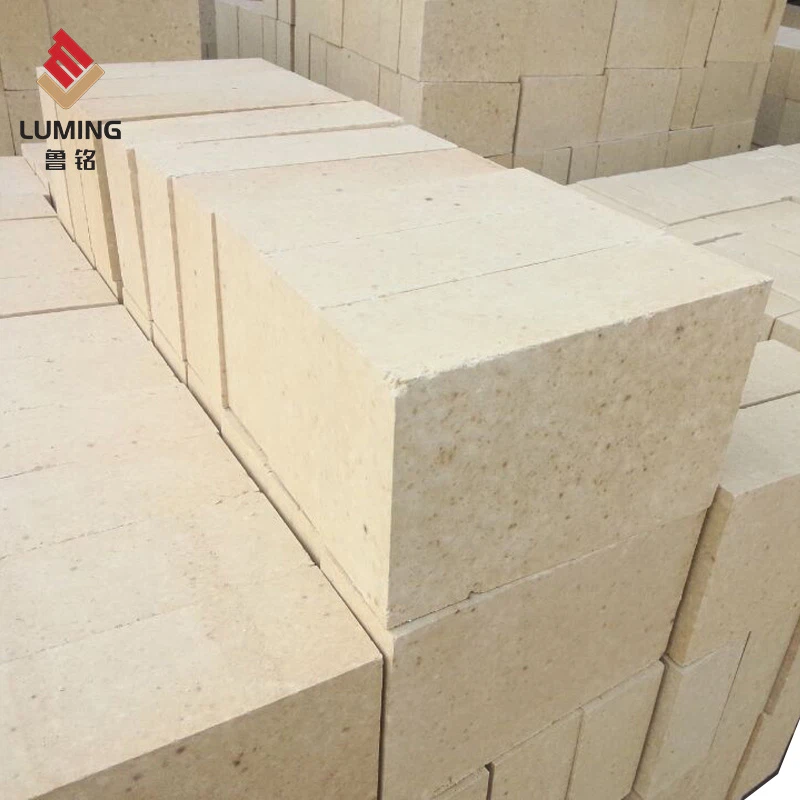
Excellent heat stability
Fire Bricks can maintain stable structure and performance in high temperature environments, and have excellent high temperature resistance and thermal insulation properties.
Excellent Chemical Resistance
Fire bricks are made from materials that are resistant to acids, bases, and other corrosive materials, making them ideal for chemical plants and other corrosive environments.
Low thermal conductivity
The lower the thermal conductivity of Fire Bricks, the less likely they are to transfer heat, and the better their thermal insulation and energy-saving effects. With the same thickness, they have better thermal insulation effects and can effectively reduce heat transfer, thereby improving the thermal efficiency and safety of equipment.
Paramenters
|
Item |
LZ-80 |
LZ-75 |
LZ-65 |
LZ-55 |
LZ-48 |
|
Al2O3,%≥ |
80 |
75 |
65 |
55 |
48 |
|
0.2Mpa RUL, ℃≥ |
1530 |
1520 |
1500 |
1450 |
1420 |
|
Reheat Linear Change, % |
1500℃x2h, 0.1~-0.4 |
1500℃x2h, 0.1~-0.4 |
1500℃x2h, 0.1~-0.4 |
1500℃x2, 0.1~-0.4 |
1450℃x2h, 0.1~-0.4 |
|
Porosity,%≤ |
22 |
23 |
23 |
22 |
22 |
|
CCS,Mpa≥ |
55 |
50 |
45 |
40 |
35 |
Basic refractory bricks that include dolomite blocks, bauxite blocks, and Magnesite blocks
Acidic refractory bricks that include ordinary fire block, Ganister block, and silica bauxite block
Neutral refractory bricks include Chrome magnesite blocks, Spinal blocks, Forsterite blocks Chromium blocks, and Carborundum.


Silica: Silica (SiO2) becomes soft at about 2800℉ and finally fuses and becomes a glassy substance at about 3200℉. It melts around 3300℉. This high softening and melting point has established it as the principal material for the production of refractory bricks.
Alumina: Alumina (Al2O3) has even higher softening and fusion temperature than silica. It melts at about 3800℉. It is, therefore, used in combination with silica.
Lime, Magnesia, Iron oxide and Alkalis: The presence of these detrimental components acts as fluxes to lower the softening and fusion temperature.
Digging:
First comes digging when raw materials such as silica, clay, alumina, and magnesia are extracted from quarries or mines. These are chosen depending on the properties of the final refractory product created.
Weathering:
The extracted raw materials are exposed to weathering. This can help reduce moisture content and improve the durability. As a result it becomes easy to form acid proof bricks later.
Tempering:
The raw materials are mixed with water to form a plastic clay-like mixture. This mixture is then tempered, which involves kneading as well as rolling to achieve uniform consistency and eliminate any kind of air pockets.
Moulding:
Molds help shape any mixture into a desired brick form. The process of molding can be done via different methods like extrusion, pressing, or casting.
Burning:
The molded bricks are fired in kilns at very high temperatures starting from around 1300°C to 1800°C (2372°F to 3272°F). It depends on the type of brick as well as its application. This firing process results in a dense and durable refractory structure.
Applications of Refractory Bricks
Kilns
Fire bricks are commonly used in kilns, which are high-temperature furnaces used for firing ceramics, glass, and other materials.
01
Furnaces
Fire bricks are used in furnaces to line the walls and floors, providing insulation and protection from high temperatures.
02
Fireplaces
Fire bricks are used in fireplaces to withstand the high temperatures and protect the surrounding materials from damage.
03
Chemical Plants
Fire bricks are used in chemical plants to withstand the corrosive effects of chemicals and high temperatures.
04
Power Plants
Fire bricks are used in power plants to line the boilers and other high-temperature equipment, providing insulation and protection.
05
FAQ
Shandong Luming New Materials Technology Co., Ltd. is one of the most professional refractory brick manufacturers and suppliers in China, featured by quality products and good service. Please rest assured to buy refractory brick at competitive price from our factory.


