

Your Professional Refractory Prefabricated Parts Supplier
Shandong Luming New Materials Technology Co., LTD covers an area of 62 acres(approx. 41,000㎡),offers end-to-end production solutions. We are fully equipped with facilities for raw material crushing and pulverizing, automated castable batching, precast block molding, tunnel drying, high-temperature shuttle kiln firing, and precision processing of both precast and fired products, ensuring we can fulfill the requirements of customers in any industry.Shandong Luming New Materials Technology Co., LTD Founded in 2003, it is the largest unshaped refractory material production enterprise in Shandong Province, located in Zhoucun District, Zibo City.
-
![Corundum Mullite Bricks]() Corundum Mullite BricksCast Corundum Mullite Bricks are high-performance refractory materials manufactured using a casting molding process. Composed primarily of corundum (α-Al₂O₃) and mullite (3Al₂O₃·2SiO₂), they...view more
Corundum Mullite BricksCast Corundum Mullite Bricks are high-performance refractory materials manufactured using a casting molding process. Composed primarily of corundum (α-Al₂O₃) and mullite (3Al₂O₃·2SiO₂), they...view more -
![Tank Opening Brick]() Tank Opening BrickTank Opening Brick is a refractory brick installed at the mouth of metallurgical equipment ( ladles, iron water tanks, or magnesium reduction furnaces) to protect the canister mouth area from...view more
Tank Opening BrickTank Opening Brick is a refractory brick installed at the mouth of metallurgical equipment ( ladles, iron water tanks, or magnesium reduction furnaces) to protect the canister mouth area from...view more -
![Corundum Precast Block For Industry Kilns]() Corundum Precast Block For Industry KilnsCorundum Precast Block is a high-performance refractory component made from high-purity corundum (Al₂O₃) aggregates and advanced refractory binders. It is manufactured through precise mold...view more
Corundum Precast Block For Industry KilnsCorundum Precast Block is a high-performance refractory component made from high-purity corundum (Al₂O₃) aggregates and advanced refractory binders. It is manufactured through precise mold...view more -
![Corundum Mullite Brick]() Corundum Mullite BrickA precast corundum mullite brick is a shaped refractory product made primarily from raw materials such as special-grade high-alumina bauxite, fused corundum, and fused mullite. These are...view more
Corundum Mullite BrickA precast corundum mullite brick is a shaped refractory product made primarily from raw materials such as special-grade high-alumina bauxite, fused corundum, and fused mullite. These are...view more -
![Glazed Furnace Door Brick for coke oven]() Glazed Furnace Door Brick for coke oven50% Al2O3 Glazed Furnace Door Brick is a specialized refractory material used for lining the inside of furnace doors in high-temperature industrial kilns and furnaces. Their main characteristic is...view more
Glazed Furnace Door Brick for coke oven50% Al2O3 Glazed Furnace Door Brick is a specialized refractory material used for lining the inside of furnace doors in high-temperature industrial kilns and furnaces. Their main characteristic is...view more -
![Composite Precast Brick]() Composite Precast BrickShandong Luming New Materials Technology Co., Ltd., a leading innovator in refractory solutions, proudly introduces our Composite Precast Brick—a high-performance, engineered material designed for...view more
Composite Precast BrickShandong Luming New Materials Technology Co., Ltd., a leading innovator in refractory solutions, proudly introduces our Composite Precast Brick—a high-performance, engineered material designed for...view more -
![Pallet Side Retainer Brick]() Pallet Side Retainer BrickShandong Luming New Materials Co., Ltd., a leading manufacturer in China’s refractory industry with over 20 years of expertise, specializes in producing Pallet Side Retainer Bricks engineered for...view more
Pallet Side Retainer BrickShandong Luming New Materials Co., Ltd., a leading manufacturer in China’s refractory industry with over 20 years of expertise, specializes in producing Pallet Side Retainer Bricks engineered for...view more -
![Glazed Furnace Door Brick]() Glazed Furnace Door BrickShandong Luming New Materials Co., Ltd. is a leading manufacturer of high-performance refractory materials, specializing in Glazed Furnace Door Bricks designed for extreme industrial environments....view more
Glazed Furnace Door BrickShandong Luming New Materials Co., Ltd. is a leading manufacturer of high-performance refractory materials, specializing in Glazed Furnace Door Bricks designed for extreme industrial environments....view more -
![Pot Mouth Brick]() Pot Mouth BrickShandong Luming New Materials Co., Ltd., a leading manufacturer of high-performance refractory materials, introduces its advanced Tank Opening Brick—a specialized solution designed for extreme...view more
Pot Mouth BrickShandong Luming New Materials Co., Ltd., a leading manufacturer of high-performance refractory materials, introduces its advanced Tank Opening Brick—a specialized solution designed for extreme...view more -
![Corundum Precast Block]() Corundum Precast BlockShandong Luming New Materials Co., Ltd., a leading enterprise in China's refractory industry with over 20 years of expertise, proudly presents our Corundum Precast Block—a high-performance...view more
Corundum Precast BlockShandong Luming New Materials Co., Ltd., a leading enterprise in China's refractory industry with over 20 years of expertise, proudly presents our Corundum Precast Block—a high-performance...view more -
![Corundum-mullite Precast Refractory Blocks]() Corundum-mullite Precast Refractory BlocksCorundum Mullite Brick represents the pinnacle of refractory technology, offering unmatched durability in high-temperature applications up to 1800℃. our product combines high-purity corundum...view more
Corundum-mullite Precast Refractory BlocksCorundum Mullite Brick represents the pinnacle of refractory technology, offering unmatched durability in high-temperature applications up to 1800℃. our product combines high-purity corundum...view more -
![Azs Re-sintered Brick]() Azs Re-sintered BrickShandong Luming New Materials Co., Ltd., a leading innovator in refractory materials with over 20 years of expertise, proudly introduces our AZS Brick (Alumina-Zirconia-Silica Brick), a...view more
Azs Re-sintered BrickShandong Luming New Materials Co., Ltd., a leading innovator in refractory materials with over 20 years of expertise, proudly introduces our AZS Brick (Alumina-Zirconia-Silica Brick), a...view more


Why Choose Us
Quality Assurance
Our company obtained ISO9001 International Quality Management System certification from the China Quality Certification Centre (CQC) in 2006.
After-Sale Service
Professional and thoughtful after -sales team, let you worry about us after -sales Intimate service, strong after -sales team support.
Custom-Engineered Solutions
By pioneering new energy-saving refractory materials and innovating kiln lining designs, we dedicate ourselves to helping clients achieve energy conservation and emission reduction goals.
Production Market
We have established long-term business cooperation and joint product R&D projects with leading design institutes, including:Dalian Design & Research Institute of ACRE (Coking & Refractory Engineering Consulting Corporation, MCC)),Shandong Metallurgical Design Institute Co., Ltd,Changsha Research Institute of Mining and Metallurgy (CRIMM), Minmetals.

》There is no need for on-site pouring construction or formwork pouring, which reduces labor costs and material costs.
》Heat-resistant anchors are not required, eliminating the material and construction costs of anchors.
》The pouring, curing, drying, and baking steps of prefabricated parts have been completed when delivered, saving a lot of construction time.
》It is not restricted by environmental and climatic conditions, which solves the problem that castable materials cannot be constructed on-site under natural conditions during hot summer and severe winter.
》It can be made into various special products with different sizes and shapes. Such as grate cooler low wall, tertiary air duct elbow, lifting gate valve, kiln tail smoke chamber, coal injection pipe, kiln mouth, and other refractory materials.
》Maintenance is easy to replace, has little waste loss, and saves labor and time. Corundum, fused mullite, special grade bauxite aggregate, and special wear-resistant materials are added to the material, and a certain proportion of special additives are added. Vibration forming.
Specification
|
Property |
Value |
|
Al₂O₃ Content |
≥80% |
|
Bulk Density |
2.85–3.10 g/cm³ |
|
Cold Crushing Strength |
100 MPa (110°C×24h) |
|
Modulus of Rupture |
10 MPa (1300°C×3h) |
|
Thermal Conductivity |
1.5 W/(m·K) |
|
Maximum Service Temperature |
1700°C |
Characteristics And Requirements Of Refractory Prefabricated Parts
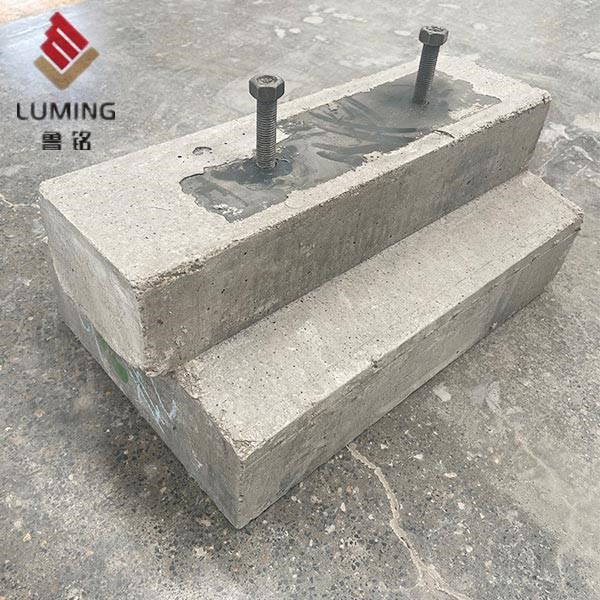


Refractory prefabricated parts are to divide the pre-constructed parts into small pieces in advance, and design a suitable shape, and then make a mold according to the shape, and then pour it in the factory, after curing, and baking, it is transported to the site for construction and installation.
Most of the parts used in refractory prefabricated parts are in special parts under severe environments such as high temperature, cement clinker erosion, abrasion, rapid cooling and rapid heating, which are prone to mechanical deformation and require good erosion resistance, good wear resistance and high temperature gas resistance. Washability and excellent thermal shock stability.
The refractory materials in the key parts of the cement kiln require high construction quality during the construction process. During the maintenance period of the cement kiln, the general construction period is short, and the construction quality of on-site pouring is difficult to guarantee. The quality of the construction quality has a great impact on the service life of the refractory materials. Impact. The increase of water addition will increase the porosity of the castable, reduce the strength, and seriously affect the wear resistance of the castable. After the construction of the castable is completed, there must be a certain curing time. After the curing is completed, it must be baked, otherwise it is easy to burst.
Since the production process of refractory prefabricated parts is carried out in the production enterprise, it can overcome the adverse effects caused by the tight construction time on site, environmental seasonal temperature changes, and on-site construction management. The quality problems caused by non-standard construction make the performance of refractory materials fully exerted. After installation, it is directly ignited and used, which shortens the maintenance time and can create good economic benefits.
Attention To Of Refractory Prefabricated Parts
Storage and transportation. During storage and transportation, prefabricated parts should be protected from moisture, heat, and external force damage. It is recommended to store prefabricated parts in a dry, ventilated, and cool warehouse. And pay attention to reasonable stacking to avoid extrusion and deformation.
Install. When installing refractory prefabricated parts, design requirements, and construction specifications should be strictly followed. For different types of prefabricated parts, corresponding installation methods and connection methods need to be adopted. During the installation process, it should be ensured that the position of the prefabricated parts is accurate and that good connection and sealing properties are maintained.
Seam treatment. Seams between precast parts should be kept clean and tight to prevent heat loss and the penetration of aggressive gases. Depending on the actual working conditions and precast material, appropriate filling materials can be used for joint treatment. Such as refractory mud, refractory fiber, etc.
Temperature control. During the initial heating and operation of the furnace, the heating rate and temperature should be strictly controlled. To prevent the refractory prefabricated parts from being damaged due to thermal stress caused by excessive heating. At the same time, regularly check the use of prefabricated parts to detect and deal with potential problems in a timely manner.
Maintenance and overhaul. During use, the refractory prefabricated parts should be inspected and maintained regularly. If damage, cracks, and other problems are found, they should be repaired or replaced in time. For prefabricated parts with a long service life, timely cleaning and maintenance can be carried out to extend their service life.
With proper selection, installation, and maintenance, refractory prefabricated components can provide efficient and stable performance for industrial furnaces. Save construction time and cost at the same time. In the continuously developing industrial field, the application of refractory prefabricated parts will continue to expand to meet the needs of various working conditions and environments.
Batching process is the foundation for ensuring product quality. Raw material ratios must be scientifically designed based on service conditions and performance requirements. Different particle size aggregates are mixed in certain proportions. This forms reasonable particle gradation and ensures good density and strength.
Forming process uses pressure forming or plastic forming methods. Pressure forming uses mechanical pressure to press the mixture into shape. It is suitable for most shaped products.
Plastic forming adds appropriate binders and moisture to the mixture. It uses extrusion or casting to form shapes. It is suitable for products with complex shapes.
Drying process removes free moisture from products. This prevents cracking during firing due to rapid moisture evaporation. Drying temperature is usually controlled at 110-150°C. Drying time depends on product thickness and moisture content.
Sintering process is the key step for products to obtain final performance. Sintering temperature usually ranges from 1400-1700°C. High temperature causes physical and chemical reactions in raw materials. This forms stable mineral phases and dense microstructures.
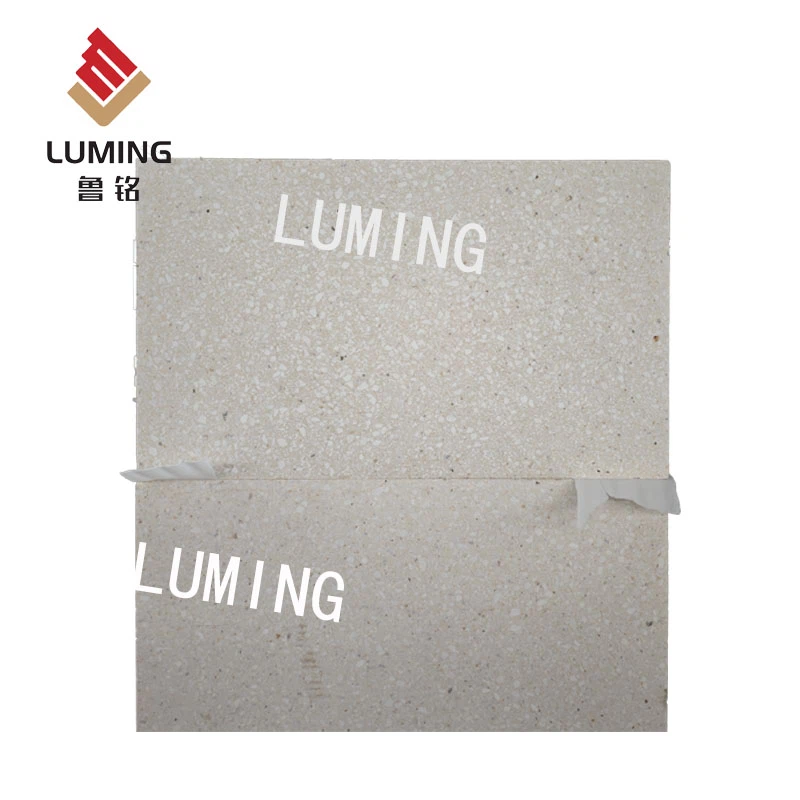
Packaging and Shipping
1.Packed on wooden pallets with moisture-proof film or wooden plates to prevent damage.
2.Keep in dry, ventilated areas.
FAQ
As one of the most professional refractory prefabricated parts manufacturers and suppliers in China, we're featured by quality products and good service. Please rest assured to buy refractory prefabricated parts at competitive price from our factory.
Pallet Side Retainer Brick, Pot Mouth Brick, refractory prefabricated parts


