

Your Professional Composite Precast Brick Supplier
Shandong Luming New Materials Technology Co., LTD covers an area of 62 acres(approx. 41,000㎡),offers end-to-end production solutions. We are fully equipped with facilities for raw material crushing and pulverizing, automated castable batching, precast block molding, tunnel drying, high-temperature shuttle kiln firing, and precision processing of both precast and fired products, ensuring we can fulfill the requirements of customers in any industry.Shandong Luming New Materials Technology Co., LTD Founded in 2003, it is the largest unshaped refractory material production enterprise in Shandong Province, located in Zhoucun District, Zibo City.
-
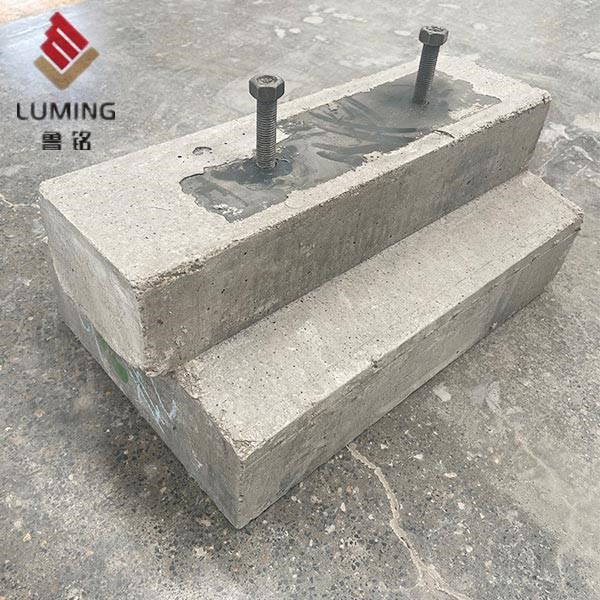
![Hi-strength Composite Precast Brick]() Hi-strength Composite Precast BrickHi-strength Composite Precast Brick for rotary kilns are specialized refractory materials designed for high-temperature rotary kilns. By combining different refractory and functional layers, they...view more
Hi-strength Composite Precast BrickHi-strength Composite Precast Brick for rotary kilns are specialized refractory materials designed for high-temperature rotary kilns. By combining different refractory and functional layers, they...view more

Why Choose Us
Quality Assurance
Our company obtained ISO9001 International Quality Management System certification from the China Quality Certification Centre (CQC) in 2006.
After-Sale Service
Professional and thoughtful after -sales team, let you worry about us after -sales Intimate service, strong after -sales team support.
Custom-Engineered Solutions
By pioneering new energy-saving refractory materials and innovating kiln lining designs, we dedicate ourselves to helping clients achieve energy conservation and emission reduction goals.
Production Market
We have established long-term business cooperation and joint product R&D projects with leading design institutes, including:Dalian Design & Research Institute of ACRE (Coking & Refractory Engineering Consulting Corporation, MCC)),Shandong Metallurgical Design Institute Co., Ltd,Changsha Research Institute of Mining and Metallurgy (CRIMM), Minmetals.

Fused corundum mullite bricks: Made from fused raw materials for higher purity
Sintered corundum mullite bricks: Created through high-temperature sintering of mixed powders
Zirconia-added bricks: Enhanced with zirconia for better corrosion resistance
Lightweight corundum mullite bricks: Lower density for insulating layers
Specification
|
Item |
LM-GM68 |
|
|
Al2O3 ≥ |
68 |
|
|
Bulk Density, g/cm3 ≥ |
2.70 |
|
|
Cold Crushing strength, MPa ≥ |
110℃×24h |
60 |
|
1300℃×3h |
80 |
|
|
Rupture Strength ,MPa ≥ |
110℃×24h |
8 |
|
1300℃×3h |
10 |
|
|
Linear Variation after burning 1300℃×3h |
±0.5 |
|
Good Thermal Conductivity
This brick exhibits excellent thermal conductivity, allowing for efficient heat transfer in high-temperature applications. Correspondingly, this property ensures uniform heat distribution and helps maintain consistent temperatures throughout the refractory structure. Good thermal conductivity is essential for optimizing energy efficiency and overall performance.
High Refractoriness
One of the standout features of corundum mullite brick is its exceptional resistance to high temperatures. Like corundum brick, it can withstand extreme heat and structural damage. Therefore, this makes it suitable for use in furnaces, kilns and other industrial applications where temperatures can reach up to 1800°C (3272°F) or higher.
Excellent Thermal Stability
Thermal stability is another notable feature of this corundum product. It retains mechanical strength and dimensional stability even when subjected to rapid or extreme temperature changes. Besides, this property is effective to minimize the risk of thermal shock and ensures the longevity and reliability of the whole refractory structure.

Oxidation Resistance
Corundum mullite bricks are highly resistant to oxidation, which makes them ideal for environments where exposure to oxygen or other oxidizing agents is present. Moreover, the composition and structure prevent the formation of oxides and maintain their integrity even under prolonged exposure to high temperatures and oxidative conditions.
Chemical Erosion Resistance
It is highly resistant to chemical erosion. Therefore, it’s suitable for applications where contact with corrosive materials or harsh chemicals is expected. Consequently, this high quality product can withstand the corrosive effects of acids, alkalis and other chemical substances. As a result, it helps to prolong the service life and reliable performance.
Wear Resistance
In addition to its thermal and chemical properties, corundum mullite bricks offer excellent resistance to wear and abrasion. It can withstand mechanical forces like friction and impact. There is no damage or loss of structural integrity. Moreover, this refractory fire brick is suitable for applications like refractory lining comes into contact with abrasive materials.
Production Process
Raw material selection
Choosing high-purity alumina and mullite
01
Mixing and shaping
Mixing powders and pressing into desired shapes
02
Drying
Removing moisture to prepare for firing
03
Sintering or firing
Heating bricks to over 1700°C
04
Quality inspection
Checking density, strength, and dimensional accuracy
05
Applications of Corundum Mullite Brick
Steel and Iron Industry
In the steel and iron industry, mullite bricks properties are able to bear intense heat generated during the steel and iron making process and ensure structural integrity. When used in steel and iron industry, this brick is suitable for blast furnaces, hot blast stoves, steel ladles and so on.
Glass Industry
The mullite brick is significant in glass industry. Because this brick has excellent resistance to chemical corrosion. In glass manufacturing, these bricks are used in the refractory linings, construction of furnaces, tank regenerators, checkers and many other parts of glass making furnaces.
Cement Industry
The cement manufacturing process has high requirements on the hardness of brick. Because it will cause strong shock and abrasion. The mullite refractory bricks from fire bricks manufacturing contribute to the overall efficiency and durability of the cement manufacturing process.
Power Industry
To withstand the intense heat and corrosive conditions in power industry, customers had better choose mullite brick for the high temperature kiln. This brick can also help maximize energy efficiency and reduce heat loss in power plants.
Non-ferrous Industry
The non-ferrous industry requires mullite bricks with high melting points and resistance to chemical corrosion. Therefore, mullite refractory bricks atre extensively employed in the construction of smelting furnaces, converters, refining vessels and other positions.
Environmental Industry
Due to thermal shock and erosion by acidic gases caused in environmental equipment, mullite bricks play a significant role. When use this brick in waste incineration and hazardous waste treatment facilities, it can realize safe and effective production.
FAQ
As one of the most professional composite precast brick manufacturers and suppliers in China, we're featured by quality products and good service. Please rest assured to buy composite precast brick at competitive price from our factory.
Hi-strength Composite Precast Brick, refractory prefabricated parts, composite precast brick


