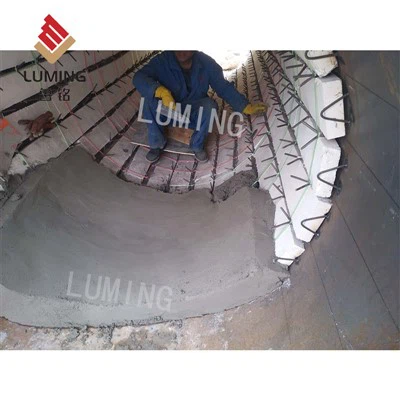
Silica bricks are a type of refractory material widely used in various high - temperature industrial applications. As a silica brick supplier, I often get asked about the chemical substances that silica bricks can resist. Understanding this is crucial for customers to select the right refractory material for their specific industrial processes.
Resistance to Acidic Substances
Silica bricks are well - known for their excellent resistance to acidic substances. This is mainly due to their high silica (SiO₂) content, which typically ranges from 93% to 98%. In industrial environments where acidic gases and slags are present, silica bricks can perform exceptionally well.
One of the most common acidic substances encountered in high - temperature processes is sulfur dioxide (SO₂). In industries such as metal smelting, power generation from fossil fuels, and chemical manufacturing, large amounts of SO₂ are produced. Silica bricks can withstand the corrosive action of SO₂ at high temperatures. When SO₂ reacts with oxygen and moisture in the air, it forms sulfuric acid (H₂SO₄) in a process known as acid rain formation. However, in high - temperature industrial settings, the reaction mechanism is different. The high silica content in silica bricks is chemically stable against the attack of SO₂. The silica forms a protective layer on the surface of the brick, preventing further penetration of the acidic gas.
Another important acidic substance is phosphorus pentoxide (P₂O₅). In the steelmaking industry, phosphorus is often present in the raw materials. During the smelting process, phosphorus is oxidized to P₂O₅. Silica bricks can resist the corrosive effect of P₂O₅. The silica in the bricks reacts with P₂O₅ to form a silicate compound that is relatively stable at high temperatures. This reaction helps to prevent the dissolution and erosion of the silica brick by the acidic P₂O₅.
Resistance to Some Neutral Substances
Silica bricks also show good resistance to certain neutral substances. For example, in the glass - making industry, molten glass is a neutral substance at high temperatures. Silica bricks are commonly used in glass furnaces because they can withstand the high - temperature environment and the chemical action of molten glass. The high melting point of silica (around 1710°C) allows the silica bricks to maintain their structural integrity in contact with molten glass, which typically has a temperature range of 1300 - 1600°C.
In addition, silica bricks can resist the action of some metal oxides in a neutral or near - neutral state. For instance, in the non - ferrous metal smelting industry, metal oxides such as zinc oxide (ZnO) and lead oxide (PbO) are present during the smelting process. Silica bricks can form a stable interface with these metal oxides at high temperatures, preventing excessive corrosion and erosion.
Limitations in Resistance to Basic Substances
However, silica bricks have limitations when it comes to resisting basic substances. Basic substances such as calcium oxide (CaO), magnesium oxide (MgO), and sodium oxide (Na₂O) can react with the silica in the bricks at high temperatures.


Calcium oxide is commonly found in the form of lime in many industrial processes, especially in steelmaking. When CaO comes into contact with silica bricks at high temperatures, a chemical reaction occurs. The reaction between CaO and SiO₂ forms calcium silicates, such as 2CaO·SiO₂ and 3CaO·SiO₂. These calcium silicates have different physical and chemical properties compared to the original silica brick. The formation of these compounds can lead to the expansion and cracking of the silica brick, reducing its service life.
Magnesium oxide is another basic substance that can cause problems for silica bricks. In some refractory applications where magnesia - based materials are also present, the interaction between MgO and silica bricks can be detrimental. The reaction between MgO and SiO₂ forms magnesium silicates, which can also lead to structural changes in the silica brick.
Different Types of Silica Bricks and Their Resistance
There are different types of silica bricks, each with its own characteristics in terms of chemical resistance.
Semi - silica Brick has a silica content lower than that of standard silica bricks, usually in the range of 85% - 93%. It is a more cost - effective option in some applications. Semi - silica bricks still have good resistance to acidic substances, but their resistance is slightly lower compared to high - purity silica bricks. They are often used in less demanding industrial environments where the acidic corrosion is not extremely severe.
Fused Silica Brick is made by fusing high - purity silica. It has a very high density and a more uniform structure compared to conventional silica bricks. Fused silica bricks have excellent resistance to acidic substances and some neutral substances. Their high - purity and dense structure make them more resistant to chemical attack, especially in high - temperature and high - corrosion environments.
Sintered Silicon Bricks are produced by sintering silicon powder. They have unique physical and chemical properties. Sintered silicon bricks can offer good resistance to certain chemical substances, and their performance can be adjusted by controlling the sintering process and the composition of the raw materials.
Conclusion and Procurement Invitation
In conclusion, silica bricks are a versatile refractory material with excellent resistance to acidic and some neutral substances. However, their performance against basic substances is limited. As a silica brick supplier, we offer a wide range of silica bricks, including semi - silica bricks, fused silica bricks, and sintered silicon bricks, to meet the diverse needs of different industries.
If you are looking for high - quality silica bricks for your industrial applications, we are here to provide you with the best solutions. Our team of experts can help you select the most suitable type of silica brick based on your specific requirements, such as the chemical substances present in your process, the temperature range, and the expected service life. Contact us to start a procurement discussion and find out how our silica bricks can enhance the efficiency and reliability of your industrial operations.
References
- "Refractory Materials Handbook" - A comprehensive guide on the properties and applications of various refractory materials, including silica bricks.
- "Industrial Furnace Technology" - This book provides in - depth knowledge about the use of refractory materials in different types of industrial furnaces and the chemical reactions that occur within them.
- Journal articles on refractory research, which often contain the latest findings on the chemical resistance of silica bricks and other refractory materials.