


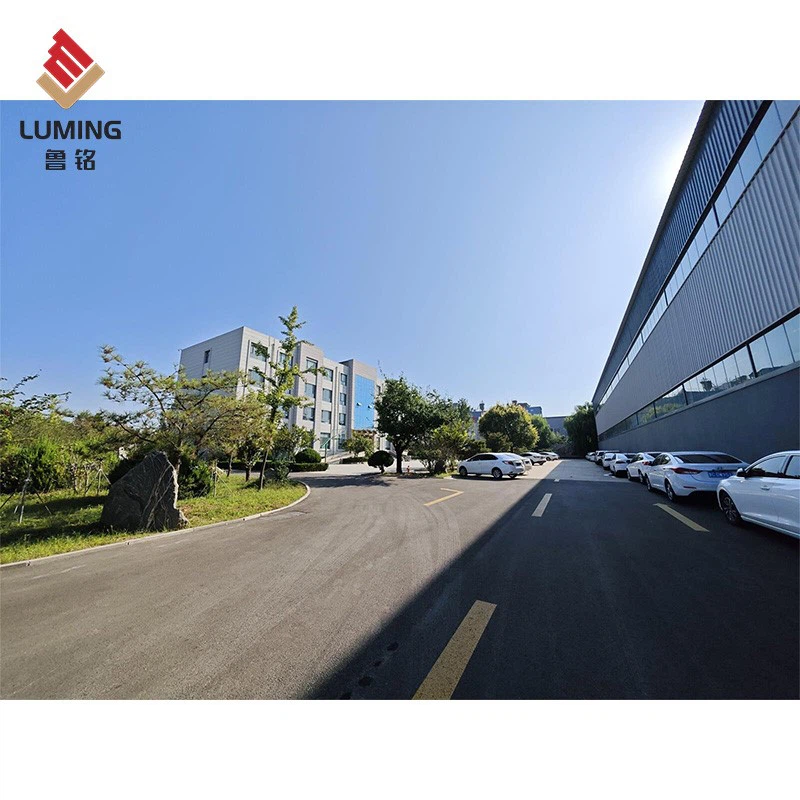
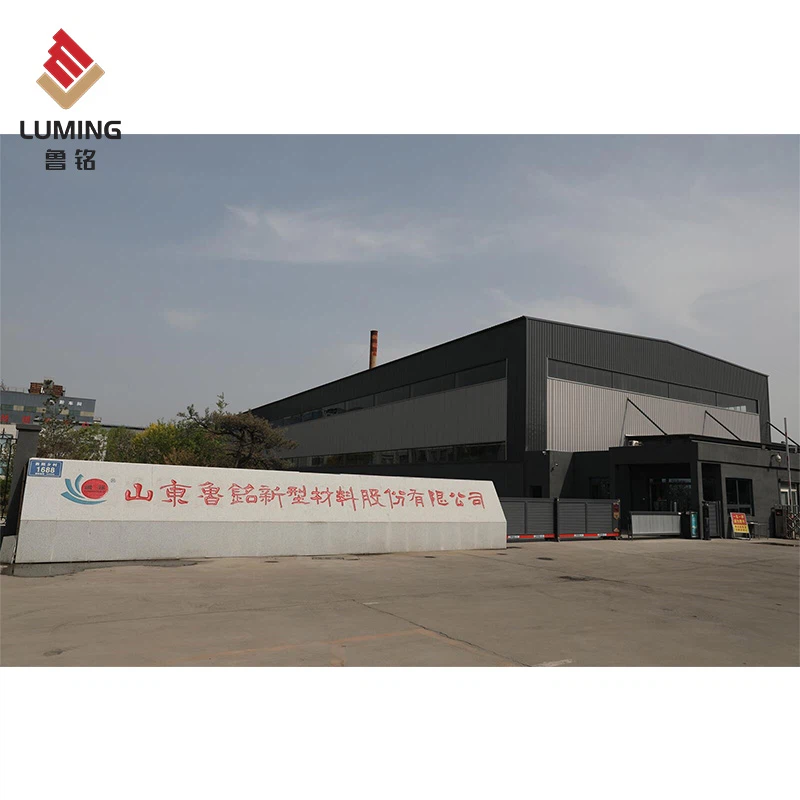
Shandong Luming New Materials Technology Co., Ltd. is one of the leading manufacturers and suppliers of semi-silica brick in China. We have world-leading production equipment and strong manufacturing capabilities. Please feel free to buy premium semi-silica brick at competitive price from our factory.
Semi Silica brick is a aluminosilicate refractory material with silica (SiO₂) as the primary component, containing 15%–30% alumina (Al₂O₃) and typically over 65% SiO₂.As a type of semi-acidic refractory material widely used in high-temperature industrial furnaces such as glass kilns and coke ovens.
Production Process
The production of semi-silica bricks typically involves several key steps:
Raw Material Preparation
The main raw materials are silica powder and bauxite. These need to be crushed and ground to meet the required particle size.
Batching and Mixing
Different sizes of aggregates and binders (such as refractory clay or specific additives) are mixed thoroughly in certain proportions.
Forming
The mixed material is then formed into bricks of various shapes under pressure. Forming methods can include mechanical pressing or hydraulic pressing.
Drying
The formed bricks need to be thoroughly dried to remove moisture, preventing cracking during the firing process.
Firing
The dried bricks are fired in high-temperature kilns. The firing temperature and time must be strictly controlled to promote mineral phase transformations, forming stable mullite and cristobalite, which impart the required strength and refractory properties to the bricks.
Inspection
After firing, semi-silica bricks undergo strict quality inspection, including dimensions, appearance, bulk density, cold crushing strength, refractoriness under load, and permanent linear change on reheating.
Technical Specifications of Semi Silica Bricks
|
Item |
Unit |
|
|
SiO2 |
% |
65 - 80 |
|
Al2O3 |
% |
15 - 30 |
|
Fe2O3 |
% |
≤2 |
|
Refractoriness |
°C |
1670 - 1750 |
|
Refractoriness under load(0.2Mpa) |
°C |
1350 - 1450 |
|
Cold Crushing Strength |
MPa |
20 - 45 |
|
Bulk Density |
g/cm³ |
1.90 - 2.15 |
|
True Density |
g/cm³ |
2.35 |
|
Apparent Porosity |
% |
18 - 25 |
|
Linear Change on Reheating (1450°C x 2h) |
% |
±0.2 |
|
Thermal Conductivity |
W/(m·K) |
0.9 - 1.2 |
|
Thermal Shock Resistance(water quenching) |
cycles |
≥ 5 |


Performance Characteristics
Due to their unique composition and production process, semi-silica refractory bricks exhibit the following properties:
Moderate Refractoriness
Typically reaches 1670°C, capable of withstanding high-temperature environments.
01
Load-Bearing Softening Point
Not less than 1250°C, ensuring structural stability under high temperatures.
02
Good Volume Stability
Semi-silica bricks exhibit minimal shrinkage during firing because the volume expansion of quartz transforming into cristobalite around 1250°C partially offsets the shrinkage of clay during sintering. This makes their volume stability superior to both silica and clay bricks.
03
Good Thermal Shock Resistance
Compared to silica bricks, semi-silica bricks have better thermal shock resistance, making them more stable in environments with significant temperature fluctuations.
04
Excellent Corrosion Resistance
As a semi-acidic material, semi-silica bricks has good resistance to acidic gases and slag corrosion.
01
True Density
Approximately 2.35 g/cm³, a moderate density suitable for various furnace structures.
02
Moderate Cost
Lower cost compared to pure silica brick, better performance compared to clay brick.Lower cost compared to high-alumina and silica bricks.
03
Good Workability
Can be cut, ground, and undergo other mechanical processing.
04
Main Applications
Due to their good overall performance and cost-effectiveness, semi silicon bricks are widely used in various industrial kilns and furnaces:
1.Iron and Steel Industry: Used for constructing furnace bodies and flues of blast furnace ,Hot blast stoves, soaking furnaces.And torpedo ladle linings,blast-furnace shaft and various heating furnaces.
2.Glass Industry: Used for upper structures, flues, tank walls, crowns,and regenerators checker bricks of glass melting furnaces.
3.Coke Ovens: Used in non-high-temperature contact areas, such as furnace doors or partition walls,furnace bodies and flues,Coke oven battery head.
4.Cement Industry: Used in the preheating zone and decomposition furnace of rotary cement kilns.
5.Non-ferrous Metals Industry: Used in smelting furnaces, etc.
6.Ceramic Industry: Used for kiln bodies and chimneys of ceramic kilns,and Kiln car bricks, furnace walls.
7.Chemical Industry: Used for linings of various high-temperature reactors and heating furnaces, carbon baking furnaces
8.Transitional Material: In some furnaces, semi-silica bricks serve as a transitional material between silica and clay bricks to mitigate stress from differing thermal expansion rates.
9.Tunnel kilns
Packaging and Shipping of Semi Silica Brick
1.Packed on wooden pallets with moisture-proof film to prevent damage.
2.Wooden box
3.Keep in dry, ventilated areas.
Our Company


Why Choose Us?
We are a modern integrated enterprise specializing in refractory materials, combining R&D, production, design, construction and technical services. Our business covers development, manufacturing and sales of refractory materials and insulation material
Our engineers will recommend right bricks for you based on:
Operating temperature → Determines Al₂O₃ content
Chemical environment → Corrosion resistance grade
Mechanical load → Density & strength requirements
Free samples to be provided.
Within in 8 hours to respond your inquiry.
If you receive defective products, We guarantee: 24-hour response, Solution within 48 hours and Replacement/refund options.
Our company supplies a complete range and type of Refractory materials, including:
Standard to high-grade products (Al2O3: 48%-90%)
Special-function types (spalling-resistant, low-creep, microporous, etc.)
Custom-engineered solutions for specific applications
Hot Tags: semi-silica brick, China semi-silica brick manufacturers, suppliers, factory, Semi-silica Brick, Silica Refractory Brick, Sintered Silicon Bricks, Fused Silica Brick, silica brick, Silica Mullite Brick


