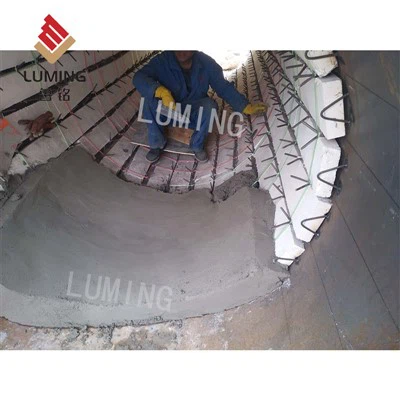
What is the cost of refractory mortar?
Refractory mortar is a crucial material in various high - temperature industrial applications, such as in furnaces, kilns, and incinerators. As a refractory mortar supplier, I often receive inquiries about the cost of refractory mortar. Understanding the cost factors can help customers make more informed decisions when purchasing this essential product.
1. Factors Affecting the Cost of Refractory Mortar
Raw Materials
The type and quality of raw materials used in refractory mortar production have a significant impact on its cost. For example, Corundum Refractory Slurry is made from high - purity corundum, which is a high - grade and relatively expensive raw material. The high alumina content in corundum provides excellent refractoriness and chemical stability, making it suitable for extremely high - temperature environments. As a result, the cost of corundum refractory slurry is generally higher compared to some other types of refractory mortar.
On the other hand, High - alumina Refractory Mud contains a high percentage of alumina but may use different grades of alumina raw materials. The cost can vary depending on the alumina content and the source of the raw material. Higher alumina content usually means better refractory performance but also comes with a higher price tag.
Mullite Mortar is another type of refractory mortar. Mullite is a mineral with good thermal shock resistance and mechanical strength. The cost of mullite mortar is influenced by the quality and quantity of mullite used in its formulation. If high - quality synthetic mullite is used, the cost will be relatively high, while using natural mullite or a lower - grade synthetic version can reduce the cost.
Manufacturing Process
The manufacturing process of refractory mortar also affects its cost. Some refractory mortars require complex processing steps, such as high - temperature calcination, fine grinding, and strict quality control during production. For instance, producing a refractory mortar with a precise particle size distribution and uniform chemical composition may require advanced manufacturing equipment and more labor - intensive processes. These additional costs are reflected in the final price of the product.
Mortars that are produced in small batches may also have a higher cost per unit compared to those produced in large - scale operations. This is because of the economies of scale. In large - scale production, the fixed costs associated with equipment, labor, and energy can be spread over a larger volume of products, resulting in a lower cost per unit.
Performance Requirements
The performance requirements of refractory mortar play a vital role in determining its cost. Different industrial applications have different temperature, chemical, and mechanical performance requirements. For example, in a steelmaking furnace, the refractory mortar needs to withstand extremely high temperatures (up to 1600°C or more), strong chemical corrosion from molten metals and slag, and mechanical abrasion. A refractory mortar designed for such a demanding environment will have a higher cost due to the need for high - performance raw materials and advanced manufacturing techniques.


In contrast, for a less - demanding application, such as a small - scale ceramic kiln operating at relatively lower temperatures, a lower - cost refractory mortar with basic performance characteristics may be sufficient. The performance requirements can also include thermal shock resistance, volume stability at high temperatures, and resistance to specific chemical substances. Meeting these special performance requirements often leads to an increase in the cost of the refractory mortar.
2. Cost Range of Different Types of Refractory Mortar
The cost of refractory mortar can vary widely depending on the type and quality. Generally, the price can range from a few dollars per kilogram for basic refractory mortars to tens of dollars per kilogram for high - end, specialty products.
Basic high - alumina refractory mud with a moderate alumina content (around 50 - 60%) may cost in the range of $3 - $8 per kilogram. This type of mortar is commonly used in medium - temperature applications, such as some industrial furnaces and boilers.
Corundum refractory slurry, which offers superior refractoriness and chemical resistance, can cost anywhere from $10 - $30 per kilogram or even more, depending on the purity of the corundum and the specific performance requirements. This type of refractory mortar is typically used in high - temperature applications like the lining of electric arc furnaces.
Mullite mortar, with its good thermal shock resistance, usually has a cost in the range of $5 - $15 per kilogram. The cost difference within this range is mainly due to the quality of mullite, the presence of other additives, and the manufacturing process.
3. Cost - Benefit Analysis for Customers
When considering the cost of refractory mortar, customers should also conduct a cost - benefit analysis. A cheaper refractory mortar may seem like a cost - effective option initially, but if it fails to meet the performance requirements of the application, it can lead to frequent repairs, replacements, and production downtime, which can ultimately result in higher overall costs.
For example, using a low - quality refractory mortar in a high - temperature furnace may cause it to crack and lose its integrity quickly. This can lead to heat leakage, reduced energy efficiency, and potential damage to the furnace structure. In contrast, investing in a high - quality, more expensive refractory mortar can ensure long - term performance, better energy efficiency, and fewer maintenance requirements, which can bring significant cost savings in the long run.
Customers should also consider the environmental impact and safety aspects of the refractory mortar. Some high - grade refractory mortars may be more environmentally friendly and produce fewer emissions during use, which is an important consideration in today's industrial landscape.
4. How We, as a Supplier, Control the Cost
As a refractory mortar supplier, we are committed to providing high - quality products at a reasonable cost. We have established long - term relationships with reliable raw material suppliers to ensure a stable supply of high - quality raw materials at competitive prices. By purchasing raw materials in bulk, we can take advantage of volume discounts and reduce the raw material cost per unit.
We also continuously invest in research and development to improve our manufacturing processes. Through technological innovation, we aim to increase production efficiency, reduce energy consumption, and minimize waste generation during production. This not only helps to lower the production cost but also makes our manufacturing process more sustainable.
In addition, we have a strict quality control system in place. By ensuring that every batch of refractory mortar meets the high - quality standards, we can reduce the number of defective products and the associated costs. This also helps us maintain a good reputation in the market and build long - term relationships with our customers.
5. Invitation for Contact
If you are in the market for refractory mortar and want to know more about the cost and our product offerings, we invite you to contact us for further discussion. We have a team of experienced professionals who can provide you with detailed information, technical support, and competitive pricing according to your specific requirements. Whether you need Corundum Refractory Slurry, High - alumina Refractory Mud, or Mullite Mortar, we are here to assist you. Let's work together to find the most suitable refractory mortar solution for your industrial needs.
References
- "Refractory Materials Handbook", published by a well - known industry publisher.
- Industry reports on refractory materials market trends and cost analysis.