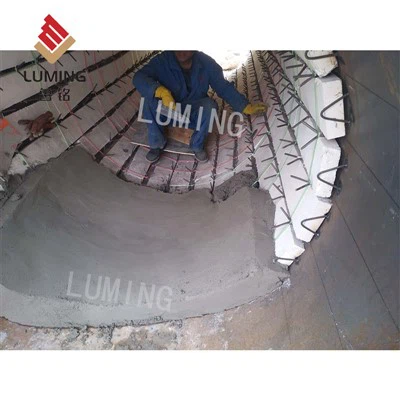
Corundum bricks are a crucial component in various high - temperature industrial applications due to their excellent refractory properties. As a dedicated corundum brick supplier, I understand that the surface finish of these bricks is not just an aesthetic concern but also has a significant impact on their performance, installation, and longevity. In this blog, we will delve into the surface finish requirements for corundum bricks.
Importance of Surface Finish
The surface finish of corundum bricks plays a vital role in their functionality. Firstly, a smooth surface finish is essential for proper installation. When corundum bricks are used to line furnaces or other high - temperature equipment, they need to fit together tightly. Any unevenness on the surface can lead to gaps between the bricks, which may cause heat leakage. Heat leakage is not only a waste of energy but can also cause a decrease in the overall efficiency of the equipment and may even damage the surrounding structures due to overheating.
Secondly, the surface finish affects the resistance to chemical attack. In industrial environments, corundum bricks are often exposed to various corrosive substances. A well - finished surface with fewer pores and a smooth texture provides better protection against chemical penetration. This is because chemicals are less likely to adhere to and infiltrate a smooth surface, thereby extending the lifespan of the bricks.


Surface Flatness
One of the primary surface finish requirements for corundum bricks is surface flatness. The flatness of the brick surface is measured in terms of the deviation from a perfectly flat plane. For most industrial applications, the allowable deviation in flatness is typically within a few millimeters per square meter of the brick surface.
In high - precision applications, such as in the lining of single - crystal furnace or some advanced ceramic firing kilns, the required flatness can be even more stringent. The bricks need to be so flat that they can ensure a seamless fit between adjacent bricks, which is crucial for maintaining a stable internal environment within the kiln.
Surface Smoothness
Surface smoothness is another key aspect of the surface finish. A smooth surface finish is characterized by a low roughness value. The roughness of the corundum brick surface is usually measured using a profilometer. A lower roughness value means a smoother surface.
For corundum bricks used in applications where the flow of molten materials is involved, such as in steel - making ladles or non - ferrous metal smelting furnaces, a smooth surface is highly desirable. A smooth surface reduces the frictional resistance to the flow of molten materials, which helps in a more uniform flow and reduces the likelihood of material sticking to the brick surface. This, in turn, helps in maintaining the cleanliness of the furnace lining and improving the overall efficiency of the melting process.
Surface Porosity
The porosity of the corundum brick surface is also an important surface finish requirement. Porosity refers to the presence of small holes or voids on the surface of the brick. A high - porosity surface can be a problem as it provides more sites for chemical attack and can also reduce the mechanical strength of the brick.
For corundum bricks used in harsh chemical environments, such as in the chemical industry or in waste incineration plants, a low - porosity surface is essential. The low - porosity surface acts as a barrier, preventing corrosive chemicals from penetrating into the brick structure. To achieve a low - porosity surface, advanced manufacturing techniques such as high - pressure molding and sintering at optimal temperatures are often employed.
Surface Color and Appearance
Although surface color and appearance may seem like less important factors compared to flatness, smoothness, and porosity, they still have their significance. A consistent color across the surface of the corundum bricks indicates a uniform manufacturing process. Inconsistent color may suggest variations in the raw materials or the manufacturing conditions, which could potentially lead to differences in the brick's performance.
In addition, a clean and uniform appearance is often preferred in industrial settings as it gives an impression of high - quality products and can also be an indication of proper handling and storage.
Different Types of Corundum Bricks and Their Surface Finish Requirements
There are several types of corundum bricks, each with its own specific surface finish requirements. For example, Zirconia - corundum Brick is commonly used in applications that require high resistance to thermal shock and chemical corrosion. The surface finish of zirconia - corundum bricks needs to be extremely smooth and have low porosity to ensure maximum protection against chemical attack and to maintain their mechanical strength under high - temperature cycling.
Sintered Corundum Brick is known for its high density and excellent refractory properties. For sintered corundum bricks, surface flatness is of utmost importance, especially when they are used in large - scale furnace linings. The precise flatness ensures a tight fit between the bricks, which is crucial for preventing heat loss and maintaining the structural integrity of the furnace lining.
Refractory Corundum Brick is widely used in various high - temperature industrial processes. The surface finish of refractory corundum bricks should be able to withstand high - temperature abrasion. A smooth surface with good hardness can reduce the wear caused by the movement of hot gases and solid particles, thereby extending the service life of the bricks.
Quality Control of Surface Finish
As a corundum brick supplier, we implement strict quality control measures to ensure that our products meet the required surface finish standards. We use advanced testing equipment to measure the flatness, smoothness, and porosity of the brick surfaces. For example, we use laser scanners to accurately measure the flatness of the bricks, and profilometers to measure the surface roughness.
We also conduct visual inspections to check the color and overall appearance of the bricks. Any bricks that do not meet the specified surface finish requirements are rejected to ensure that only high - quality products are delivered to our customers.
Conclusion
In conclusion, the surface finish requirements for corundum bricks are multi - faceted and play a crucial role in their performance, installation, and longevity. Surface flatness, smoothness, porosity, and appearance all need to be carefully controlled to meet the specific needs of different industrial applications.
If you are in the market for high - quality corundum bricks that meet the strictest surface finish requirements, we are here to help. We have a wide range of corundum bricks, including zirconia - corundum bricks, sintered corundum bricks, and refractory corundum bricks, to meet your diverse needs. Reach out to us to discuss your specific requirements and start a procurement negotiation today.
References
- "Refractory Materials Handbook", John Wiley & Sons
- Proceedings of the International Symposium on High - Temperature Refractories
- Research papers on corundum brick manufacturing and performance from leading scientific journals.