


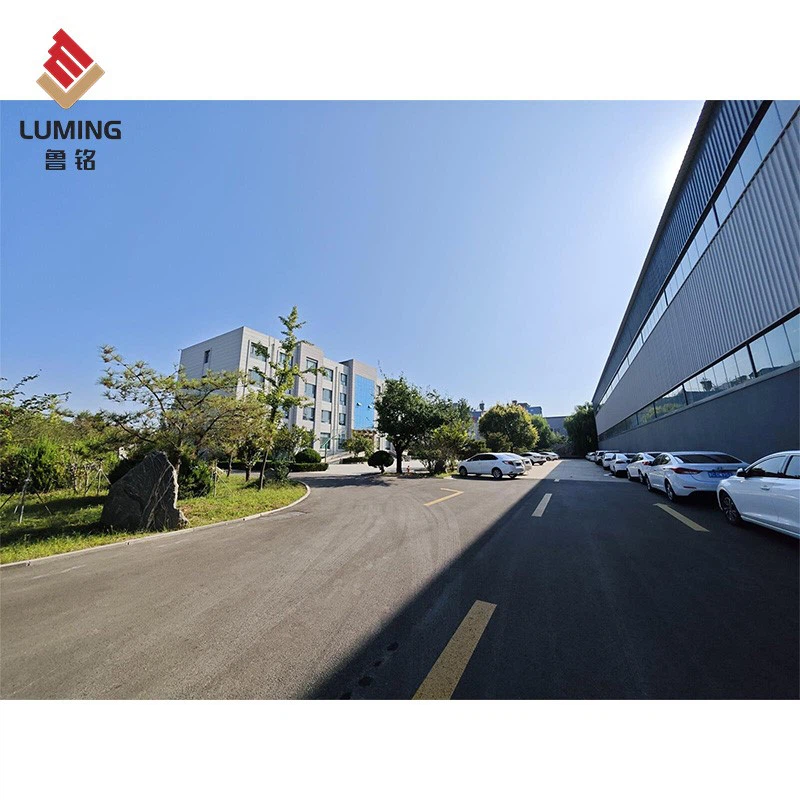
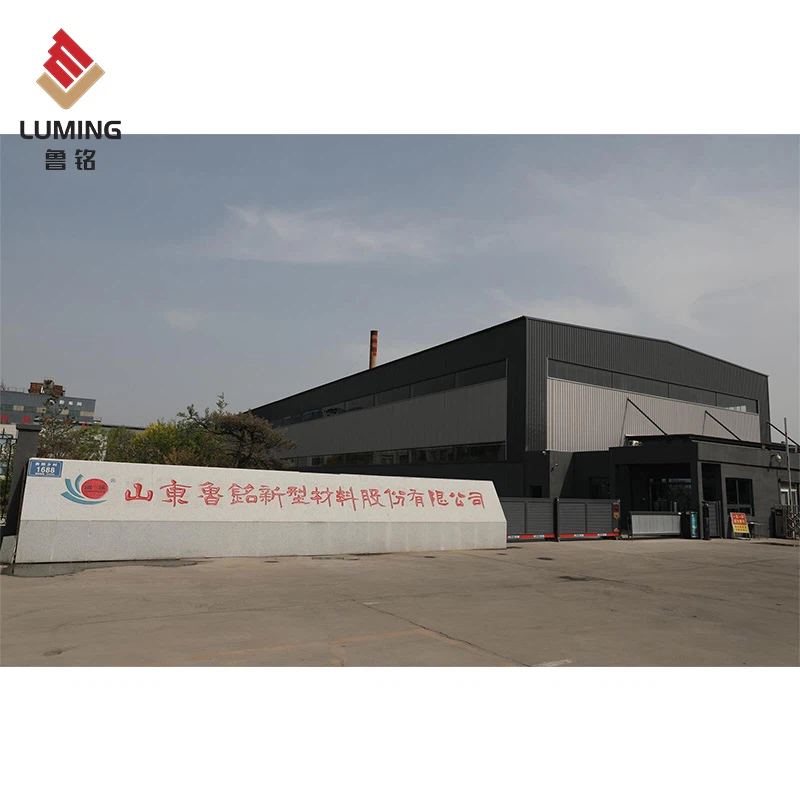
Shandong Luming New Materials Technology Co., Ltd. is one of the leading manufacturers and suppliers of zirconia-corundum brick in China. We have world-leading production equipment and strong manufacturing capabilities. Please feel free to buy premium zirconia-corundum brick at competitive price from our factory.
Zirconia Corundum Brick is a refractory product made from industrial alumina powder (Al₂O₃) and selected zircon sand (containing zirconia ZrO₂ and silica SiO₂) as primary raw materials, produced through high-temperature electric arc furnace melting or sintering. The ZrO₂ content typically ranges from 33% to 45%.Zirconia-corundum bricks,with their high refractoriness, excellent corrosion resistance, and high strength, are indispensable refractory materials in the glass industry and other high-temperature applications.
Production Process
Zirconia-corundum bricks are produced using two main methods: fused casting and sintering.
1.Fused Zirconia-Corundum Brick (AZS Brick):
The production process of zirconia-corundum bricks typically involves several key steps:
1).Batching: Industrial alumina powder, zircon sand (mainly composed of zirconia and silica), a small amount of soda ash, and some fused zirconia-corundum grog (recycled material) are mixed uniformly in specific proportions. The addition of grog helps improve the quality of the melt and reduces power consumption.
2).Melting: The mixed raw materials are fed into a three-phase electric arc furnace and melted using high-voltage, high-current electricity. Melting temperatures typically range from 1760 to 1850℃.
3).Casting and Forming: The molten material is poured into pre-prepared molds.
4).Cooling and Annealing: After casting, the castings are buried in insulating materials or placed in an external heated annealing kiln for slow cooling and annealing. The cooling rate during annealing is strictly controlled (e.g., 0.053-0.098℃/kg·h).
5).Cold Working: The annealed brick blanks undergo cold working such as cutting or grinding to achieve precise dimensions and shapes.
2.Sintered Zirconia-Corundum Brick:
1).Process: Raw materials are ground, mixed, shaped, and sintered in a high-temperature tunnel kiln (approximately 1600°C–1700°C).
2).Characteristics: Compared to fused bricks, sintered bricks have higher porosity, uniform structure, lower thermal conductivity, and less thermal expansion fluctuation, making them suitable for specific low-or medium-temperature applications.
Technical Data of AZS Brick
|
Item |
Resintering AZS brick |
||
|
AZS-16 |
AZS-20 |
AZS-32 |
|
|
ZrO2, ≥% |
16 |
20 |
32 |
|
Fe2O3, ≤% |
0.5 |
0.5 |
0.5 |
|
Bulk Density, ≥g/cm³ |
2.7 |
2.85 |
3.1 |
|
Apparent Porosity ,≤% |
18 |
18 |
18 |
|
Compressive strength, ≥Mpa |
70 |
80 |
80 |
|
0.2Mpa Refractoriness under load, ≥℃ |
1580 |
1630 |
1630 |
|
Item |
AZS33 |
AZS36 |
AZS41 |
|
Al2O3,% |
The rest |
The rest |
The rest |
|
ZrO2,% |
32---36 |
35--40 |
40--44 |
|
Fe2O3+TiO2,%,≤ |
0.3 |
0.3 |
0.3 |
|
SiO2,%,≤ |
16 |
14 |
13 |
|
Na2O,%≤ |
1.5 |
1.6 |
1.3 |
|
Fe2O3+TiO2+CaO+MgO+ Na2O+K2O+B2O2,%≤ |
2.5 |
2.5 |
2.5 |
|
Porosity,%,≤ |
2.0 |
1.5 |
1.3 |
|
Bulk density,g/cm3,≥ |
3.70 |
3.75 |
3.90 |
|
Corrosion resistance of glass melt , mm/24h,≤(1500℃x36h) |
1.6 |
1.5 |
1.3 |
|
Exudation temperature of Glass phase , ℃≥ |
1400 |
1400 |
1400 |
|
Bubbling separate ,%≤(1300℃x10h) |
2.0 |
1.5 |
1.0 |
|
Thermal Expansion,1000℃ |
0.8 |
0.8 |
0.8 |
|
Compressive strength, ≥Mpa |
350 |
350 |
350 |


Key Characteristics and Advantages of Zirconium Corundum Brick
Due to its unique composition and structure, Zirconia-containing corundum brick exhibits the following key characteristics:
High Density and Low Apparent Porosity: The fusion-casting process results in a very dense structure for zirconia-corundum bricks, with apparent porosity typically below 2%. This provides excellent resistance to molten glass erosion.
Excellent Corrosion Resistance: Highly resistant to acidic and alkaline media, especially glass melt, making it ideal for the glass industry.Corrosion resistance increases with higher ZrO₂ content
Excellent Thermal Shock Resistance: Due to zirconia's low thermal conductivity and appropriate thermal expansion coefficient, the material has good thermal shock resistance and can withstand rapid temperature changes.
High Strength and Hardness: Superior strength at both room temperature and high temperatures,Compressive strength at room temperature≥ 350 MPa, suitable for heavy-load areas.Corundum (alumina) itself is a high-hardness material, and its combination with zirconia further enhances the brick's mechanical strength and wear resistance.
Excellent High-Temperature Resistance: Baddeleyite (ZrO₂) has a melting point of 2715°C, providing exceptional refractoriness.Corundum (α-Al₂O₃) enhances structural stability at high temperatures.Zirconia-corundum bricks have a refractoriness of over 1900-2000℃ and Capable of maintaining its structural and performance stability over long periods at extremely high temperatures without significant deformation or softening.
Good Thermal Conductivity:
1).Fused Bricks: Good thermal conductivity at room temperature, decreasing with rising temperature but increasing again above 1000°C.
2).Sintered Bricks: Lower thermal conductivity due to higher porosity, with minimal fluctuation with temperature changes.
Electrical Resistivity and Thermal Expansion: Resistivity decreases with increasing temperature, suitable for high-temperature electric melting environments.Linear expansion rate shows reversible behavior, ensuring good thermal stability.
Long Lifespan: Significantly extends the service life of kilns, reducing downtime for maintenance.
High Efficiency: Improves kiln operating efficiency and reduces energy consumption.
Product Quality: Helps ensure the quality of glass and other products, reducing defects.
Strong Adaptability: Capable of handling extreme high temperatures, strong corrosion, and severe temperature fluctuations in harsh working conditions.
Application Areas
Due to their superior properties, zirconia- corundum high density refractory bricks are widely used in industrial fields with extremely demanding requirements for refractory materials:
1.Glass Industry: This is the primary application field for zirconia-corundum bricks, especially in critical areas of glass furnaces such as:
1).Melting Tank: Furnace walls and bottom, particularly high-stress zones like the corners of the charging area, weirs, and throat areas, which are in prolonged contact with high-temperature molten glass, demanding extremely high erosion resistance.
2).Regenerator: Especially high-stress zones such as the port necks and target walls.
3).Refining Tank and Working Tank: Ensures glass quality and prevents defects.
4).Glass tank structures (sidewalls, bottom plates, throat channels, flow channels, breast walls. etc.) to withstand the erosion of high-temperature molten glass.
As a key material, it enhances melting efficiency, extends furnace lifespan, and reduces energy consumption.
2.Steel Industry:
1).Used as key refractory materials in steelmaking continuous casting systems, such as tundish linings and nozzle seat bricks.
2).Linings for ladles and refining furnaces.
3).steelmaking electric arc furnaces.
3.Non-ferrous Metal Industry: Used as lining materials for copper, aluminum, and other non-ferrous metal smelting furnaces.
4.Petrochemical Industry: High-temperature kiln linings, incinerators
5.Ceramic Industry: Used in key parts of high-grade ceramic firing kilns.
6.Electronics industry: Semiconductor-grade fused quartz crucibles.
7.Power Industry: Applied in power plant boilers, chimneys, and other high-temperature, wear-resistant areas.
8.Other High-Temperature Industries: Also applied in kilns for producing corrosive glass fibers, mineral wool, and other materials, as well as in other industrial furnaces and kilns with strict requirements for high-temperature resistance, corrosion resistance, and thermal shock resistance.
Packaging and Shipping of Zirconia Corundum Brick
1.Packed on wooden pallets with moisture-proof film to prevent damage.
2.Packed on wooden box.
3.Keep in dry, ventilated areas.
Our Company


FAQ
Hot Tags: zirconia-corundum brick, China zirconia-corundum brick manufacturers, suppliers, factory, Fused Corundum Brick, Zirconia-corundum Brick, corundum brick, Refractory Corundum Brick, Chrome-corundum Brick, Sintered Corundum Brick


