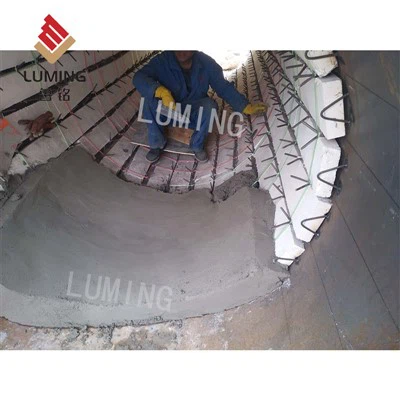
As a leading supplier of lime kilns, I often get asked about the materials used in these essential industrial structures. Lime kilns are crucial for the production of quicklime and hydrated lime, which have a wide range of applications in industries such as construction, agriculture, and environmental protection. In this blog post, I will delve into the various materials used in lime kilns, their functions, and the reasons behind their selection.
Refractory Materials
Refractory materials are the backbone of any lime kiln. These materials are designed to withstand high temperatures, thermal shock, and chemical corrosion, which are common in the lime - making process.
Fireclay Bricks
Fireclay bricks are one of the most commonly used refractory materials in lime kilns. They are made from a mixture of clay and other refractory minerals, which are fired at high temperatures to form a hard, heat - resistant material. Fireclay bricks have good thermal insulation properties, which help to reduce heat loss from the kiln. They are also relatively inexpensive, making them a cost - effective choice for lining the kiln walls.
High - Alumina Bricks
High - alumina bricks contain a higher percentage of alumina (Al₂O₃) compared to fireclay bricks. This gives them superior heat resistance and mechanical strength. High - alumina bricks can withstand temperatures up to 1800°C, making them suitable for use in the hottest parts of the lime kiln, such as the combustion zone. They are also more resistant to chemical attack from the lime and other substances present in the kiln.
Magnesite Bricks
Magnesite bricks are made from magnesia (MgO) and are known for their excellent resistance to basic slag and high temperatures. In lime kilns, magnesite bricks are often used in areas where the lime has a high basicity. They can withstand temperatures up to 2000°C and are very effective in preventing the penetration of molten lime into the kiln lining.
Insulation Materials
Insulation materials are used to reduce heat loss from the lime kiln, improve energy efficiency, and protect the outer shell of the kiln from high temperatures.
Ceramic Fiber Blankets
Ceramic fiber blankets are made from ceramic fibers that are spun into a blanket - like material. They have excellent thermal insulation properties and can withstand temperatures up to 1400°C. Ceramic fiber blankets are lightweight and easy to install, making them a popular choice for insulating the walls and roofs of lime kilns.
Perlite Insulation
Perlite is a volcanic glass that expands when heated. Perlite insulation is made by expanding perlite ore and then processing it into a granular or powder form. It has low thermal conductivity and is an effective insulation material for lime kilns. Perlite insulation is also non - combustible and environmentally friendly.
Structural Materials
The structural materials of a lime kiln provide the framework and support for the refractory and insulation materials.
Steel
Steel is commonly used in the construction of the outer shell of the lime kiln. It has high strength and can withstand the mechanical stresses and vibrations generated during the operation of the kiln. Steel is also relatively easy to fabricate and weld, allowing for the construction of large - scale lime kilns. The outer steel shell of the kiln is often coated with a protective paint to prevent corrosion.


Concrete
Concrete is used for the foundation and support structures of the lime kiln. It provides a stable base for the kiln and helps to distribute the weight evenly. Concrete is also resistant to fire and can withstand the high temperatures and loads associated with the lime - making process.
Other Materials
In addition to the above - mentioned materials, there are other materials used in a lime kiln for specific functions.
Fuel
The most common fuels used in lime kilns are coal, natural gas, and oil. Coal is a widely used fuel due to its relatively low cost and high energy content. Natural gas is a cleaner - burning fuel and is often used in modern lime kilns to reduce emissions. Oil can also be used as a fuel, especially in areas where other fuels are not readily available.
Lime Stone
Lime stone is the raw material for the production of lime in the kiln. It is typically composed of calcium carbonate (CaCO₃). When heated in the kiln, the calcium carbonate decomposes into calcium oxide (quicklime) and carbon dioxide (CO₂). The quality of the lime stone, including its purity and particle size, can have a significant impact on the quality of the lime produced.
Related Kiln Products
As a lime kiln supplier, we also offer a range of related kiln products. For example, our Roasting Kiln is designed for the roasting of various ores and minerals. It uses advanced technology to ensure efficient and uniform roasting. Our Lithium Industry Kilns are specifically tailored to the needs of the lithium industry, providing high - quality equipment for lithium extraction and processing. Additionally, our Hazardous Waste Incineration Kiln is used for the safe and effective incineration of hazardous waste, helping to protect the environment.
Conclusion
The materials used in a lime kiln are carefully selected to ensure its efficient operation, long - term durability, and high - quality lime production. From refractory materials that withstand high temperatures to insulation materials that improve energy efficiency, each material plays a crucial role. As a lime kiln supplier, we are committed to using the best materials and advanced technology to provide our customers with high - performance lime kilns.
If you are interested in purchasing a lime kiln or have any questions about our products, please feel free to contact us for a detailed discussion. We are here to provide you with the best solutions for your lime - making needs.
References
- "Refractories Handbook" by Peter C. Roberts
- "Industrial Kilns and Furnaces: Principles, Design and Operation" by A. G. Thomas
- "Lime and Limestone: Chemistry and Technology, Production and Uses" by George W. Bricker