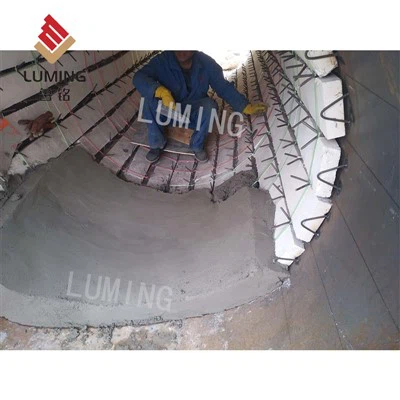
Hey there! As a supplier of roasting kilns, I'm super excited to chat about the various applications of these awesome machines in the chemical industry. Roasting kilns are like unsung heroes in the world of chemistry, playing a crucial role in a ton of different processes. So, let's dive right in and explore where and how they're used.
Metal Ore Processing
One of the most well - known applications of roasting kilns in the chemical industry is in metal ore processing. When we're dealing with metal ores, they often come with all sorts of impurities. Roasting helps to get rid of these impurities and convert the metal in the ore into a more easily extractable form.
For example, when processing sulfide ores, roasting is used to convert metal sulfides into metal oxides. This is a key step because metal oxides are generally easier to reduce to the pure metal. In a roasting kiln, the sulfide ore is heated in the presence of air. The sulfur in the ore reacts with oxygen to form sulfur dioxide gas, which is released, and the metal is left behind as an oxide.
The chemical reaction for roasting copper sulfide ore can be represented as:
2Cu₂S + 3O₂ → 2Cu₂O+ 2SO₂
This reaction is carried out at high temperatures in the roasting kiln, and the conditions can be carefully controlled to ensure maximum efficiency. The resulting metal oxides can then be further processed in other steps, such as smelting, to obtain the pure metal.

Production of Chemicals
Roasting kilns are also used in the production of a wide range of chemicals. One of the classic examples is the production of lime (calcium oxide). Lime is an important chemical used in construction, water treatment, and many other industries.
To produce lime, limestone (calcium carbonate) is heated in a roasting kiln. The high temperature causes the limestone to decompose into lime and carbon dioxide gas. The chemical reaction is as follows:
CaCO₃ → CaO+ CO₂
The roasting kiln provides the necessary heat to drive this endothermic reaction. The quality of the lime produced depends on factors such as the temperature, the residence time in the kiln, and the purity of the limestone.
Another chemical production area where roasting kilns come in handy is the production of titanium dioxide. Titanium dioxide is a widely used white pigment in paints, plastics, and other products. The process involves roasting titanium ore with certain chemicals to convert it into a form that can be further refined into the pure titanium dioxide product.
Cement Industry
In the cement industry, roasting kilns play a vital role. Cement is made by heating a mixture of limestone, clay, and other materials in a kiln. The high - temperature roasting process causes chemical reactions to occur that transform the raw materials into clinker, which is the main component of cement.
During the roasting process in the kiln, the limestone decomposes to form lime, and the clay and other minerals undergo various chemical changes. The resulting clinker is then cooled and ground into cement powder. The efficiency of the roasting kiln directly affects the quality and production rate of the cement. Modern roasting kilns in the cement industry are designed to be highly efficient, using advanced technologies to control the temperature and air flow.
Coke Oven and Refractory Production
When it comes to the production of coke, which is a crucial fuel in the steel - making industry, roasting kilns, specifically coke ovens, are used. Coal is heated in the absence of air in a coke oven to produce coke. The volatile components in the coal are driven off, leaving behind a porous, carbon - rich material called coke.
In the refractory industry, roasting kilns are used to heat refractory materials to high temperatures to improve their physical and chemical properties. Refractory materials are used in lining furnaces and other high - temperature equipment. By roasting these materials, their strength, resistance to thermal shock, and other properties can be enhanced.
Glass Kiln and Glass Production
For glass production, glass kilns are essential. Glass is made by melting a mixture of silica, soda ash, and limestone in a high - temperature kiln. The roasting kiln provides the heat necessary to melt the raw materials and form a homogeneous glass melt.
The temperature and atmosphere in the glass kiln need to be carefully controlled to ensure the quality of the glass. Different types of glass may require different roasting conditions. For example, borosilicate glass, which is known for its high heat resistance, is made under specific temperature and chemical conditions in the roasting kiln.
Lithium Industry Kilns and Lithium - related Production
With the growing demand for lithium - ion batteries, the lithium industry has seen a significant boom. Lithium industry kilns are used in various processes related to lithium production.
One important process is the conversion of lithium ores or brines into lithium compounds. Roasting can be used to convert lithium - containing minerals into a more soluble form, which can then be further processed to extract pure lithium compounds. The roasting conditions, such as temperature and the presence of certain additives, can have a big impact on the efficiency of lithium extraction.
Why Choose Our Roasting Kilns
Now that we've seen the wide range of applications of roasting kilns in the chemical industry, you might be wondering why you should choose our roasting kilns. Well, we've got a few things going for us.
First of all, our roasting kilns are designed with the latest technology. We use advanced materials and engineering techniques to ensure high - temperature resistance, energy efficiency, and long service life. Our kilns can be customized to meet the specific needs of different industries and processes.
Secondly, we offer excellent after - sales service. We have a team of experienced technicians who can provide installation, maintenance, and repair services. We also offer training programs for our customers' staff to ensure they can operate the roasting kilns safely and efficiently.
Finally, our prices are competitive. We understand that cost is an important factor for our customers, and we strive to offer high - quality roasting kilns at reasonable prices.
If you're in the chemical industry and are looking for a reliable roasting kiln supplier, we'd love to talk to you. Whether you're involved in metal ore processing, chemical production, cement manufacturing, or any other related field, we have the perfect roasting kiln solution for you. Don't hesitate to get in touch with us to start a discussion about your requirements and how we can help improve your production processes.
References
- Smeltzer, W. W., & Young, R. A. (1975). Principles of Extractive Metallurgy. John Wiley & Sons.
- Van Oss, C. J., & Gillman, J. (1980). Phenomenological and physical chemistry of cement. Marcel Dekker.
- Lewis, J. A. (2006). The Chemistry of Glassmaking. Royal Society of Chemistry.