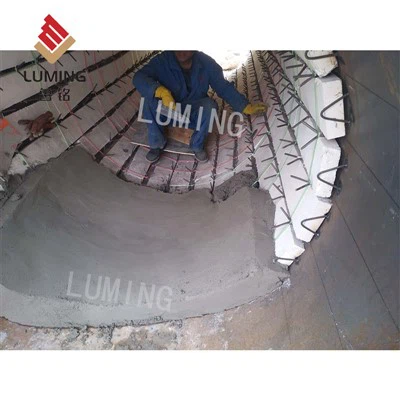
As a corundum brick supplier, I've seen firsthand how the production process can make or break the quality of these essential refractory materials. Corundum bricks are widely used in various industries, from steelmaking to glass manufacturing, thanks to their high melting points, excellent chemical stability, and superior wear resistance. But not all corundum bricks are created equal, and the production process plays a crucial role in determining their final quality.
Let's start with the raw materials. The quality of the raw materials used in corundum brick production is the foundation of everything else. High - purity alumina is the primary ingredient for corundum bricks. Any impurities in the alumina can significantly affect the brick's properties. For example, if there are too many iron or silica impurities, it can lower the melting point of the brick and reduce its chemical resistance. We always source the highest - quality alumina from trusted suppliers to ensure the best starting point for our production.
The next step is the preparation of the raw materials. This involves crushing, grinding, and sieving the alumina to achieve the right particle size distribution. The particle size is super important. If the particles are too large, the brick may have poor density and strength. On the other hand, if they are too small, it can lead to problems during the forming process, like excessive shrinkage. We use state - of - the - art equipment to precisely control the particle size, making sure it meets the specific requirements for different types of corundum bricks, such as Fused Corundum Brick, Chrome - corundum Brick, and Sintered Corundum Brick.
After the raw materials are prepared, it's time for the forming process. There are several methods for forming corundum bricks, including dry pressing, isostatic pressing, and extrusion. Each method has its own advantages and is suitable for different applications.
Dry pressing is a common method. It involves pressing the prepared powder into a mold under high pressure. The pressure applied during dry pressing affects the density and strength of the brick. If the pressure is too low, the brick will be porous and weak. But if it's too high, it can cause cracks in the brick. We carefully calibrate the pressure based on the type of corundum brick we're making to ensure optimal quality.
Isostatic pressing is another option. This method applies pressure evenly from all directions, which can produce bricks with more uniform density and better mechanical properties. It's especially useful for making complex - shaped corundum bricks. However, it's a more expensive process, so we use it mainly for high - end products where the extra cost is justified by the performance requirements.
Extrusion is used when we need to make corundum bricks with a continuous cross - section, like tubes or bars. During extrusion, the mixture is forced through a die to form the desired shape. The speed of extrusion and the consistency of the mixture are critical factors. If the extrusion speed is too fast, the brick may have surface defects. And if the mixture is not well - mixed, it can lead to variations in the brick's properties.
Once the bricks are formed, they go through the firing process. Firing is where the magic happens. It transforms the green bricks into hard, durable corundum bricks. The firing temperature and time are key parameters. Different types of corundum bricks require different firing conditions.
For sintered corundum bricks, the firing temperature is usually in the range of 1600 - 1800 degrees Celsius. At this high temperature, the particles in the brick bond together, forming a strong and dense structure. If the firing temperature is too low, the bonding will be incomplete, and the brick will be weak. If it's too high, it can cause the brick to deform or even melt.
The firing time also matters. A longer firing time allows for more complete bonding, but it also increases the production cost. We use advanced kilns with precise temperature and time control to ensure that each corundum brick is fired under the optimal conditions.
In addition to the basic production steps, there are also some post - production treatments that can improve the quality of corundum bricks. One such treatment is heat treatment. Heat treatment can relieve internal stresses in the brick and improve its thermal shock resistance. We carefully design the heat - treatment process based on the specific requirements of the bricks.
Another post - production treatment is surface coating. A surface coating can provide additional protection against chemical attack and wear. For example, a ceramic coating can enhance the corrosion resistance of the brick in harsh chemical environments.
The quality of corundum bricks is also affected by quality control during the production process. We have a strict quality control system in place. At every stage of production, from raw material inspection to final product testing, we conduct a series of tests. These tests include chemical analysis, physical property testing (such as density, porosity, and strength), and thermal property testing (such as thermal conductivity and thermal expansion). Only the bricks that pass all the tests are allowed to leave our factory.
In conclusion, the production process has a profound impact on the quality of corundum bricks. From the selection of raw materials to the final post - production treatments, every step matters. As a corundum brick supplier, we're committed to using the best production techniques and strict quality control to provide our customers with high - quality corundum bricks.

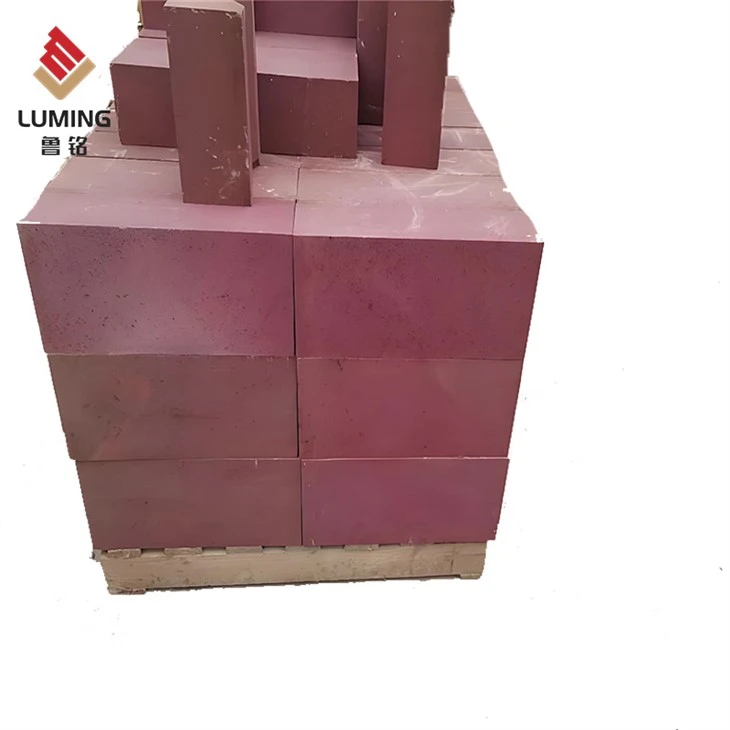
If you're in the market for corundum bricks and want to learn more about our products or discuss your specific requirements, don't hesitate to reach out. We're here to help you find the perfect corundum bricks for your application.
References
- "Refractory Materials: Properties and Applications" - A comprehensive book on refractory materials, including corundum bricks.
- Industry research reports on the production and quality control of corundum bricks.