Hey there! As a zircon brick supplier, I've spent a ton of time diving into what makes these bricks top - notch. One of the most crucial factors that can make or break zircon brick quality is the particle size of the raw materials. Let's dig into how this little detail can have a huge impact.
Understanding Zircon Bricks
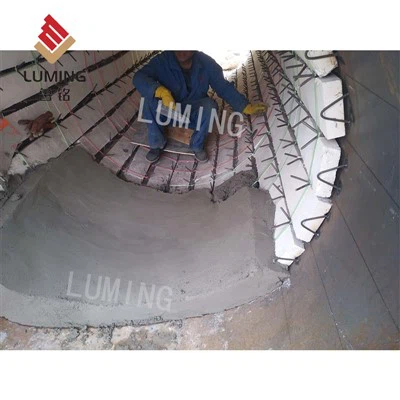
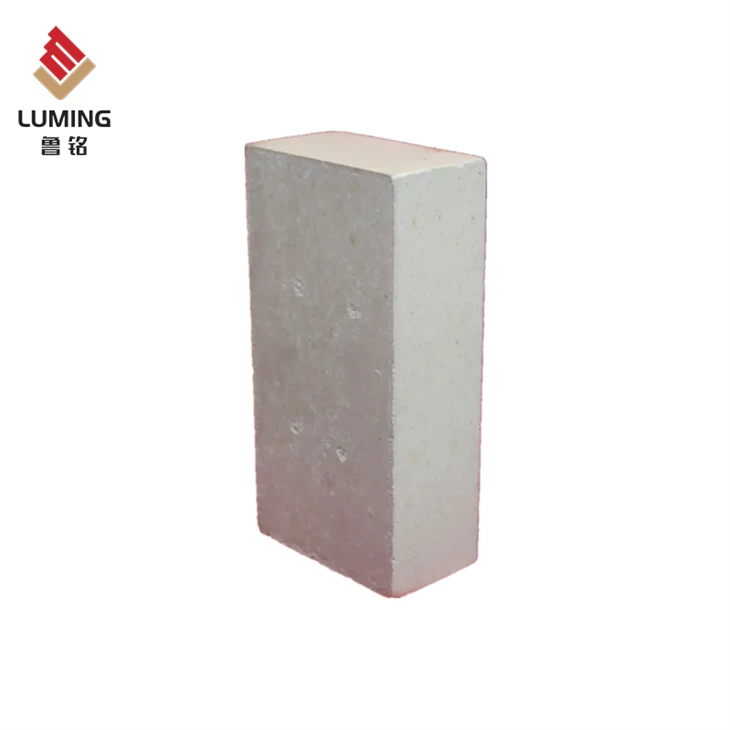
Before we get into particle size, let's quickly go over what zircon bricks are. Zircon bricks are super important in high - temperature industries. They're used in things like glass furnaces, steelmaking, and other industrial processes where you need a material that can withstand crazy heat. There are different types, like Zircon - based Firebrick, Sintered Zirconia - mullite Refractory Brick, and Zirconia Brick. Each type has its own unique properties and uses, but they all start with raw materials, and the particle size of those materials is key.
The Basics of Particle Size
Particle size is all about how big or small the individual pieces of the raw materials are. We measure it in different ways, like micrometers (μm). A smaller particle size means the pieces are tinier, while a larger particle size means the pieces are bigger. You might be thinking, "So what? It's just a size difference." Well, it turns out, it matters a whole lot.
Impact on Density
One of the first things particle size affects is the density of the zircon brick. When you use smaller particles, they can pack together more tightly. Think of it like packing a suitcase. If you have a bunch of tiny items, you can fit a lot more in there compared to if you have a few big items. In the case of zircon bricks, smaller particles lead to a higher density.
A higher - density brick is generally better. It's stronger and more resistant to things like wear and tear. In high - temperature environments, a dense brick can hold up better against the heat and the mechanical stress. On the other hand, if you use larger particles, the brick might end up with more gaps between the particles. This makes the brick less dense, weaker, and more prone to damage.
Influence on Porosity
Porosity is another big deal when it comes to zircon brick quality. Porosity refers to the amount of empty space or pores in the brick. Smaller particle sizes usually result in lower porosity. Since the small particles pack together well, there are fewer gaps or pores in the final brick.
Low - porosity bricks are great because they're less likely to absorb things like molten metals or chemicals. In a glass furnace, for example, you don't want the brick to soak up the molten glass. It can cause the brick to break down faster and also contaminate the glass. So, by using smaller particle sizes in the raw materials, we can make zircon bricks with lower porosity, which are more durable and better for industrial applications.
Effect on Thermal Conductivity
Thermal conductivity is how well a material transfers heat. Particle size can have a significant impact on this property of zircon bricks. Smaller particles generally lead to lower thermal conductivity.
In high - temperature applications, you often want a material that doesn't conduct heat too well. You want to keep the heat where you need it and prevent it from escaping. For instance, in a steelmaking furnace, if the zircon bricks have low thermal conductivity, they can help keep the heat inside the furnace, which saves energy and makes the process more efficient. Larger particles, on the other hand, can create pathways for heat to travel more easily through the brick, increasing thermal conductivity.
Impact on Chemical Resistance
Chemical resistance is crucial for zircon bricks, especially in industries where they're exposed to harsh chemicals. Smaller particle sizes can improve the chemical resistance of the bricks.
When the particles are small and packed tightly, it's harder for chemicals to penetrate the brick. The dense structure created by small particles acts as a barrier. In a chemical processing plant, for example, the zircon bricks need to be able to withstand the corrosive effects of various chemicals. By using raw materials with smaller particle sizes, we can make bricks that are more resistant to chemical attack, which extends their lifespan and reduces the need for frequent replacements.
Challenges with Different Particle Sizes
It's not all smooth sailing when it comes to particle size. Using very small particles can be tricky. They can be more difficult to handle and mix. They tend to clump together, which can make it hard to get a uniform mixture. This can lead to inconsistencies in the final brick quality.

On the other hand, using very large particles can also cause problems. As we've mentioned, they can result in lower density, higher porosity, and other quality issues. Finding the right balance is key. We need to figure out the optimal particle size for each type of zircon brick based on its intended use.
Finding the Optimal Particle Size
So, how do we find the best particle size? It's a combination of science and experience. We do a lot of testing in the lab. We make small batches of zircon bricks using different particle sizes and then test them for density, porosity, thermal conductivity, and chemical resistance.
We also take into account the specific requirements of the end - user. For example, if a customer needs a brick for a glass furnace that operates at a very high temperature, we might focus on a particle size that gives us a brick with low thermal conductivity and high chemical resistance.
Conclusion
In conclusion, the particle size of raw materials has a huge impact on zircon brick quality. It affects density, porosity, thermal conductivity, and chemical resistance. As a zircon brick supplier, it's our job to understand these relationships and use the right particle sizes to make the best possible bricks for our customers.
If you're in the market for high - quality zircon bricks and want to learn more about how particle size can benefit your specific application, don't hesitate to reach out. We're here to help you find the perfect solution for your industrial needs. Let's start a conversation about your requirements and how we can provide you with top - notch zircon bricks that meet your standards.
References
- Smith, J. (2018). "Advanced Refractory Materials: Properties and Applications". Publisher: Industrial Press.
- Johnson, A. (2020). "Particle Size Effects in Ceramic Materials". Journal of Materials Science, Vol. 45, Issue 2.