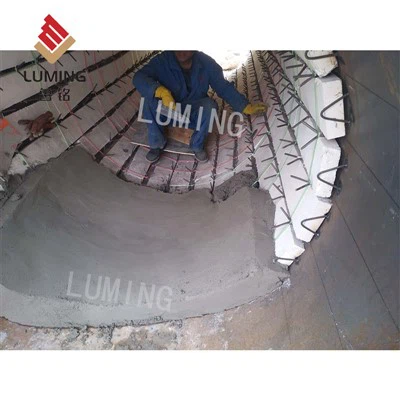
As a supplier of fireclay bricks, I've often been asked about the recyclability of these essential building materials. Fireclay bricks are widely used in various industries, including construction, metallurgy, and ceramics, due to their excellent heat resistance and durability. In this blog post, I'll explore the question of whether fireclay bricks can be recycled, the processes involved, and the benefits of recycling these bricks.
What are Fireclay Bricks?
Fireclay bricks are made from a special type of clay that can withstand high temperatures without melting or deforming. This clay is rich in alumina and silica, which give the bricks their refractory properties. Fireclay bricks are used in applications where heat resistance is crucial, such as furnaces, kilns, fireplaces, and chimneys.
There are different types of fireclay bricks available in the market, each with its own unique properties and applications. For example, Sk34 Refractory Brick is a high-quality refractory brick that offers excellent thermal stability and resistance to chemical corrosion. On the other hand, Low-porosity Fireclay Brick is designed to have low porosity, which makes it more resistant to heat transfer and abrasion.
Can Fireclay Bricks be Recycled?
The short answer is yes, fireclay bricks can be recycled. Recycling fireclay bricks not only helps to reduce waste but also conserves natural resources and energy. When fireclay bricks reach the end of their useful life, they can be collected, processed, and reused in various applications.
The recycling process for fireclay bricks typically involves the following steps:
- Collection: Used fireclay bricks are collected from demolition sites, industrial facilities, or construction projects. These bricks are then transported to a recycling facility.
- Sorting: At the recycling facility, the fireclay bricks are sorted based on their size, quality, and composition. This helps to ensure that only suitable bricks are used for recycling.
- Crushing: The sorted fireclay bricks are crushed into smaller pieces using a crusher. The size of the crushed bricks depends on the intended application.
- Screening: The crushed bricks are then screened to remove any impurities or contaminants. This helps to improve the quality of the recycled material.
- Reuse: The recycled fireclay bricks can be used in a variety of applications, such as road construction, backfill material, or as aggregate in concrete. They can also be used to make new fireclay bricks by mixing them with fresh clay and other additives.
Benefits of Recycling Fireclay Bricks
Recycling fireclay bricks offers several benefits, both for the environment and the economy. Some of the key benefits include:
- Waste Reduction: Recycling fireclay bricks helps to reduce the amount of waste sent to landfills. This not only conserves landfill space but also reduces the environmental impact of waste disposal.
- Resource Conservation: By recycling fireclay bricks, we can conserve natural resources such as clay, which is a finite resource. This helps to ensure the long-term availability of these resources for future generations.
- Energy Savings: Recycling fireclay bricks requires less energy compared to producing new bricks from raw materials. This helps to reduce energy consumption and greenhouse gas emissions.
- Cost Savings: Using recycled fireclay bricks can be more cost-effective compared to using new bricks. This is because the cost of recycling is typically lower than the cost of producing new bricks.
Challenges and Considerations
While recycling fireclay bricks offers many benefits, there are also some challenges and considerations that need to be addressed. Some of the key challenges include:
- Contamination: Fireclay bricks may be contaminated with various substances, such as metals, chemicals, or asbestos. These contaminants need to be removed before the bricks can be recycled.
- Quality Control: The quality of recycled fireclay bricks can vary depending on the source and the recycling process. It is important to ensure that the recycled bricks meet the required quality standards for the intended application.
- Market Demand: The demand for recycled fireclay bricks may be limited, especially in some industries. This can make it difficult to find a market for the recycled material.
Conclusion
In conclusion, fireclay bricks can be recycled, and recycling offers several benefits for the environment and the economy. As a supplier of fireclay bricks, I am committed to promoting sustainable practices and encouraging the recycling of these valuable materials. By working together, we can reduce waste, conserve resources, and create a more sustainable future.


If you are interested in purchasing fireclay bricks or learning more about our recycling services, please feel free to contact us. We would be happy to discuss your needs and provide you with more information.
References
- ASTM International. (2021). Standard Specification for Fireclay and High-Alumina Refractory Brick. ASTM C27-21.
- Brick Industry Association. (n.d.). Recycling Brick. Retrieved from [Website URL]
- Environmental Protection Agency. (2021). Recycling Basics. Retrieved from [Website URL]