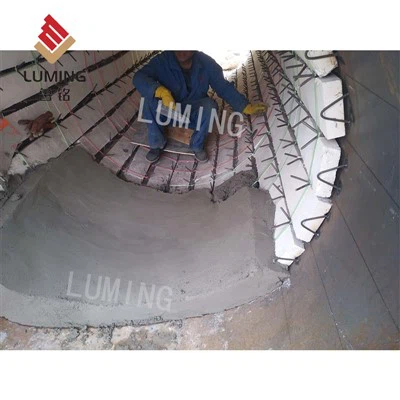
Hey there! As a supplier of Ferronickel Kilns, I've been in the industry for quite a while, and one question that often pops up is about the effect of furnace shape on the performance of a Ferronickel Kiln. So, let's dig into this topic and break it down.
First off, we need to understand what a Ferronickel Kiln is. It's a specialized furnace used in the production of ferronickel, an alloy of iron and nickel. This alloy is super important in the stainless - steel industry. The performance of a Ferronickel Kiln can be measured in several ways, like energy efficiency, production capacity, and product quality. And believe it or not, the shape of the furnace plays a huge role in all these aspects.
Let's start with the most common furnace shapes: cylindrical and rectangular. Cylindrical furnaces are widely used in the industry. One of the main advantages of a cylindrical shape is its uniform heat distribution. Heat tends to spread evenly in a circular space, which means that the raw materials inside the kiln are heated more uniformly. This is crucial for the chemical reactions that take place during the ferronickel production process. When the heat is evenly distributed, the reactions are more likely to occur at the right temperature and rate, resulting in a higher - quality product.
For example, in a cylindrical Ferronickel Kiln, the nickel and iron ores can be heated to the optimal temperature throughout the entire volume of the furnace. This leads to a more complete reduction of the ores, which means more nickel and iron are extracted from the raw materials. As a result, the production yield is increased, and the quality of the final ferronickel product is improved.
Another benefit of the cylindrical shape is its structural strength. A cylinder can withstand high internal pressures better than a rectangular shape. In a Ferronickel Kiln, there are often high - temperature and high - pressure conditions during the production process. The strong structure of a cylindrical furnace ensures its safety and longevity. It reduces the risk of cracks or leaks, which could not only disrupt the production process but also pose a safety hazard.
On the other hand, rectangular furnaces also have their own advantages. One of the key benefits is the ease of installation and maintenance. Rectangular furnaces are generally easier to build and install in a factory setting. They can be more easily integrated into existing production lines, especially if the factory has limited space or specific layout requirements.
In terms of heat transfer, rectangular furnaces can be designed to have a larger surface area for heat exchange. This can be beneficial in some cases, as it allows for more efficient heat transfer between the heating elements and the raw materials. However, the heat distribution in a rectangular furnace is often less uniform compared to a cylindrical one. There may be hot spots and cold spots inside the furnace, which can affect the quality of the final product.


For instance, if there are cold spots in a rectangular Ferronickel Kiln, the chemical reactions in those areas may not occur properly. This can lead to incomplete reduction of the ores and lower - quality ferronickel. To address this issue, additional heating elements or mixing devices may be required, which can increase the cost and complexity of the furnace.
Now, let's talk about some other factors related to furnace shape that can affect the performance of a Ferronickel Kiln. The aspect ratio of the furnace, which is the ratio of its length to its diameter (for cylindrical furnaces) or its length to its width (for rectangular furnaces), also plays an important role.
A long and narrow cylindrical furnace may have better heat transfer characteristics in the axial direction. This can be useful for processes that require a long residence time for the raw materials inside the kiln. However, it may also be more difficult to achieve uniform heat distribution in the radial direction. On the other hand, a short and wide cylindrical furnace may have better radial heat distribution but may not be suitable for processes that need a long reaction time.
For rectangular furnaces, the aspect ratio can affect the flow pattern of the gases and the raw materials inside the furnace. A furnace with a large length - to - width ratio may have a more laminar flow, which can be beneficial for some processes. But it may also lead to more uneven heat distribution if not properly designed.
In addition to the basic cylindrical and rectangular shapes, there are also some specialized furnace shapes that are designed for specific applications. For example, some Ferronickel Kilns may have a conical shape at the bottom. This conical shape can help in the collection and discharge of the molten ferronickel. It allows the molten metal to flow more easily towards the outlet, reducing the risk of blockages and improving the efficiency of the production process.
As a Ferronickel Kiln supplier, we offer a variety of furnace shapes to meet the different needs of our customers. Whether you need a cylindrical furnace for its uniform heat distribution and structural strength or a rectangular furnace for its ease of installation and maintenance, we've got you covered.
If you're in the market for a Ferronickel Kiln, it's important to consider your specific production requirements, such as the production capacity, the quality of the final product, and the available space in your factory. We can work with you to design and build the perfect furnace shape for your needs.
By the way, we also supply other types of kilns, such as Alumina Calcination Kiln, Vanadium - titanium Kiln, and Hazardous Waste Incineration Kiln. These kilns are also designed with different shapes to optimize their performance for their respective applications.
In conclusion, the shape of a Ferronickel Kiln has a significant impact on its performance. Different shapes offer different advantages and disadvantages in terms of heat distribution, structural strength, installation, and maintenance. As a supplier, we understand the importance of choosing the right furnace shape for your specific needs. If you're interested in learning more about our Ferronickel Kilns or other kiln products, don't hesitate to contact us for a detailed discussion. We're here to help you make the best decision for your business.
References
- Smith, J. (2018). Furnace Design and Operation. Industrial Furnace Handbook.
- Johnson, A. (2019). The Impact of Furnace Geometry on Metal Production Processes. Journal of Metallurgical Engineering.