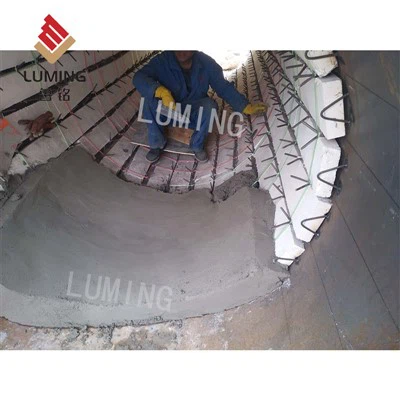
Silica bricks are widely used in various high - temperature industrial applications due to their excellent thermal properties. As a silica brick supplier, understanding the wear rate of silica brick is crucial for both us and our customers. In this blog, we will delve into what the wear rate of silica brick is, the factors influencing it, and its implications for industrial use.
What is the Wear Rate of Silica Brick?
The wear rate of silica brick refers to the rate at which the brick material is gradually removed or deteriorated under specific operating conditions. It is usually expressed as the amount of material loss per unit of time, area, or volume. For example, it can be measured in grams per hour, millimeters per year, or cubic centimeters per cycle of operation.
The wear of silica bricks can occur in different forms, including abrasion, corrosion, and thermal spalling. Abrasion is the mechanical wear caused by the friction between the silica brick and other solid particles, such as in a cement kiln where raw materials are constantly moving and rubbing against the bricks. Corrosion, on the other hand, is the chemical attack on the silica brick by molten metals, slags, or gases at high temperatures. Thermal spalling is the cracking and flaking of the brick surface due to rapid temperature changes.
Factors Affecting the Wear Rate of Silica Brick
Chemical Composition
The chemical composition of silica bricks plays a vital role in determining their wear rate. High - purity silica bricks with a silica (SiO₂) content of over 93% generally have better resistance to corrosion and thermal stress. Impurities such as alumina (Al₂O₃), iron oxide (Fe₂O₃), and alkalis can lower the melting point of the brick and increase its susceptibility to chemical attack. For instance, alkalis can react with silica at high temperatures to form low - melting - point compounds, which can accelerate the corrosion process.
Physical Properties
Physical properties like density, porosity, and strength also influence the wear rate. Dense silica bricks with low porosity are more resistant to abrasion and penetration by molten materials. A lower porosity means there are fewer pathways for corrosive substances to enter the brick, reducing the likelihood of internal damage. High - strength silica bricks can better withstand mechanical stress during operation, thus reducing the risk of abrasion.
Operating Temperature
The operating temperature is a critical factor. Silica bricks have a relatively high melting point, but at extremely high temperatures close to their melting range (around 1710°C), their structure can become unstable. Prolonged exposure to high temperatures can cause the recrystallization of silica, leading to changes in the brick's physical properties and increasing its wear rate. Moreover, rapid temperature fluctuations can induce thermal stresses within the brick, resulting in thermal spalling.
Contact with Corrosive Substances
The nature and concentration of corrosive substances in contact with the silica brick significantly affect its wear rate. In industries such as steelmaking and non - ferrous metal smelting, molten metals and slags can react with the silica in the bricks. For example, in a copper smelting furnace, the copper matte can contain sulfur and other elements that can corrode the silica bricks. The higher the concentration of these corrosive substances and the longer the contact time, the faster the wear rate.
Measuring the Wear Rate of Silica Brick
There are several methods to measure the wear rate of silica bricks. One common method is the laboratory test, where samples of silica bricks are exposed to simulated operating conditions. For example, in an abrasion test, a rotating drum with abrasive particles is used to rub against the brick sample, and the weight loss of the sample over a certain period is measured.
In - situ monitoring in industrial furnaces is also an important way. This can be done through regular inspections, ultrasonic testing, or thermal imaging. Ultrasonic testing can detect internal cracks and damage in the bricks, while thermal imaging can identify areas of abnormal heat distribution, which may indicate potential wear problems.
Implications for Industrial Use
Understanding the wear rate of silica bricks is essential for industrial users. It helps in predicting the service life of the bricks, planning maintenance schedules, and optimizing the operation of furnaces and kilns. For example, if the wear rate of silica bricks in a glass furnace is known, the plant managers can estimate when the bricks need to be replaced, avoiding unexpected shutdowns due to brick failure.
As a silica brick supplier, we offer a variety of silica bricks to meet different industrial needs. Our Sintered Silicon Bricks are known for their high density and excellent abrasion resistance, suitable for applications where mechanical wear is a major concern. Our Silica Refractory Brick has a high silica content, providing good resistance to high - temperature corrosion. And our Silica Mullite Brick combines the advantages of silica and mullite, offering improved thermal shock resistance.
Contact for Procurement and洽谈
If you are in need of high - quality silica bricks and want to discuss the wear rate and other technical details, we are here to help. Our team of experts can provide you with detailed information about our products, including their wear - resistant properties, and assist you in selecting the most suitable silica bricks for your specific industrial applications. Whether you are in the steel, glass, cement, or other high - temperature industries, we can offer customized solutions to meet your requirements.


References
- "Refractories Handbook" by R. N. Mohanty
- "High - Temperature Materials and Technology" by J. F. Shackelford
- Research papers on silica brick wear mechanisms published in international journals of materials science and engineering.