As a supplier of high alumina bricks, I often encounter inquiries about the thermal shock resistance of these products. Thermal shock resistance is a crucial property, especially in industries where high - temperature applications are common. In this blog, I'll delve into what thermal shock resistance means for high alumina bricks, its importance, factors affecting it, and how we ensure the quality of our products in this regard.
Understanding Thermal Shock Resistance
Thermal shock resistance refers to a material's ability to withstand sudden and extreme changes in temperature without cracking, spalling, or significant damage. In the case of high alumina bricks, they are frequently used in environments where they are exposed to rapid heating and cooling cycles. For example, in industrial furnaces, the temperature can rise from room temperature to several hundred or even thousands of degrees Celsius in a short period and then cool down just as quickly during maintenance or shutdowns.
When a high alumina brick is heated rapidly, the outer surface expands faster than the inner part. This creates internal stresses within the brick. If these stresses exceed the material's strength, cracks will form. Similarly, during rapid cooling, the outer surface contracts more rapidly than the interior, again leading to the development of stresses that can cause damage. A high - quality high alumina brick with good thermal shock resistance can endure these cycles without significant structural degradation.
Importance of Thermal Shock Resistance in High Alumina Bricks
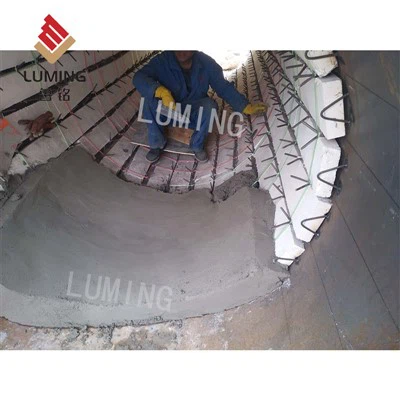
The importance of thermal shock resistance in high alumina bricks cannot be overstated. In industries such as steelmaking, cement production, and glass manufacturing, furnaces and kilns operate under extreme temperature conditions. High alumina bricks are used to line these furnaces, protecting the structural integrity of the equipment and ensuring efficient heat transfer.
If the bricks have poor thermal shock resistance, they will crack and spall over time. This not only reduces the lifespan of the lining but also poses safety risks. Cracked bricks can allow hot gases and molten materials to escape, potentially causing damage to the surrounding equipment and endangering the operators. Moreover, the need for frequent replacement of damaged bricks increases maintenance costs and downtime, which can have a significant impact on the overall productivity and profitability of the business.
Factors Affecting the Thermal Shock Resistance of High Alumina Bricks
Chemical Composition
The chemical composition of high alumina bricks plays a vital role in determining their thermal shock resistance. High alumina bricks typically contain a high percentage of alumina (Al₂O₃), which provides excellent refractory properties. However, the presence of other oxides such as silica (SiO₂), iron oxide (Fe₂O₃), and titanium dioxide (TiO₂) can also influence the thermal shock behavior.
A proper balance of these components is necessary. For instance, a small amount of silica can form a glassy phase at high temperatures, which can help to relieve internal stresses and improve thermal shock resistance. On the other hand, excessive amounts of iron oxide can lead to the formation of low - melting - point phases, which can reduce the strength and thermal shock resistance of the brick.
Microstructure
The microstructure of high alumina bricks, including the grain size, pore structure, and the distribution of phases, also affects their thermal shock resistance. Bricks with a fine - grained microstructure generally have better thermal shock resistance than those with a coarse - grained structure. Fine grains can more effectively distribute the internal stresses generated during thermal cycling.
The pore structure is another important factor. A well - controlled pore size and distribution can act as stress - relieving sites. Closed pores can prevent the penetration of molten materials and hot gases, while open pores can allow for the expansion and contraction of the material without causing excessive stress buildup.
Manufacturing Process
The manufacturing process of high alumina bricks has a significant impact on their thermal shock resistance. Proper raw material selection, mixing, forming, and firing are all crucial steps. During the forming process, the density and uniformity of the brick need to be carefully controlled. A uniform density ensures that the thermal expansion and contraction are consistent throughout the brick, reducing the likelihood of stress concentration.
The firing process is also critical. The firing temperature and time need to be optimized to achieve the desired phase transformation and densification. Over - firing or under - firing can result in a brick with poor mechanical properties and thermal shock resistance.
Our Approach to Ensuring Thermal Shock Resistance in High Alumina Bricks
As a supplier of high alumina bricks, we take several measures to ensure the excellent thermal shock resistance of our products.
Quality Raw Materials
We source high - quality raw materials from reliable suppliers. Our raw materials are carefully analyzed to ensure that they meet our strict chemical and physical specifications. We focus on obtaining raw materials with the right balance of alumina and other oxides to optimize the thermal shock resistance of the final product.


Advanced Manufacturing Techniques
We use advanced manufacturing techniques to produce high alumina bricks. Our state - of - the - art production facilities are equipped with modern equipment that allows for precise control of the manufacturing process. From raw material mixing to brick forming and firing, every step is monitored and adjusted to ensure the highest quality.
Rigorous Testing
Before our high alumina bricks are shipped to customers, they undergo rigorous testing. We use a variety of testing methods, including thermal shock testing, to evaluate the performance of our bricks under simulated real - world conditions. Only bricks that meet or exceed our quality standards are released for sale.
Our Product Range
We offer a wide range of high alumina bricks to meet the diverse needs of our customers. Our High Alumina Refractory Brick is suitable for a variety of high - temperature applications. It has excellent thermal shock resistance, high refractoriness, and good mechanical strength.
Our Sk40 Refractory Brick is another popular product. It is designed for use in demanding industrial environments where high thermal shock resistance is required. With its superior performance, it can withstand the most extreme temperature cycles.
In addition, our Refractory High Alumina Brick is known for its excellent insulation properties and thermal shock resistance. It is an ideal choice for lining furnaces and kilns in industries such as steel, cement, and glass.
Contact Us for Procurement
If you are in the market for high - quality high alumina bricks with excellent thermal shock resistance, we invite you to contact us for procurement. Our team of experts is ready to assist you in selecting the right product for your specific application. We can provide detailed product information, technical support, and competitive pricing. Whether you need a small quantity for a pilot project or a large order for a major industrial installation, we have the capacity and expertise to meet your requirements.
References
- "Refractories Handbook" by J. A. Salem
- "High - Temperature Materials and Technology" by P. K. Rohatgi
- Research papers on high alumina bricks' thermal shock resistance from industry - related academic journals.