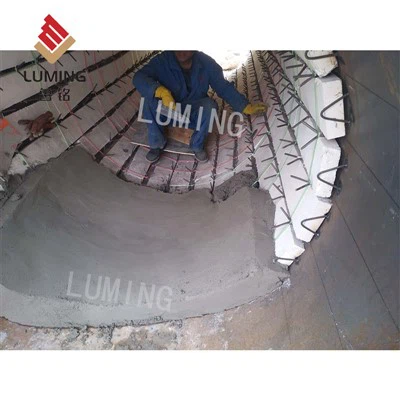
Silica bricks are widely used in various industrial applications, especially in high - temperature environments such as glass furnaces, coke ovens, and steelmaking ladles. As a silica brick supplier, I have witnessed firsthand the importance of understanding the effects of impurities on these bricks. In this blog, I will delve into the impact of impurities on silica bricks, which can help customers make more informed decisions when purchasing and using them.
Physical and Chemical Properties of Silica Bricks
Before discussing the effects of impurities, it's essential to understand the basic physical and chemical properties of silica bricks. Silica bricks are mainly composed of silica (SiO₂), typically with a content of over 93%. They have high refractoriness, usually above 1690°C, and good thermal shock resistance. Their low thermal expansion coefficient makes them suitable for applications where temperature fluctuations are common.
The crystal structure of silica in silica bricks can exist in different forms, such as quartz, tridymite, and cristobalite. During the firing process, quartz gradually transforms into tridymite and cristobalite, which affects the physical properties of the bricks.
Types of Impurities in Silica Bricks
Impurities in silica bricks can come from various sources, including the raw materials used in production, the manufacturing process, and the environment during storage and use. Common impurities include alumina (Al₂O₃), iron oxide (Fe₂O₃), calcium oxide (CaO), magnesium oxide (MgO), and alkali oxides (such as Na₂O and K₂O).
Effects of Impurities on Refractoriness
Refractoriness is one of the most important properties of silica bricks. Impurities can significantly affect the refractoriness of silica bricks. For example, iron oxide (Fe₂O₃) is a common impurity. When present in silica bricks, it can form low - melting - point compounds with silica. At high temperatures, these low - melting - point compounds can cause the bricks to soften and deform earlier than pure silica bricks.
Alumina (Al₂O₃) can also have a negative impact on refractoriness. Although alumina itself has a high melting point, when combined with silica in silica bricks, it can form mullite at high temperatures. The formation of mullite can change the crystal structure of the brick and reduce its refractoriness. On the other hand, a small amount of alumina can sometimes improve the mechanical strength of the brick, but this needs to be carefully balanced.
Impact on Thermal Expansion
The thermal expansion behavior of silica bricks is crucial for their performance in applications with temperature changes. Impurities can alter the thermal expansion coefficient of silica bricks. Alkali oxides (Na₂O and K₂O) are known to increase the thermal expansion of silica bricks. When the temperature rises, the presence of alkali oxides can cause the silica lattice to expand more rapidly, which may lead to cracking and spalling of the bricks.
Calcium oxide (CaO) and magnesium oxide (MgO) can also affect thermal expansion. In some cases, they can form solid solutions with silica, which may either increase or decrease the thermal expansion coefficient depending on the concentration and the specific chemical reactions occurring.
Influence on Chemical Resistance
Silica bricks are often exposed to various chemical substances in industrial environments. Impurities can affect the chemical resistance of these bricks. For instance, iron oxide can make the brick more susceptible to corrosion by acidic substances. In a glass - making furnace, where acidic gases are present, silica bricks with a high iron oxide content may corrode more quickly.
Alkali - containing impurities can react with silica in the brick under high - temperature conditions, leading to the formation of alkali - silica compounds. These compounds can cause the brick to expand and crack, reducing its service life in environments with high alkali concentrations, such as some types of cement kilns.
Effects on Mechanical Strength
Mechanical strength is another critical property of silica bricks. Impurities can have both positive and negative effects on mechanical strength. A small amount of alumina can enhance the mechanical strength of silica bricks by forming a more stable crystal structure. However, excessive impurities can weaken the brick. For example, if there are large amounts of low - melting - point impurities, they can cause the brick to lose its structural integrity at high temperatures, resulting in a decrease in mechanical strength.
Quality Control and Impurity Management
As a silica brick supplier, we pay great attention to quality control and impurity management. We carefully select raw materials to minimize the content of harmful impurities. During the manufacturing process, we use advanced techniques to ensure the uniform distribution of components and reduce the formation of impurities.
We also conduct strict quality inspections on the finished products. By using modern analytical methods such as X - ray diffraction (XRD) and scanning electron microscopy (SEM), we can accurately determine the content and distribution of impurities in the bricks. This allows us to provide high - quality silica bricks that meet the specific requirements of our customers.


Product Recommendations
We offer a wide range of silica bricks to meet different industrial needs. Our Sintered Silicon Bricks are known for their high refractoriness and good thermal shock resistance. They are suitable for applications in glass furnaces and other high - temperature environments.
Our Silica Mullite Brick combines the advantages of silica and mullite, providing excellent mechanical strength and chemical resistance. It is a great choice for applications where both high - temperature performance and chemical stability are required.
If you need general - purpose silica bricks with good overall performance, our Silica Refractory Brick is an ideal option. It has been widely used in various industries and has received positive feedback from our customers.
Conclusion
In conclusion, impurities can have a significant impact on the properties of silica bricks, including refractoriness, thermal expansion, chemical resistance, and mechanical strength. As a silica brick supplier, we understand the importance of managing impurities to ensure the high quality of our products. By carefully controlling the raw materials and the manufacturing process, we can produce silica bricks that meet the diverse needs of our customers.
If you are interested in our silica bricks or have any questions about their performance and application, please feel free to contact us for procurement and negotiation. We are committed to providing you with the best products and services.
References
- Schneider, H., & Somers, J. (2008). Refractories Handbook. Wiley - VCH Verlag GmbH & Co. KGaA.
- Reed, J. S. (1995). Principles of Ceramic Processing. John Wiley & Sons.
- Kingery, W. D., Bowen, H. K., & Uhlmann, D. R. (1976). Introduction to Ceramics. John Wiley & Sons.