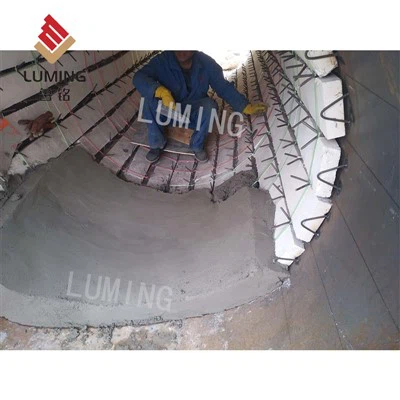
Refractory mortar is a specialized type of mortar designed to withstand high temperatures, making it an essential material in industries where extreme heat is a constant factor. As a leading supplier of refractory mortar, I have witnessed firsthand the numerous advantages that this remarkable material offers. In this blog post, I will delve into the key benefits of using refractory mortar and explain why it is the preferred choice for many high-temperature applications.
High Temperature Resistance
One of the most significant advantages of refractory mortar is its exceptional high-temperature resistance. Unlike traditional mortars, which can deteriorate or even melt under extreme heat, refractory mortar is engineered to maintain its structural integrity at temperatures ranging from 1,000°C to 1,800°C (1,832°F to 3,272°F). This makes it ideal for use in furnaces, kilns, fireplaces, and other high-temperature environments where ordinary mortars would fail.
For example, in a steelmaking furnace, the temperature can reach up to 1,600°C (2,912°F). Refractory mortar is used to line the furnace walls and joints, providing a protective barrier that prevents heat loss and ensures the efficient operation of the furnace. Without refractory mortar, the furnace would lose heat rapidly, leading to increased energy consumption and reduced productivity.
Excellent Thermal Insulation
In addition to its high-temperature resistance, refractory mortar also offers excellent thermal insulation properties. It acts as a barrier that reduces heat transfer, helping to maintain a consistent temperature within the high-temperature environment. This not only improves energy efficiency but also protects the surrounding structures and equipment from the damaging effects of heat.
For instance, in a ceramic kiln, refractory mortar is used to line the kiln chamber. The mortar's thermal insulation properties help to keep the heat inside the kiln, allowing the ceramics to be fired evenly and efficiently. This results in higher-quality products and reduced energy costs.
Chemical Resistance
Refractory mortar is also highly resistant to chemical corrosion, making it suitable for use in environments where it may come into contact with aggressive chemicals. It can withstand the effects of acids, alkalis, and other corrosive substances, ensuring the long-term durability of the structure.
In a chemical processing plant, for example, refractory mortar is used to line the reaction vessels and pipes. The mortar's chemical resistance protects the equipment from corrosion, preventing leaks and ensuring the safe and efficient operation of the plant.
Good Adhesion and Bonding
Another advantage of refractory mortar is its excellent adhesion and bonding properties. It can form a strong bond with various refractory materials, such as bricks, tiles, and castables, creating a seamless and durable structure. This helps to prevent the entry of heat, gases, and liquids, ensuring the integrity of the high-temperature installation.


When installing refractory bricks in a furnace, for example, refractory mortar is used to bond the bricks together. The mortar's strong adhesion ensures that the bricks remain in place, even under the extreme conditions of the furnace. This results in a more stable and reliable furnace structure.
Versatility
Refractory mortar is available in a variety of types and formulations, each designed to meet specific application requirements. Some of the common types of refractory mortar include Silica Refractory Mud, Fireclay Refractory Mortar, and High-alumina Refractory Mud.
Silica refractory mud is suitable for use in applications where high silica content is required, such as in glass melting furnaces. Fireclay refractory mortar is commonly used in general-purpose high-temperature applications, such as in fireplaces and small kilns. High-alumina refractory mud is ideal for applications where high strength and resistance to abrasion are needed, such as in steelmaking furnaces.
This versatility allows users to choose the most appropriate refractory mortar for their specific needs, ensuring optimal performance and longevity of the high-temperature installation.
Ease of Installation
Refractory mortar is relatively easy to install, even for those with limited experience in refractory work. It can be applied using standard masonry tools, such as trowels and brushes, and does not require specialized equipment or techniques.
Before installing refractory mortar, it is important to prepare the surface properly to ensure good adhesion. The surface should be clean, dry, and free of any loose debris or contaminants. Once the surface is prepared, the refractory mortar can be mixed according to the manufacturer's instructions and applied to the joints or surfaces as required.
The ease of installation of refractory mortar reduces the time and cost associated with high-temperature installations, making it a cost-effective solution for many industries.
Long Service Life
Due to its high-temperature resistance, chemical resistance, and excellent adhesion, refractory mortar has a long service life. It can withstand the harsh conditions of high-temperature environments for extended periods without deteriorating or losing its effectiveness.
This long service life reduces the need for frequent repairs and replacements, resulting in significant cost savings over the life of the high-temperature installation. In addition, it minimizes downtime and disruption to operations, ensuring the continuous and efficient operation of the facility.
Environmental Friendliness
Many modern refractory mortars are formulated to be environmentally friendly, using natural and sustainable materials. They are free from harmful substances, such as asbestos, and do not release toxic fumes or pollutants during use.
This makes refractory mortar a sustainable choice for high-temperature applications, helping to reduce the environmental impact of industrial processes. It also ensures the safety and well-being of workers and the surrounding community.
Conclusion
In conclusion, the advantages of using refractory mortar are numerous and significant. Its high-temperature resistance, excellent thermal insulation, chemical resistance, good adhesion, versatility, ease of installation, long service life, and environmental friendliness make it the ideal choice for a wide range of high-temperature applications.
As a supplier of refractory mortar, I am committed to providing high-quality products that meet the specific needs of our customers. Whether you are in the steel, ceramic, glass, or chemical industry, or any other industry that requires high-temperature solutions, we have the right refractory mortar for you.
If you are interested in learning more about our refractory mortar products or would like to discuss your specific requirements, please do not hesitate to contact us. Our team of experts will be happy to assist you and provide you with the best possible solutions for your high-temperature applications. Let's work together to ensure the success and efficiency of your operations.
References
- ASTM International. (2023). Standard Terminology Relating to Refractory Materials. ASTM C71-23.
- Norton, F. H. (1968). Refractories. Addison-Wesley Publishing Company.
- Reed, J. S. (1995). Principles of Ceramic Processing. John Wiley & Sons.