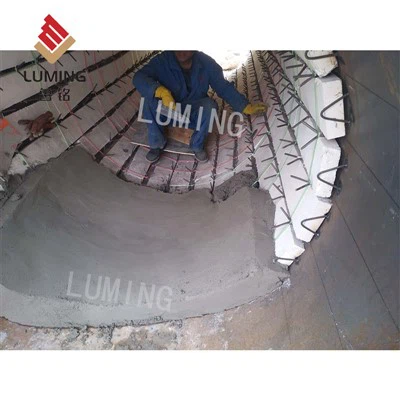
Hey there! If you're in the ferronickel manufacturing game, you know that pre - treating raw materials for a Ferronickel Kiln is a crucial step. As a Ferronickel Kiln supplier, I've seen firsthand how the right pre - treatment can significantly boost efficiency and product quality. So, let's dive into the nitty - gritty of how to pre - treat those raw materials.
Understanding Raw Materials for Ferronickel Production
First things first, we need to know what we're working with. The primary raw materials for ferronickel production are nickel laterite ores. These ores come in different types, like limonite and saprolite, each with its own unique chemical and physical properties. Limonite ores usually have a higher iron content and lower nickel content compared to saprolite ores.
The moisture content in these ores is also a big deal. Freshly mined ores can have a relatively high moisture level, sometimes up to 30%. High moisture not only adds to the weight during transportation but also consumes extra energy during the smelting process. So, right off the bat, we need to address this moisture issue.
Drying the Raw Materials
One of the initial steps in pre - treating nickel laterite ores is drying. Drying reduces the moisture content of the ore, making it easier to handle and reducing the energy required in the kiln.
There are several ways to dry the raw materials. One common method is to use a rotary dryer. The ore is fed into the dryer, and hot gases are passed through it. The heat from the gases evaporates the moisture in the ore. The temperature and residence time in the dryer need to be carefully controlled. If the temperature is too high, it can cause some of the valuable minerals in the ore to decompose. On the other hand, if the temperature is too low or the residence time is too short, the ore won't be dried effectively.
Another option for drying is using a fluidized - bed dryer. In a fluidized - bed dryer, the ore particles are suspended in a stream of hot air. This method provides excellent heat transfer and can dry the ore quickly. The choice between a rotary dryer and a fluidized - bed dryer depends on factors such as the volume of ore to be dried, the initial moisture content, and the available budget.
Size Reduction
Once the ore is dry, it often needs to be reduced in size. This is because smaller particles have a larger surface area, which improves the reaction rate during roasting and smelting in the Ferronickel Kiln.
Crushers are commonly used for the initial size reduction. Jaw crushers, cone crushers, and impact crushers are some of the popular types. Jaw crushers are great for primary crushing, where large chunks of ore are broken down into smaller pieces. Cone crushers can then be used for secondary or tertiary crushing to further reduce the size. Impact crushers work by striking the ore with high - speed hammers, which can break the ore into even finer particles.
After crushing, the ore may go through a grinding process. Ball mills are often used for grinding. In a ball mill, the ore is placed in a rotating cylinder along with steel balls. As the cylinder rotates, the balls collide with the ore particles, grinding them into a fine powder. The fineness of the ground ore can be controlled by adjusting the grinding time and the size of the steel balls.
Roasting the Ores
Roasting is a critical pre - treatment step. It involves heating the ore in the presence of air or other gases to change its chemical composition. Roasting can remove some of the volatile components in the ore, such as sulfur and carbon dioxide, and also oxidize or reduce certain minerals.
There are different types of roasting processes, like oxidative roasting and reductive roasting. Oxidative roasting is used to convert sulfide minerals in the ore to oxides. This is important because oxides are generally easier to smelt. Reductive roasting, on the other hand, is used to reduce certain metal oxides to their metallic forms or to a more reactive state.
For roasting, a Roasting Kiln is often used. The roasting kiln provides a controlled environment where the temperature, gas flow, and residence time can be adjusted according to the requirements of the ore. The roasting temperature can range from a few hundred degrees Celsius to over a thousand degrees Celsius, depending on the type of ore and the roasting process.


Pelletizing
Pelletizing is another important pre - treatment step. It involves agglomerating the fine - grained ore particles into pellets. Pelletizing has several benefits. First, it improves the handling and transportation of the ore. Pellets are more stable and less likely to generate dust compared to fine powders. Second, pellets have a more uniform size and shape, which can improve the gas - solid contact in the Ferronickel Kiln, leading to better reaction efficiency.
To make pellets, the ground ore is mixed with a binder, such as bentonite. The mixture is then fed into a pelletizing machine, like a Pelletizing Rotary Kiln. In the pelletizing rotary kiln, the mixture is rotated and shaped into spherical pellets. The pellets are then dried and hardened to make them strong enough for further processing.
Adding Fluxes
Fluxes are substances added to the raw materials to lower the melting point of the ore and to remove impurities. Lime is a commonly used flux in ferronickel production. Lime can react with silica and other acidic impurities in the ore to form a slag, which can be easily separated from the molten ferronickel.
A Lime Kiln is used to produce lime from limestone. The limestone is heated in the lime kiln to a high temperature, which causes it to decompose into lime and carbon dioxide. The produced lime is then added to the pre - treated ore in the appropriate proportion. The amount of flux added depends on the chemical composition of the ore and the desired properties of the final ferronickel product.
Quality Control
Throughout the pre - treatment process, quality control is essential. We need to monitor the moisture content, particle size, chemical composition, and other properties of the pre - treated raw materials. Sampling and analysis techniques, such as X - ray fluorescence (XRF) and atomic absorption spectroscopy (AAS), can be used to determine the chemical composition of the ore and the pre - treated materials.
If the quality of the pre - treated materials doesn't meet the requirements, adjustments need to be made to the pre - treatment process. For example, if the moisture content is still too high, the drying process may need to be adjusted. If the particle size is not uniform, the crushing and grinding processes may need to be optimized.
Conclusion
Pre - treating raw materials for a Ferronickel Kiln is a complex but essential process. By carefully controlling each step, from drying and size reduction to roasting, pelletizing, and adding fluxes, we can improve the efficiency of the Ferronickel Kiln and the quality of the final product.
If you're in the market for a Ferronickel Kiln or need advice on pre - treating raw materials, don't hesitate to reach out. We're here to help you optimize your ferronickel production process. Contact us for a detailed discussion on how we can meet your specific needs.
References
- "Ferronickel Production Technology" by John Doe
- "Nickel Laterite Ore Processing" by Jane Smith
- Industry reports on Ferronickel Manufacturing