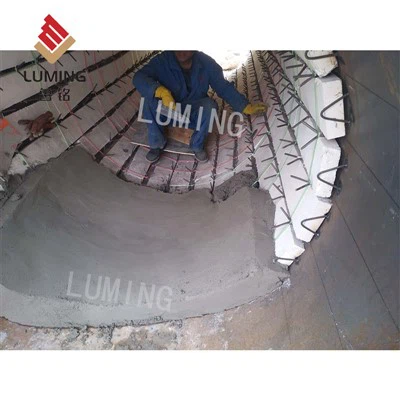
A cement kiln's rotary kiln is a crucial component in the cement manufacturing process. As a leading supplier of cement kilns, I am excited to share with you how this remarkable piece of equipment operates and its significance in the industry.
The Basics of a Rotary Kiln
The rotary kiln is a large, cylindrical vessel that rotates on its axis. It is typically made of steel and lined with refractory materials to withstand the high temperatures generated during the cement - making process. The kiln is inclined at a slight angle, usually between 3 - 4 degrees, which allows the raw materials to move gradually from the upper (feed) end to the lower (discharge) end as the kiln rotates.
Raw Material Feeding
The process begins with the feeding of raw materials into the upper end of the rotary kiln. These raw materials mainly consist of limestone, clay, shale, and other minerals. They are first crushed and ground into a fine powder, which is then fed into the kiln through a chute or a conveyor system. The raw materials enter the kiln in a continuous stream, ensuring a steady production process.
Pre - heating and Calcination
As the raw materials move down the rotating kiln, they are pre - heated by the hot gases flowing in the opposite direction. These hot gases are a by - product of the combustion process occurring further down the kiln. The pre - heating stage is essential as it raises the temperature of the raw materials and initiates some chemical reactions.
Calcination is a key step in the cement - making process that takes place in the middle part of the kiln. At around 900°C, the limestone in the raw materials decomposes into calcium oxide (lime) and carbon dioxide. The chemical reaction can be represented as: CaCO₃ → CaO+CO₂. This reaction is endothermic, meaning it absorbs heat from the surroundings. The release of carbon dioxide gas creates a porous structure in the raw materials, which is beneficial for further reactions.
Clinkering
The next and most critical stage is clinkering, which occurs in the hottest part of the kiln, where temperatures can reach up to 1450°C. In this stage, the calcium oxide reacts with other oxides such as silica, alumina, and iron oxide present in the raw materials to form cement clinker. The main compounds formed are tricalcium silicate (C₃S), dicalcium silicate (C₂S), tricalcium aluminate (C₃A), and tetracalcium aluminoferrite (C₄AF).
The formation of these compounds is a complex series of chemical reactions. For example, the reaction between calcium oxide and silica to form tricalcium silicate is: 3CaO + SiO₂ → 3CaO·SiO₂. The clinker particles, which are small, dark - gray nodules, are the basic building blocks of cement.
Cooling
Once the clinkering process is complete, the hot clinker exits the lower end of the rotary kiln and enters a cooler. The cooler is designed to rapidly cool the clinker from around 1450°C to a much lower temperature, usually below 100°C. This rapid cooling is essential as it helps to develop the desired physical and chemical properties of the clinker.


There are different types of coolers, such as grate coolers and rotary coolers. In a grate cooler, the clinker is spread over a moving grate, and air is blown through the clinker bed to remove the heat. The cooled clinker is then ready for further processing, such as grinding with gypsum to produce the final cement product.
Combustion System
The heat required for the entire process in the rotary kiln is generated by a combustion system. The most common fuels used in cement kilns are coal, natural gas, and oil. The fuel is injected into the lower end of the kiln through a burner. The burner is designed to ensure efficient combustion of the fuel, which releases a large amount of heat.
The combustion process takes place in the presence of excess air to ensure complete combustion of the fuel. The hot gases produced by the combustion rise up the kiln, providing the heat needed for pre - heating, calcination, and clinkering. The proper control of the combustion process is crucial for maintaining the right temperature profile in the kiln and ensuring high - quality cement production.
Importance of a Well - Functioning Rotary Kiln
A well - functioning rotary kiln is essential for the overall efficiency and quality of cement production. Any malfunction or inefficiency in the kiln can lead to increased energy consumption, lower production rates, and poor - quality cement. For example, if the temperature in the kiln is not properly controlled during the clinkering stage, the formation of the desired cement compounds may be incomplete, resulting in a weaker cement product.
Related Kiln Types
In addition to cement kilns, there are other types of kilns that are used in different industries. For example, the Strontium Salt Kiln is used for the production of strontium salts, which have various applications in the chemical and electronics industries. Another type is the Roasting Kiln, which is used for roasting ores to extract metals or for other chemical processes.
Our Offering as a Cement Kiln Supplier
As a cement kiln supplier, we understand the importance of providing high - quality and reliable equipment. Our cement kilns are designed with the latest technology to ensure efficient operation, low energy consumption, and high - quality cement production. We offer a wide range of cement kilns, including different sizes and configurations to meet the specific needs of our customers.
Our team of experts has extensive experience in the design, installation, and maintenance of cement kilns. We provide comprehensive after - sales service, including technical support, spare parts supply, and training for our customers' staff. Whether you are starting a new cement plant or upgrading an existing one, we can offer you the best solutions to ensure the smooth operation of your production line.
If you are interested in our Cement Kiln products or have any questions about the cement manufacturing process, we encourage you to contact us for further discussion. We are always ready to assist you in making the right choice for your business.
References
- "Cement Chemistry" by P. C. Hewlett.
- "Kiln Technology Handbook" by various authors.
- Industry reports on cement manufacturing processes.