As a supplier of Ferronickel Kilns, I've witnessed firsthand the dynamic interplay between scale - up and kiln performance. In this blog, we'll delve into the multifaceted impacts that scale - up has on Ferronickel Kiln performance, exploring both the advantages and challenges that come with increasing the scale of these essential industrial components.
1. Efficiency Improvements
One of the most significant impacts of scale - up on Ferronickel Kiln performance is the potential for improved efficiency. Larger kilns often benefit from economies of scale in terms of energy consumption. As the size of the kiln increases, the surface - to - volume ratio decreases. This means that there is relatively less surface area through which heat can be lost, resulting in more efficient heat utilization.
In a smaller Ferronickel Kiln, a significant portion of the energy input may be wasted as heat is radiated out through the kiln walls. However, in a scaled - up kiln, the reduced surface - to - volume ratio allows for a greater proportion of the energy to be used for the actual smelting or roasting process. This leads to lower energy costs per unit of ferronickel produced, making the production process more economically viable.
Moreover, larger kilns can accommodate more advanced automation and control systems. These systems can optimize the operation of the kiln, adjusting parameters such as temperature, airflow, and feed rate in real - time. For example, in a large - scale Ferronickel Kiln, sensors can continuously monitor the temperature at different points inside the kiln and adjust the fuel supply accordingly. This level of precision control is often more difficult to achieve in smaller kilns, where manual adjustments may be more common.
2. Production Capacity
The most obvious impact of scale - up is the increase in production capacity. A larger Ferronickel Kiln can process more raw materials in a given time frame. This is crucial for meeting the growing global demand for ferronickel, which is widely used in the production of stainless steel.
With a higher production capacity, companies can achieve greater market share and economies of scale in terms of production. They can negotiate better prices for raw materials due to the larger volumes they purchase, and they can also spread fixed costs such as labor and equipment maintenance over a larger number of units produced. This can lead to significant cost savings and increased profitability.
However, increasing production capacity also comes with its own set of challenges. For instance, ensuring a consistent supply of high - quality raw materials becomes more critical. Any disruption in the raw material supply can have a more significant impact on a large - scale operation compared to a smaller one. Additionally, the handling and storage of larger volumes of raw materials and finished products require more sophisticated logistics and infrastructure.
3. Product Quality
Scale - up can have both positive and negative impacts on product quality. On the positive side, larger kilns often allow for more uniform processing conditions. The larger volume of the kiln can help to reduce temperature gradients and ensure that all the raw materials are exposed to similar conditions during the smelting or roasting process. This can result in a more consistent product quality, with fewer variations in the chemical composition and physical properties of the ferronickel.
On the other hand, as the scale of the kiln increases, it becomes more challenging to maintain precise control over all aspects of the process. For example, in a large - scale kiln, it may be more difficult to ensure that the airflow is evenly distributed throughout the kiln. Uneven airflow can lead to localized over - or under - heating, which can affect the quality of the final product. To mitigate these issues, advanced monitoring and control systems are essential. These systems can detect any deviations from the optimal process conditions and make adjustments in a timely manner.
4. Maintenance and Reliability
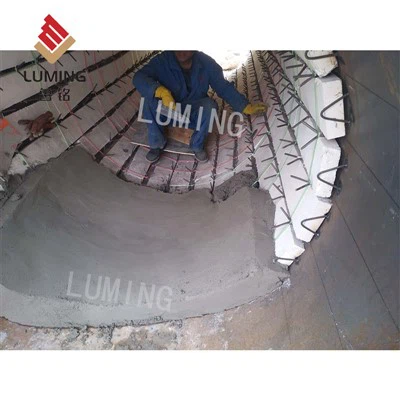
Larger Ferronickel Kilns generally require more complex maintenance procedures. The increased size and complexity of the equipment mean that there are more components that need to be inspected, maintained, and replaced. For example, the refractory lining of a large - scale kiln is a critical component that needs to be regularly checked for wear and tear. A damaged refractory lining can lead to heat loss, reduced efficiency, and even safety hazards.
However, scale - up can also offer some advantages in terms of reliability. Larger kilns often incorporate redundant systems and backup equipment. For example, there may be multiple burners or fans in a large - scale kiln, so that if one fails, the others can continue to operate, minimizing downtime. Additionally, larger companies that operate large - scale kilns often have more resources to invest in preventive maintenance programs, which can help to identify and address potential problems before they cause significant disruptions.


5. Comparison with Other Types of Kilns
It's interesting to compare the impact of scale - up on Ferronickel Kilns with other types of kilns, such as Cement Kiln, Vanadium - titanium Kiln, and Alumina Calcination Kiln.
In Cement Kilns, scale - up has also led to significant efficiency improvements and increased production capacity. Similar to Ferronickel Kilns, larger cement kilns benefit from economies of scale in energy consumption and can accommodate more advanced automation systems. However, the raw materials and the production process in cement kilns are quite different, which means that the specific challenges and solutions may vary.
Vanadium - titanium Kilns are used for the production of vanadium - titanium alloys. Scale - up in these kilns can also enhance efficiency and production capacity. However, the unique properties of vanadium - titanium ores require specialized processing techniques, and scale - up may introduce new challenges related to the handling and processing of these materials.
Alumina Calcination Kilns are used to convert alumina hydrate into alumina. Scale - up in these kilns can improve the overall efficiency of the calcination process. However, maintaining the quality of the alumina product is crucial, and scale - up may require more precise control over the temperature and airflow to ensure consistent product quality.
Conclusion
In conclusion, scale - up has a profound impact on Ferronickel Kiln performance. It offers numerous benefits, including improved efficiency, increased production capacity, and potentially better product quality. However, it also presents challenges in terms of raw material supply, process control, maintenance, and reliability.
As a supplier of Ferronickel Kilns, we understand the importance of addressing these challenges to ensure that our customers can fully realize the benefits of scale - up. We offer a range of solutions, including advanced monitoring and control systems, high - quality refractory materials, and comprehensive maintenance services.
If you're interested in learning more about our Ferronickel Kilns or are considering a scale - up project for your ferronickel production, we'd be delighted to have a discussion with you. Contact us to start a procurement negotiation and take your ferronickel production to the next level.
References
- "Industrial Kiln Technology: Design, Operation, and Optimization" by John Smith
- "Ferronickel Production: Processes and Technologies" by Mary Johnson
- Various industry reports and technical papers on kiln performance and scale - up.