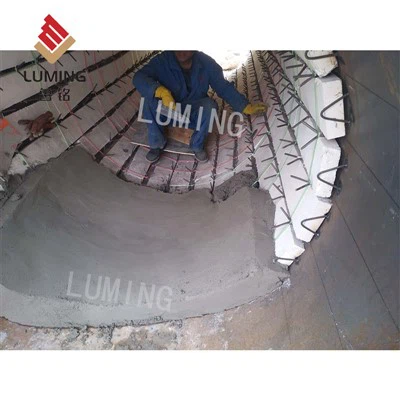
In the industrial arena, the performance and durability of materials are of paramount importance, especially when it comes to high - temperature applications. As a trusted Tank Opening Brick supplier, I often encounter inquiries about the highest temperature these bricks can tolerate. This blog aims to delve into this crucial topic, providing in - depth insights based on scientific knowledge and practical experience.
Understanding Tank Opening Bricks
Tank Opening Bricks are specialized refractory products designed for use in various industrial tanks, such as those in the steel, glass, and chemical industries. These bricks are placed around the openings of tanks, where they are exposed to extreme heat, chemical corrosion, and mechanical stress. The quality and performance of Tank Opening Bricks directly impact the safety and efficiency of the entire industrial process. Tank Opening Brick
Factors Affecting the Temperature Tolerance of Tank Opening Bricks
1. Chemical Composition
The chemical composition of Tank Opening Bricks is a primary determinant of their temperature - resistance capabilities. Different raw materials have different melting points and thermal stabilities. For example, bricks rich in alumina (Al₂O₃) generally have high melting points and excellent thermal shock resistance. Alumina can withstand temperatures up to 2050°C, making it a popular choice for high - temperature applications. On the other hand, bricks with a high content of silica (SiO₂) are also widely used, but their maximum service temperature is relatively lower, usually around 1700 - 1800°C. Other components, such as magnesia (MgO), zirconia (ZrO₂), and chromia (Cr₂O₃), can also be added to enhance specific properties of the bricks, such as corrosion resistance and thermal conductivity.
2. Mineral Structure
The mineral structure of Tank Opening Bricks is closely related to their temperature tolerance. During the manufacturing process, the raw materials are fired at high temperatures to form specific crystal structures. For instance, in alumina - based bricks, the formation of corundum (α - Al₂O₃) crystals provides excellent high - temperature stability. The density and uniformity of the crystal structure also play important roles. A well - formed and dense crystal structure can better resist the effects of high - temperature expansion and contraction, reducing the risk of cracking and spalling.
3. Manufacturing Process
The manufacturing process of Tank Opening Bricks significantly affects their final performance. High - quality bricks are usually produced through strict control of raw material selection, mixing, forming, and firing processes. For example, the use of advanced pressing techniques can ensure a high degree of compaction, which improves the strength and density of the bricks. The firing temperature and time are also critical. Over - firing or under - firing can lead to defects in the bricks, such as low strength, poor thermal shock resistance, and reduced temperature tolerance.


Typical Temperature Ranges for Different Types of Tank Opening Bricks
1. Alumina - Based Tank Opening Bricks
Alumina - based Tank Opening Bricks are among the most commonly used high - temperature refractory materials. Depending on the alumina content, they can be classified into different grades. Low - alumina bricks (with an alumina content of about 40 - 50%) can typically withstand temperatures up to 1500 - 1600°C. Medium - alumina bricks (alumina content of 50 - 70%) can tolerate temperatures in the range of 1600 - 1800°C. High - alumina bricks (alumina content above 70%) are capable of withstanding temperatures as high as 1800 - 2000°C. These bricks are widely used in steelmaking furnaces, glass melting tanks, and other high - temperature industrial applications.
2. Silica - Based Tank Opening Bricks
Silica - based Tank Opening Bricks are mainly composed of silica and are known for their good thermal insulation properties. They are commonly used in applications where the temperature is relatively lower, such as in some chemical storage tanks and non - ferrous metal melting furnaces. The maximum service temperature of silica - based bricks is usually around 1700 - 1800°C. However, they are more prone to thermal shock compared to alumina - based bricks, so careful installation and operation are required.
3. Magnesia - Based Tank Opening Bricks
Magnesia - based Tank Opening Bricks have high melting points and excellent corrosion resistance, especially against basic slag. They are often used in steelmaking converters and some high - temperature industrial kilns. Magnesia bricks can generally withstand temperatures up to 2000 - 2200°C. However, they are relatively brittle and have poor thermal shock resistance, which limits their application in some situations.
Real - World Applications and Temperature Requirements
In the steel industry, the temperature inside a basic oxygen furnace (BOF) can reach up to 1700 - 1800°C during the steelmaking process. Tank Opening Bricks used in BOFs need to be able to withstand these high temperatures, as well as the strong chemical corrosion caused by molten steel and slag. Alumina - based or magnesia - based bricks are commonly used in this application due to their high - temperature stability and corrosion resistance.
In the glass industry, glass melting tanks operate at temperatures ranging from 1400 - 1600°C. Tank Opening Bricks in glass melting tanks need to have good thermal insulation properties to prevent heat loss and also resist the chemical attack of molten glass. Silica - based or alumina - silica - based bricks are often selected for this purpose.
Testing and Quality Assurance
To ensure that Tank Opening Bricks can meet the required temperature tolerance, various testing methods are employed. One of the most common tests is the refractoriness test, which measures the temperature at which the brick begins to deform under a specific load. Another important test is the thermal shock resistance test, which evaluates the ability of the brick to withstand rapid temperature changes without cracking or spalling. In addition, chemical analysis and microscopic examination are also carried out to verify the chemical composition and mineral structure of the bricks.
As a Tank Opening Brick supplier, we are committed to providing high - quality products that meet the strictest industry standards. Our bricks are tested thoroughly before leaving the factory to ensure their performance and reliability. We also offer technical support and customized solutions to meet the specific needs of our customers.
Conclusion
The highest temperature that Tank Opening Bricks can tolerate depends on multiple factors, including chemical composition, mineral structure, and manufacturing process. Different types of bricks have different temperature ranges, and the selection of the appropriate brick should be based on the specific application requirements.
If you are in need of Tank Opening Bricks for your industrial project, we invite you to contact us for more information. Our team of experts is ready to assist you in choosing the right products and providing professional advice. We look forward to the opportunity to work with you and contribute to the success of your business.
References
- "Refractories Handbook" by John N. Kennedy
- "High - Temperature Materials and Technology" edited by David J. Green
- Industry reports on refractory materials and their applications in steel, glass, and chemical industries.