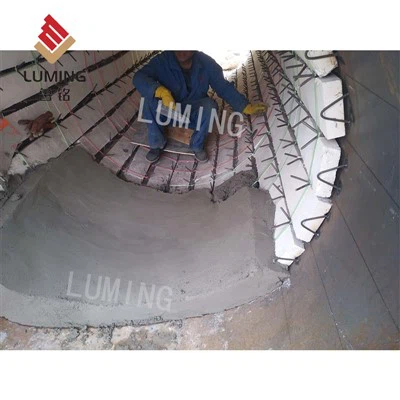
Hey there! As a supplier of Ferronickel Kilns, I often get asked if there are suitable catalysts for these kilns. Well, let's dive right into this topic and explore the ins and outs of catalysts in the context of Ferronickel Kilns.
First off, let's understand what a Ferronickel Kiln is. It's a specialized piece of equipment used in the production of ferronickel, an alloy of iron and nickel. This alloy is crucial in various industries, such as stainless - steel manufacturing. Just like other types of kilns, like the Cement Kiln, Coke Oven, and Vanadium - titanium Kiln, the Ferronickel Kiln has its own unique requirements when it comes to catalysts.
So, what exactly are catalysts? Catalysts are substances that speed up a chemical reaction without being consumed in the process. In the case of a Ferronickel Kiln, catalysts can play a vital role in enhancing the efficiency of the reduction process that takes place inside the kiln. The main goal here is to convert nickel and iron oxides into their metallic forms more quickly and with less energy consumption.
One of the potential catalysts for a Ferronickel Kiln is carbon - based catalysts. Carbon can act as a reducing agent and also as a catalyst in some reactions. For example, in the presence of carbon, the reduction of nickel and iron oxides can occur at lower temperatures. This not only saves energy but also reduces the wear and tear on the kiln lining. However, the use of carbon - based catalysts also has its drawbacks. If the carbon content is too high, it can lead to the formation of unwanted by - products, such as carbides, which can affect the quality of the ferronickel produced.
Another type of catalyst that shows promise is metal - based catalysts. Metals like platinum, palladium, and ruthenium are known for their catalytic properties. They can lower the activation energy of the reduction reactions in the Ferronickel Kiln, thereby increasing the reaction rate. However, these metals are expensive, and their use on an industrial scale can be cost - prohibitive. So, researchers are looking into using more abundant and less expensive metals, such as copper and manganese, as catalysts.
Copper, for instance, has been studied for its potential to catalyze the reduction of nickel oxides. It can form intermediate compounds with nickel and oxygen, which then decompose more easily to release metallic nickel. Manganese, on the other hand, can help in the oxidation - reduction cycles that occur during the ferronickel production process. It can also improve the fluidity of the slag, which is a by - product of the kiln operation, making it easier to separate from the ferronickel.
In addition to these, some rare - earth elements can also act as catalysts in a Ferronickel Kiln. Rare - earth elements like cerium and lanthanum have unique electronic structures that allow them to participate in chemical reactions in a way that promotes the reduction of nickel and iron oxides. They can also improve the selectivity of the reactions, meaning that they can direct the reaction towards the formation of the desired products rather than unwanted by - products.
Now, let's talk about the challenges of using catalysts in a Ferronickel Kiln. One of the main challenges is the high - temperature and high - pressure environment inside the kiln. Catalysts need to be stable under these harsh conditions. If a catalyst decomposes or loses its activity at high temperatures, it won't be effective in speeding up the reactions. Another challenge is the presence of impurities in the feedstock. Impurities can adsorb onto the surface of the catalyst, blocking its active sites and reducing its catalytic activity.
To overcome these challenges, researchers are working on developing catalysts that are more resistant to high temperatures and impurities. One approach is to coat the catalysts with a protective layer. This layer can prevent the catalyst from coming into direct contact with the harsh environment inside the kiln and the impurities in the feedstock. Another approach is to design catalysts with a high surface area. A larger surface area means more active sites for the reactions to occur, which can increase the catalytic activity.


When it comes to choosing the right catalyst for a Ferronickel Kiln, it's not a one - size - fits - all solution. The choice depends on several factors, such as the type of feedstock, the design of the kiln, and the desired quality of the ferronickel. For example, if the feedstock has a high content of sulfur impurities, a catalyst that is resistant to sulfur poisoning needs to be selected.
As a Ferronickel Kiln supplier, we understand the importance of finding the right catalyst for our customers. We work closely with researchers and industry experts to stay updated on the latest developments in catalyst technology. We also offer customized solutions to our customers based on their specific requirements.
If you're in the market for a Ferronickel Kiln or are looking to improve the efficiency of your existing kiln, we'd love to hear from you. Our team of experts can help you evaluate different catalysts and determine the best option for your operation. Whether you're a small - scale producer or a large - scale industrial facility, we have the knowledge and experience to provide you with the right solution.
In conclusion, while there are several potential catalysts for a Ferronickel Kiln, each has its own advantages and disadvantages. The key is to find a balance between cost, performance, and environmental impact. With ongoing research and development, we can expect to see more effective and affordable catalysts for Ferronickel Kilns in the future. So, if you're interested in learning more about how catalysts can improve your ferronickel production process, don't hesitate to get in touch with us. We're here to help you take your business to the next level.
References:
- "Catalysis in Metallurgical Processes" - A comprehensive book on the use of catalysts in various metallurgical operations.
- Journal of Metals - Articles on recent research in the field of ferronickel production and catalyst development.
- Industrial and Engineering Chemistry Research - Publications on the application of catalysts in high - temperature industrial processes.