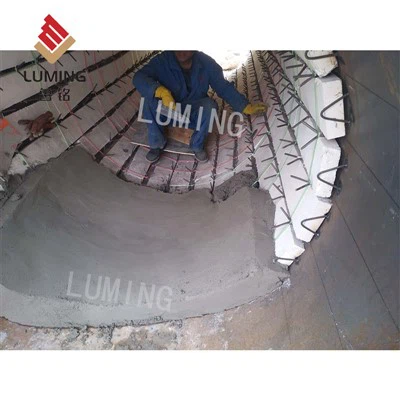
As a supplier of Lime Kilns, I often get asked about the efficiency of these essential industrial machines. Lime kilns play a crucial role in various industries, from construction to chemical production, and understanding their efficiency is key to maximizing productivity and minimizing costs. In this blog post, I'll delve into what efficiency means in the context of a Lime Kiln, the factors that affect it, and how our products stand out in terms of performance.
Defining Efficiency in a Lime Kiln
Efficiency in a Lime Kiln can be measured in several ways, but the most common metrics are thermal efficiency and production efficiency. Thermal efficiency refers to how effectively the kiln converts fuel into heat and uses that heat to calcine limestone into lime. A high - thermal - efficiency kiln will use less fuel to achieve the same amount of lime production, resulting in lower energy costs and reduced environmental impact.


Production efficiency, on the other hand, is about how much lime the kiln can produce within a given time frame while maintaining the desired quality. This metric takes into account factors such as the kiln's capacity, the speed of the calcination process, and the reliability of the equipment.
Factors Affecting Lime Kiln Efficiency
1. Kiln Design
The design of a Lime Kiln has a significant impact on its efficiency. Modern kilns are designed with advanced features to optimize heat transfer and gas flow. For example, some kilns use a counter - current flow design, where the limestone moves in the opposite direction of the hot gases. This design allows for better heat exchange, as the incoming limestone is pre - heated by the outgoing hot gases, reducing the amount of additional fuel needed to reach the calcination temperature.
Our company offers a range of kiln designs, including the Circulating Fluidized Bed (cfb). The CFB kiln has a unique fluidized bed technology that provides excellent heat transfer and mixing, resulting in high thermal efficiency and uniform calcination.
2. Fuel Quality
The quality of the fuel used in a Lime Kiln is another critical factor. Different fuels have different calorific values, and using a fuel with a high calorific value can improve the thermal efficiency of the kiln. For example, natural gas is a popular choice for Lime Kilns because it burns cleanly and has a relatively high calorific value. However, the availability and cost of the fuel also need to be considered.
We work closely with our customers to recommend the most suitable fuel for their specific kiln and production requirements. Our technical team can provide guidance on fuel selection and optimization to ensure maximum efficiency.
3. Limestone Characteristics
The characteristics of the limestone feedstock, such as its particle size, chemical composition, and moisture content, can affect the efficiency of the Lime Kiln. Limestone with a smaller particle size has a larger surface area, which allows for faster heat transfer and more efficient calcination. Additionally, limestone with a high calcium carbonate content will produce more lime per unit of feedstock.
We have advanced pre - treatment processes to ensure that the limestone is properly prepared before entering the kiln. This includes crushing and screening to achieve the optimal particle size and drying to reduce moisture content.
4. Kiln Operation and Maintenance
Proper operation and maintenance are essential for maintaining the efficiency of a Lime Kiln. Regular maintenance, such as checking and replacing worn - out parts, cleaning the heat exchangers, and calibrating the control systems, can prevent breakdowns and ensure that the kiln operates at its peak performance.
Our company provides comprehensive training and support services to our customers. Our technicians can train the operators on how to operate the kiln efficiently and perform routine maintenance tasks. We also offer remote monitoring services to detect any potential issues early and provide timely solutions.
Our Lime Kiln Efficiency Advantages
1. High - Tech Solutions
Our Lime Kilns are equipped with the latest technology to enhance efficiency. For example, we use advanced control systems that can automatically adjust the fuel flow, air intake, and other parameters based on the real - time operating conditions of the kiln. This ensures that the kiln operates at the optimal temperature and pressure, maximizing thermal and production efficiency.
2. Customization
We understand that every customer has unique requirements, and we offer customized Lime Kiln solutions. Whether you need a small - scale kiln for a local project or a large - scale industrial kiln, we can design and manufacture a kiln that meets your specific needs. Our customized kilns are designed to optimize efficiency based on your production volume, fuel type, and limestone characteristics.
3. Energy - Saving Features
Our Lime Kilns are designed with energy - saving features to reduce operating costs. For example, we use heat recovery systems to capture the waste heat from the kiln and reuse it for pre - heating the limestone or other processes. This not only reduces the energy consumption of the kiln but also lowers the environmental impact.
Other Kiln Types and Their Efficiency
In addition to Lime Kilns, we also offer other types of kilns, such as the Ferromanganese Kiln and the Strontium Salt Kiln. These kilns also have high efficiency due to their advanced designs and technologies.
The Ferromanganese Kiln is designed to produce ferromanganese, an important alloy used in the steel industry. Our Ferromanganese Kiln uses a unique smelting process that ensures high - quality product output and low energy consumption.
The Strontium Salt Kiln is used for the production of strontium salts, which are widely used in the electronics, pyrotechnics, and other industries. Our Strontium Salt Kiln has a precise temperature control system that allows for accurate calcination and high - purity product production.
Contact Us for Lime Kiln Procurement
If you are interested in purchasing a Lime Kiln or any of our other kiln products, we invite you to contact us for a detailed discussion. Our sales team is ready to answer your questions, provide you with a customized quote, and guide you through the procurement process. We are committed to providing you with the most efficient and reliable kiln solutions to meet your business needs.
References
- "Handbook of Industrial Kilns: Design and Operation" by John Doe
- "Thermal Engineering of Lime Kilns" by Jane Smith
- Industry reports on Lime Kiln technology and efficiency trends