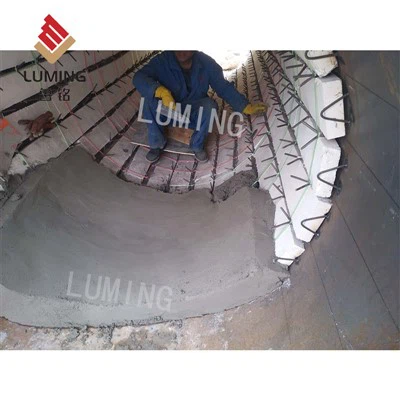
The Circulating Fluidized Bed (CFB) is an advanced combustion technology widely used in power plant boilers, industrial boilers, waste incineration, and chemical processes.The circulating fluidized bed boiler is a new type of combustion boiler developed from the bubbling fluidized bed boiler. Its main advantages include:
1.Fuel adaptability is very strong. Circulating fluidized bed boilers can effectively burn fuels that are difficult for conventional combustion methods, such as oil shale, coal gangue, peat, high-sulfur coal, and low-calorific-value anthracite.
2.Adding a desulfurizing agent during the combustion process achieves clean combustion, eliminating the need for a separate desulfurization device, which reduces investment costs and benefits environmental protection.
3.The boiler furnace's cross-sectional heat release rate and volumetric heat load are significantly enhanced.
4.Low ammonia oxide emissions, which is beneficial for environmental protection.
5.It has a wide load variation range and good regulation characteristics.
6.Ensure stable combustion, minimal slagging tendency, and convenient combustion adjustment, significantly reducing operator workload
Working Principle of Circulating Fluidized Bed (CFB) Boilers and Operating Conditions of Key Components
The circulating fluidized bed boiler differs from traditional pulverized coal boilers. First, coal is crushed into 0-10mm particles and fed into the furnace. Meanwhile, the furnace contains a large amount of bed material (slag or quartz sand). Air supplied from the bottom of the furnace causes the fuel to burn in a "fluidized state" within the bed material. The bed material, carried by the flue gas, rises along the furnace and exits through the upper outlet into the separator. In the separator, gas-solid phase separation occurs. The separated flue gas exits through the upper outlet into the boiler's tail flue, while the separated solid particles are returned to the lower part of the furnace via the return valve for further combustion.The fuel circulates multiple times with the bed material in the furnace, which provides sufficient burnout time for the fuel and reduces the carbon content in fly ash.
Different models of circulating fluidized bed boilers have different working conditions at various locations. Taking a 220 t/h circulating fluidized bed boiler as an example,The dense phase zone: Sandy medium (pulverized coal and limestone powder) fluidizes here. The pressure in this zone is 13,818–20,580 Pa, the flue gas velocity is 1.2–1.8 m/s, and the normal operating temperature is 820–900°C; Dilute Phase Zone: The region above the secondary air inlet, where fine fuel particles are concentrated for combustion. The solid material concentration in this zone is approximately 12-16 kg/m³, with a normal operating temperature of 930-980°C;Furnace Top Zone: The normal operating temperature is 850-1000°C, with the flue gas velocity increasing to 18 m/s at the inlet of the separator;Cyclone separator: normal operating temperature of 850-930℃; cyclone separator outlet header, where the flue gas dust content is 70-530 g/m³, with normal operating temperature of 850-930℃.
Erosion Mechanism of Refractory Materials Used in Circulating Fluidized Bed Boilers
During the operation of a circulating fluidized bed (CFB) boiler, the solid bed materials-comprising fuel, fuel ash, limestone, and their reaction products-continuously circulate at high temperatures within the closed-loop system of the furnace, separator, return valve, and back to the furnace. In this cyclic process, the high concentration and high-velocity fly ash particles cause severe wear to the furnace's heating surface lining due to intense collision and erosion.Erosion wear is the foremost issue refractory materials in CFB boilers must withstand.Secondly, under normal circumstances, circulating fluidized bed (CFB) boilers undergo 2-10 start-ups and shutdowns per year. However, during the initial operation phase, due to factors such as improper operation or commissioning issues, the number of start-ups and shutdowns can reach several dozen per year-in extreme cases, even multiple times within a single week.Each start-up or shutdown subjects the refractory materials to severe thermal shock.The drastic temperature fluctuations inevitably generate substantial thermal stresses within the material. When these stresses exceed the material's inherent strength, spalling becomes unavoidable.If the refractory material exhibits poor thermal shock resistance, then structural spalling induced by thermal cycling will become a critical failure mechanism.Additionally, the working temperature of the lining in various parts of circulating fluidized bed boilers does not exceed 1000°C at maximum, which is considered a medium-temperature zone for refractory materials. Therefore, for fired products, since their sintering temperatures are all higher than this temperature, their physical and chemical properties at high temperatures can be directly used as the basis for selecting refractory materials. However, for unshaped refractory materials, their physical and chemical performance indicators at medium temperatures must be considered.
In summary, the main mechanisms causing erosion damage to refractory materials in circulating fluidized bed boilers are: 1) erosion wear, 2) frequent boiler start-ups and shutdowns, and 3) poor medium-temperature strength of refractory materials. Therefore, overcoming or improving these three performance indicators of refractory materials through targeted research and development will play a highly effective role in extending the service life of refractory materials in circulating fluidized bed boilers.
Because circulating fluidized bed (CFB) boilers burn low-grade fuels with high ash content, the fly ash particles are large and are repeatedly heated during circulation. As a result, the flue gas contains fly ash at high concentration and high velocity, causing severe wear to the furnace's heating surface linings due to collision and erosion by these particles.Therefore, in the lining design, high-strength wear-resistant materials are used before the flue gas outlet of the cyclone separator, while ordinary wear-resistant materials are used after the flue gas outlet of the cyclone separator.Specifically, wear-resistant castable refractory is applied as wear-resistant lining in the following areas: water-cooled air chamber, dense phase zone and dilute phase zone of the furnace, furnace outlet area, horizontal flue duct at furnace outlet, cyclone separator, steel plate separator, separator outlet flue duct, return feeder, cold slag remover, and other parts. Refractory wear-resistant material is also applied on the water-cooled air distribution plate, and the wind caps are cast from highly wear-resistant hot cast iron.For the furnace bottom, the inner surfaces of the cyclone separator, and the inlet passages-areas prone to wear-the wear-resistant castable lining should be applied with increased thickness.In the dense-phase zone surrounding the lower part of the furnace and in severely worn areas at the furnace outlet, high-temperature refractory ramming materials are sometimes used, secured in place with anchor pins.Wear-resistant bricks are installed inside the return standpipe, the return feeder, and the connecting pipelines at the lower part of the cyclone separator.

Our Products in CFB
Leveraging robust R&D capabilities and state-of-the-art testing/production facilities, our company has developed over a dozen specialized refractory solutions for CFB boilers. These products have demonstrated exceptional field performance through widespread commercialization, gaining increasing market recognition. Our innovations are now driving technological advancements in CFB refractory systems.
The refractory materials for circulating fluidized bed boilers developed by our company can be divided into two major categories based on their shape and construction methods: First, shaped products, which mainly include phosphate-bonded high alumina bricks of P and PA types; Second, unshaped products, which mainly include brown corundum castable, high-strength wear-resistant castables HF-160 and HF-135, brown corundum ramming material, and high alumina plastic refractory.
1. Shaped products:
The phosphate bricks produced by our company mainly use special grade high alumina bauxite as the primary raw material, phosphate as the binder, and add composite high-temperature expansion agents. They are formed by high-tonnage press molding and processed through medium-temperature heat treatment. The products have outstanding characteristics such as good wear resistance, high strength, and excellent thermal shock stability. Particularly at high temperatures, they exhibit slight expansion, which improves the integrity of the masonry and prevents lining spalling caused by enlarged mortar joints resulting from refractory brick shrinkage.
Fire clay bricks Primarily used in areas of circulating fluidized bed boilers where there is no abrasive erosion.
|
Mark No. Item |
Phosphate-bonded high alumina bricks |
Fire clay bricks N-2a |
||
|
P |
PA |
|||
|
chemical components(%) |
AL2O3 |
75 |
77 |
42 |
|
Fe2O3 |
2.9 |
2.6 |
2.3 |
|
|
Bulk density(g/cm3) |
2.7 |
2.75 |
2.2 |
|
|
Cold crushing strength(Mpa) |
85 |
110 |
25 |
|
|
Fired Linear Change(%)1000℃×3h |
0.3 |
0.3 |
-0.2 |
|
|
Thermal shock resistance(times),1000℃ ,water cooling |
25 |
25 |
5 |
|
|
Refractoriness under load(℃) |
1450 |
1400 |
1350 |
|
|
Waer resistance(cm3) |
7 |
9 |
||
|
Refractoriness(℃) |
1780 |
1780 |
1740 |
|
2. Unshaped products:
Monolithic refractories have gained extensive application in circulating fluidized bed (CFB) boilers due to their unique advantages, including integral structural integrity, ease of installation, and convenient maintenance. Their deployment in the boiler's most severe wear zones makes their performance quality a critical factor in determining whether the boiler can achieve long-term, full-capacity, and safe operation.Unshaped refractory materials can be classified into castables, plastic refractories, ramming materials, gunning materials, patching materials, etc., according to their different construction methods. Among these, castables are the most widely used type in circulating fluidized bed boilers, while plastic refractories and ramming materials are mainly used in areas where formwork vibration casting is difficult and in locations with thin linings.
Technical Specifications of Our Monolithic Refractory Materials:
|
Mark No. Item |
Brown corundum castable |
high-strength wear-resistant castables |
Brown corundum ramming material |
high alumina plastic refractory |
||
|
HF-160 |
HF-135 |
|||||
|
chemical components (%) |
AL2O3 ≥ |
80 |
75 |
65 |
80 |
75 |
|
Fe2O3 ≤ |
2.0 |
2.0 |
2.0 |
|||
|
Bulk Density(g/cm3) |
110℃×24h ≥ |
3.0 |
2.8 |
2.65 |
3.0 |
2.6 |
|
1000℃×3h ≥ |
2.9 |
2.75 |
2.60 |
2.9 |
2.5 |
|
|
Cold Modulus of Rupture (Mpa) |
110℃×24h ≥ |
10 |
9 |
8 |
8 |
8 |
|
1000℃×3h ≥ |
20 |
15 |
12 |
18 |
15 |
|
|
Cold Crushing Strength(Mpa) |
110℃×24h ≥ |
70 |
70 |
60 |
65 |
40 |
|
1000℃×3h ≥ |
150 |
120 |
100 |
125 |
90 |
|
|
Fired Linear Change(%)1000℃×3h |
0.1 |
-0.2 |
-0.3 |
0.2 |
0.3 |
|
|
Thermal shock resistance(次) ≥ |
30 |
25 |
25 |
25 |
20 |
|
|
Wear resistance(cm3)≤ |
5 |
4.5 |
6 |
6 |
9 |
|
|
Refractoriness(℃) ≥ |
1780 |
1770 |
1750 |
1780 |
1750 |
|
Our Manufacturing Qualifications
Shandong Luming New Materials Technology Co., LTD is the largest manufacturer of unshaped refractory materials in Shandong Province. We have been awarded certificates for our Quality Management System, Environmental Management System, and Occupational Health and Safety Management System.We are a high-tech enterprise certified by Shandong Province;AAA"-Grade Credit Enterprise certified by the China Refractory Industry Association;Appointed as a Council Member Unit of the China Lime Association in 2013;Ranked among the Top 500 Enterprises of China's Building Materials Industry in 2014;Recognized as a Zibo Gazelle Enterprise in 2020, with its Technical Center certified as a Provincial-Level Technology Center;Recognized as a National-Level "Specialized, Sophisticated, Distinctive and Innovative" Little Giant Enterprise in August 2022. Our company possesses comprehensive production and testing capabilities, with an annual output of:100,000 tons of castable refractories,8,000 tons of corundum & mullite products,40,000 tons of high-grade high-alumina & clay products.
Our company is committed to technological innovation and customer-centric development. By pioneering new energy-saving refractory materials and innovating kiln lining designs, we dedicate ourselves to helping clients achieve energy conservation and emission reduction goals. We strive to contribute our utmost to environmental protection efforts in China and across the globe!
Our Quality Management
Our company strictly adheres to national and industry standards for refractory materials in design, production, and inspection. We also comply with international standards specified by clients to meet customized requirements.Based on the principles of safety, reliability, and cost-effectiveness, we have established a comprehensive quality management system and inspection and testing system.Our internal quality control standards encompass all critical aspects: Raw material qualification,Production process monitoring, Key control point management, Equipment maintenance & inspection,Full-process quality testing & evaluation, Closed-loop quality feedback & improvement.We implement strict raw material quality control, conducting batch-by-batch inspection with full documentation to ensure consistent material compliance.During the production process, strict quality control is enforced, with every process detail rigorously monitored and inspected. A comprehensive quality management and accountability system is implemented to ensure the overall product quality is flawless.Deploy qualified and experienced project managers and professional construction teams to carry out meticulous construction, ensuring construction quality and progress, and guaranteeing timely completion with high quality and quantity.
Our Service
Personalized customization solutions:
Based on client requirements, we conduct multi-dimensional analysis covering: Usage Pain Points,Cost Control, Service Life,Energy Saving & Emission Reduction, Project Timeline,etc;We design configuration plans for different budgets and provide detailed product technical specifications and user instructions to ensure customers have a comprehensive understanding of the product;Provide customers with comprehensive end-to-end solutions including consultation, design, production, construction, after-sales service, maintenance and upkeep.
Technical Support & Training:
We Provide 24/7 customer service, ready to accept customer inquiries and feedback at any time.Based on customer needs, we can organize regular or occasional technical training sessions on product usage and maintenance to improve customers' ability to use and maintain the products.
High-efficiency supply and logistics solutions:
Flexible production mechanism, with adaptable production scheduling to maximize fulfillment of customer delivery requirements.Tiered Delivery Time Management: We provide customized logistics solutions tailored to client requirements, ensuring on-time arrival to meet diverse delivery needs.
Customized Packaging Solutions:
All delivered goods are packaged in strict compliance with the buyer's requirements as well as relevant national and industry standards.Shaped products such as refractory bricks and precast blocks are typically packaged on wooden pallets, wrapped with stretch film for sealing, and secured with plastic-steel strapping.Unshaped refractory materials are packaged in 25-50kg plastic bags, with additional outer protection using bulk bags.Our company provides customized packaging solutions including containers, wooden cases, metal boxes, and moisture-proof marine packaging, fully compliant with both local regulations and corporate requirements in your market.
After-sales Service & Continuous Improvement:
We provide complimentary technical consulting services to promptly address any issues encountered during product use.During the warranty period, any quality defects caused by our materials or workmanship will be remedied through free repair, replacement or improvement.During project operation, we systematically collect and analyze user feedback to promptly identify and rectify deficiencies, thereby continuously improving product and service quality while enhancing performance and energy efficiency.Continuously improve the quality management system and production processes to enhance both product and service quality and operational efficiency.
Hot Tags: circulating fluidized bed (cfb), China circulating fluidized bed (cfb) manufacturers, suppliers, factory, Hazardous Waste Incineration Kiln, Alumina Calcination Kiln, Strontium Salt Kiln, Cement Kiln, Pelletizing Rotary Kiln, Ferromanganese Kiln