Hey there! As a supplier of Ferronickel Kilns, I often get asked about the differences between various types of these kilns. It's a topic that's not only crucial for those in the industry but also quite fascinating once you dig deeper. So, let's break it down and take a closer look at what sets these different Ferronickel Kilns apart.
First off, we need to understand what Ferronickel is. Ferronickel is an alloy of iron and nickel, and it's widely used in the production of stainless steel. The process of making Ferronickel involves heating nickel ore with a reducing agent in a kiln. Different types of kilns are used for this process, each with its own unique features, advantages, and limitations.
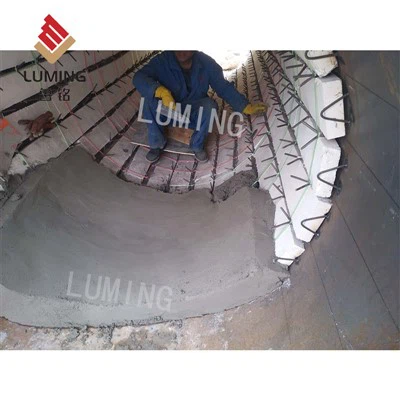
One of the most common types of Ferronickel Kilns is the Rotary Kiln. Rotary Kilns are large, cylindrical furnaces that rotate on their axis. They're known for their high capacity and continuous operation. In a Rotary Kiln, the nickel ore and reducing agent are fed into one end of the kiln, and as the kiln rotates, the materials move through the kiln, getting heated along the way. The heat is usually provided by burning fuel, such as coal or natural gas, at the other end of the kiln.


The advantage of a Rotary Kiln is its ability to handle large volumes of material. It can process a significant amount of nickel ore in a relatively short period, making it ideal for large-scale production. However, Rotary Kilns also have some drawbacks. They require a lot of energy to operate, and the high temperatures can cause wear and tear on the kiln lining, which needs to be replaced periodically.
Another type of Ferronickel Kiln is the Electric Arc Furnace (EAF). Unlike Rotary Kilns, EAFs use electricity to generate heat. In an EAF, electrodes are inserted into the furnace, and an electric arc is created between the electrodes and the material in the furnace. This arc generates intense heat, which melts the nickel ore and reducing agent.
EAFs have several advantages. They're more energy-efficient than Rotary Kilns, as they can convert a higher percentage of the electrical energy into heat. They also offer better control over the heating process, which can result in a more consistent quality of Ferronickel. However, EAFs are more expensive to install and operate, and they require a reliable source of electricity.
A less common but still important type of Ferronickel Kiln is the Blast Furnace. Blast Furnaces are large, vertical furnaces that use a blast of hot air to burn fuel and heat the nickel ore. In a Blast Furnace, the nickel ore, reducing agent, and fuel are loaded into the top of the furnace, and hot air is blown in from the bottom. The combustion of the fuel generates heat, which melts the nickel ore and reduces it to Ferronickel.
Blast Furnaces are known for their high productivity and ability to handle a wide range of raw materials. They can also produce high-quality Ferronickel. However, they're very large and complex to operate, and they require a significant amount of capital investment.
Now, let's talk about some related kiln types that might not be directly used for Ferronickel production but are worth mentioning. For example, the Pelletizing Rotary Kiln is used to convert fine-grained materials into pellets. These pellets are easier to handle and transport, and they can be used as feedstock in other processes. The Glass Kiln is used to melt and shape glass. It operates at very high temperatures and requires precise control of the heating process. And the Lime Kiln is used to produce lime by heating limestone. Lime is an important industrial chemical used in a variety of applications.
So, as you can see, there are several different types of Ferronickel Kilns, each with its own pros and cons. The choice of kiln depends on a variety of factors, such as the scale of production, the quality of the raw materials, the availability of energy, and the budget.
If you're in the market for a Ferronickel Kiln, it's important to do your research and choose the type of kiln that best suits your needs. At our company, we offer a wide range of Ferronickel Kilns, and we can help you select the right one for your specific requirements. Our team of experts has years of experience in the industry, and we can provide you with all the information and support you need to make an informed decision.
Whether you're looking for a high-capacity Rotary Kiln for large-scale production, an energy-efficient Electric Arc Furnace, or a reliable Blast Furnace, we've got you covered. We also offer after-sales service and maintenance to ensure that your kiln operates smoothly and efficiently for years to come.
So, if you're interested in learning more about our Ferronickel Kilns or if you have any questions, don't hesitate to get in touch. We'd love to have a chat with you and discuss how we can help you achieve your production goals. Contact us today to start the conversation!
References
- Smith, J. (2020). Kiln Technology: Principles and Applications. Industrial Press.
- Johnson, A. (2019). Ferronickel Production: Processes and Technologies. Metallurgical Society.