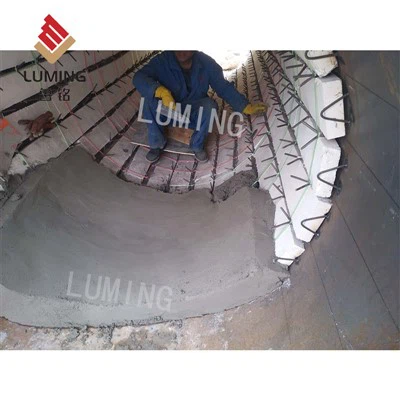
Refractory mortar is a crucial component in various high - temperature applications, playing a vital role in bonding refractory bricks and other materials in furnaces, kilns, and other heat - intensive environments. One of the fundamental distinctions within the realm of refractory mortar is the difference between acidic and basic refractory mortar. As a refractory mortar supplier, understanding these differences is essential for providing the best products to our customers.
Chemical Composition and Properties
Acidic Refractory Mortar
Acidic refractory mortar is primarily composed of silica (SiO₂) as its main ingredient. Silica has excellent acid - resistant properties and can withstand high temperatures. Other components may include alumina (Al₂O₃) in varying proportions. The high silica content gives acidic refractory mortar certain characteristics. For example, it has good thermal shock resistance, which means it can endure rapid temperature changes without cracking easily.


Silica refractory mud, a type of acidic refractory mortar, is widely used in many industries. You can learn more about it by visiting Silica Refractory Mud. This type of mortar is suitable for use in environments where the atmosphere is acidic, such as in some glass - making furnaces. In glass production, the melting process often involves acidic substances, and acidic refractory mortar can resist the corrosive effects of these substances.
Another type of acidic refractory mortar is silicon carbide refractory mud. Silicon Carbide Refractory Mud has unique properties. Silicon carbide (SiC) has high thermal conductivity, which allows for efficient heat transfer in high - temperature applications. It also has good abrasion resistance, making it suitable for use in areas where there is a high degree of wear, such as in the linings of some industrial kilns.
Basic Refractory Mortar
Basic refractory mortar, on the other hand, contains a high proportion of basic oxides such as magnesia (MgO) and calcium oxide (CaO). These basic components give the mortar excellent resistance to basic slag and alkaline environments. Basic refractory mortar has high refractoriness, meaning it can withstand extremely high temperatures, often higher than that of acidic refractory mortar.
Mullite mortar is a special type of refractory mortar that has some characteristics of both acidic and basic mortars but leans more towards the acidic side due to its alumina - silica composition. However, it also has good performance in high - temperature applications. You can find more details about Mullite Mortar. Basic refractory mortar is commonly used in steel - making furnaces. In the steel - making process, the slag produced is often basic, and basic refractory mortar can effectively resist the corrosion of this basic slag, ensuring the integrity and longevity of the furnace lining.
Application Environments
Acidic Refractory Mortar Applications
Acidic refractory mortar is well - suited for applications where the working environment is acidic. In addition to glass - making furnaces, it is also used in some ceramic kilns. In ceramic production, the firing process may involve acidic gases or substances, and acidic refractory mortar can provide a stable bonding and protective layer for the kiln structure.
It is also used in some non - ferrous metal smelting processes. For example, in the smelting of copper and zinc, the environment can be acidic, and acidic refractory mortar can prevent the corrosion of the furnace lining by the acidic substances generated during the smelting process.
Basic Refractory Mortar Applications
Basic refractory mortar is mainly used in environments where basic slag or alkaline substances are present. As mentioned earlier, steel - making furnaces are the most common application. In electric arc furnaces and basic oxygen furnaces, basic refractory mortar is used to line the furnace walls to resist the highly basic slag produced during the steel - making process.
It is also used in some cement kilns. The clinker production in cement kilns involves high - temperature reactions, and the atmosphere can be alkaline. Basic refractory mortar can withstand the alkaline environment and the high temperatures, ensuring the normal operation of the kiln.
Performance Differences
Thermal Resistance
In terms of thermal resistance, basic refractory mortar generally has a higher melting point and can withstand more extreme temperatures compared to acidic refractory mortar. For example, basic refractory mortar with a high magnesia content can withstand temperatures up to 2000°C or even higher, while acidic refractory mortar usually has a maximum service temperature in the range of 1500 - 1800°C. This makes basic refractory mortar more suitable for applications where extremely high temperatures are involved, such as in some high - temperature steel - making processes.
Chemical Resistance
Acidic refractory mortar is highly resistant to acidic substances. It can prevent the penetration and corrosion of acidic gases, liquids, and slags. However, it is vulnerable to attack by basic substances. When exposed to basic slag, acidic refractory mortar may react chemically, leading to the deterioration of its structure and performance.
Conversely, basic refractory mortar is resistant to basic substances but is susceptible to acidic attack. In an acidic environment, basic refractory mortar may undergo chemical reactions, resulting in the loss of its protective properties and the weakening of the furnace lining.
Mechanical Properties
Acidic refractory mortar often has better thermal shock resistance. The structure of silica - based acidic refractory mortar can absorb and dissipate the stress caused by rapid temperature changes, reducing the risk of cracking. Basic refractory mortar, although having high refractoriness, may be more brittle and less resistant to thermal shock in some cases. However, with the development of material technology, modern basic refractory mortars are being improved to enhance their thermal shock resistance.
Selection Considerations
When selecting between acidic and basic refractory mortar, several factors need to be considered. First, the chemical nature of the working environment is crucial. If the environment is acidic, acidic refractory mortar should be chosen. If it is basic, basic refractory mortar is the better option.
The temperature requirements of the application also play an important role. For high - temperature applications close to or exceeding 1800°C, basic refractory mortar is usually more suitable. For applications with relatively lower temperature requirements and rapid temperature changes, acidic refractory mortar with good thermal shock resistance may be a better choice.
The mechanical stress and wear in the application area should also be considered. If there is a high degree of abrasion, silicon carbide - based acidic refractory mortar may be preferred due to its good abrasion resistance.
As a refractory mortar supplier, we understand the importance of providing the right product for each specific application. We have a team of experts who can help our customers analyze their needs and select the most suitable refractory mortar. Whether you need acidic or basic refractory mortar, we can offer high - quality products that meet your requirements.
If you are in need of refractory mortar for your high - temperature applications, we invite you to contact us for a detailed discussion. Our experienced staff will be happy to assist you in making the best selection and provide you with comprehensive product information and technical support.
References
- "Refractories Handbook" by J. F. Davis
- "High - Temperature Materials and Technology" by R. C. Bradt
- Industry research reports on refractory materials