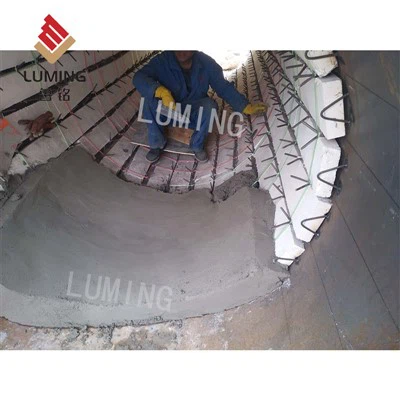
What is the capacity of a typical Lime Kiln?
Lime kilns are essential industrial equipment used for the calcination of limestone to produce quicklime. The capacity of a typical lime kiln can vary significantly depending on several factors, including its design, type, and intended application. As a leading lime kiln supplier, we have in - depth knowledge of these factors and can provide valuable insights into the capacity of different lime kilns.
Factors Affecting Lime Kiln Capacity
1. Kiln Type
There are various types of lime kilns, such as vertical kilns, rotary kilns, and fluidized - bed kilns. Each type has its own characteristics and capacity ranges.
- Vertical Kilns: These are simple in design and are often used for small - to medium - scale production. They have relatively lower capacities compared to some other types. A typical vertical lime kiln may have a capacity ranging from 10 to 100 tons per day. The vertical structure allows for a continuous flow of limestone from the top and the discharge of quicklime from the bottom. The relatively small cross - sectional area limits the amount of material that can be processed at one time.
- Rotary Kilns: Rotary kilns are widely used in large - scale lime production. They consist of a rotating cylindrical shell. The continuous rotation of the kiln ensures uniform heating of the limestone. Rotary kilns can have much higher capacities, typically ranging from 100 to 1000 tons per day or even more in some large industrial plants. The long and large - diameter cylindrical structure provides a large volume for the calcination process, enabling the processing of a significant amount of limestone.
- Fluidized - Bed Kilns: Fluidized - bed kilns use a fluidized bed of limestone particles. They offer high heat transfer rates and can achieve relatively high production capacities. Their capacity can range from 50 to 500 tons per day, depending on the size of the fluidized - bed reactor and the operating conditions.
2. Kiln Size
The physical dimensions of the kiln play a crucial role in determining its capacity. Larger kilns generally have higher capacities. For example, in a rotary kiln, a longer and wider shell can accommodate more limestone. The length of the kiln affects the residence time of the material, which is important for complete calcination. A wider kiln allows for a greater cross - sectional area for the flow of limestone and hot gases.


3. Fuel and Heating System
The type of fuel used and the efficiency of the heating system also impact the capacity of the lime kiln. Fuels such as coal, natural gas, and oil are commonly used. Natural gas is often preferred in modern kilns due to its clean combustion and high heat - release rate. An efficient heating system can ensure that the limestone is heated quickly and uniformly, which can increase the production rate. For instance, a well - designed burner system can distribute heat evenly throughout the kiln, enabling more efficient calcination and potentially increasing the kiln's capacity.
4. Limestone Quality
The quality of the limestone feedstock affects the kiln capacity. Limestone with a higher calcium carbonate content and lower impurities generally requires less energy for calcination and can be processed more efficiently. Impurities in the limestone can reduce the heat transfer efficiency and may cause problems such as clinker formation, which can limit the capacity of the kiln.
Applications and Capacity Requirements
The capacity requirements of a lime kiln depend on the end - use of the quicklime.
- Steel Industry: In the steel industry, large amounts of quicklime are used for slag formation and desulfurization. Steel plants often require lime kilns with high capacities, typically in the range of 500 - 1000 tons per day or more. The continuous production of steel requires a stable and large - scale supply of quicklime.
- Chemical Industry: The chemical industry uses quicklime in the production of various chemicals such as calcium carbide, calcium hydroxide, and sodium carbonate. Depending on the scale of the chemical plant, the capacity requirements can vary from small - scale (less than 100 tons per day) to medium - scale (100 - 500 tons per day).
- Environmental Applications: In water treatment and waste management, lime is used for pH adjustment and sludge treatment. Small - to medium - capacity lime kilns (less than 200 tons per day) are often sufficient for these applications.
Comparison with Other Types of Kilns
It is interesting to compare the capacity of lime kilns with other types of kilns, such as the Ferromanganese Kiln, Pelletizing Rotary Kiln, and Strontium Salt Kiln.
- Ferromanganese Kiln: Ferromanganese kilns are used for the production of ferromanganese alloys. Their capacity is usually determined by the demand for the alloy in the steel - making industry. Similar to large - scale lime rotary kilns, ferromanganese kilns can have high capacities, often in the range of several hundred tons per day. However, the operating conditions and the nature of the feedstock (manganese ore and coke) are different from those of lime kilns.
- Pelletizing Rotary Kiln: Pelletizing rotary kilns are used to produce iron ore pellets. The capacity of these kilns can be quite large, similar to large - scale lime rotary kilns. They are designed to handle large volumes of iron ore fines to produce high - quality pellets for the steel industry. The process in a pelletizing rotary kiln involves induration of the pellets, which is different from the calcination process in a lime kiln.
- Strontium Salt Kiln: Strontium salt kilns are used for the production of strontium salts. These kilns usually have relatively lower capacities compared to large - scale lime or ferromanganese kilns. The production of strontium salts is often on a smaller scale, and the capacity of strontium salt kilns may range from a few tons to a few dozen tons per day.
Optimizing Lime Kiln Capacity
As a lime kiln supplier, we offer solutions to optimize the capacity of our lime kilns.
- Advanced Design: We use advanced design techniques to ensure that the kiln has the most efficient shape and structure. For example, in rotary kilns, we design the internal lining and the burner system to maximize heat transfer and minimize energy losses.
- Automation and Control Systems: Our kilns are equipped with advanced automation and control systems. These systems can monitor and adjust the operating parameters such as temperature, fuel flow, and feed rate in real - time. By maintaining optimal operating conditions, the capacity of the kiln can be increased, and the quality of the quicklime can be improved.
- Quality Assurance: We ensure that our kilns are made of high - quality materials and are built to strict quality standards. This reduces the risk of breakdowns and maintenance requirements, which can disrupt the production process and limit the capacity.
Contact for Purchase and Negotiation
If you are interested in purchasing a lime kiln or have any questions about the capacity and performance of our lime kilns, we invite you to contact us. Our team of experts is ready to provide you with detailed information, customized solutions, and competitive pricing. Whether you need a small - scale kiln for a specific application or a large - scale industrial kiln, we can meet your requirements.
References
- "Industrial Kilns and Furnaces: Principles, Design, and Operation" by A. G. Fraser
- "Lime and Limestone: Chemistry and Technology, Production and Uses" by J. S. J. van Deventer and J. P. Groves