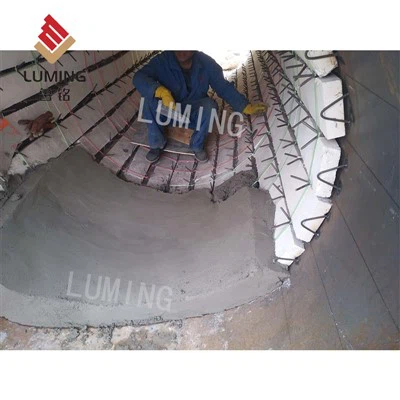
Zircon brick, a specialized type of refractory material, has gained significant attention in various high - temperature industrial applications due to its excellent insulating properties. As a trusted zircon brick supplier, I am delighted to share in - depth knowledge about the insulating characteristics of zircon brick, which will help you make informed decisions for your industrial needs.
1. Composition and Structure of Zircon Brick
Zircon brick is primarily composed of zircon (ZrSiO₄), a mineral that consists of zirconium dioxide (ZrO₂) and silicon dioxide (SiO₂). The unique crystal structure of zircon contributes to its insulating capabilities. The zirconium and silicon atoms are arranged in a complex lattice structure, which restricts the movement of heat - carrying particles such as phonons. Phonons are the quantized units of lattice vibration that are responsible for heat conduction in solids. The tight - knit lattice structure of zircon makes it difficult for phonons to travel through the material, thus reducing the rate of heat transfer.
2. Thermal Conductivity
One of the most crucial parameters to evaluate the insulating properties of a material is its thermal conductivity. Thermal conductivity (k) is defined as the quantity of heat that passes through a unit area of a material per unit time, per unit temperature gradient. Zircon brick has a relatively low thermal conductivity compared to many other refractory materials.


The thermal conductivity of zircon brick typically ranges from 1.0 to 2.0 W/(m·K) at room temperature. This low value indicates that zircon brick is an effective insulator, as it can resist the flow of heat. In high - temperature applications, such as in steelmaking furnaces, glass melting tanks, and ceramic kilns, the low thermal conductivity of zircon brick helps to minimize heat loss from the hot interior of the equipment to the surrounding environment. This not only improves the energy efficiency of the industrial processes but also reduces the operating costs associated with heating.
3. High - Temperature Stability
Zircon brick exhibits excellent high - temperature stability, which is essential for maintaining its insulating properties under extreme conditions. It can withstand temperatures up to 1600 - 1800°C without significant degradation. At these high temperatures, the crystal structure of zircon remains relatively stable, and its low thermal conductivity is retained.
This high - temperature stability is due to the strong chemical bonds within the zircon structure. The zirconium - oxygen and silicon - oxygen bonds are very strong, which prevents the material from melting or undergoing phase transitions easily. As a result, zircon brick can provide reliable insulation in applications where other materials might fail due to thermal stress or chemical reactions.
4. Resistance to Chemical Corrosion
In addition to its thermal insulating properties, zircon brick also has good resistance to chemical corrosion. In many industrial processes, the refractory lining is exposed to various corrosive substances, such as molten metals, slags, and acidic or alkaline gases. Zircon brick can resist the attack of these corrosive agents, which helps to maintain its integrity and insulating performance over time.
The resistance to chemical corrosion is related to the chemical inertness of zircon. Zircon does not react readily with most common corrosive substances, which means that the insulating layer formed by zircon brick will not be damaged by chemical reactions. This is particularly important in applications such as non - ferrous metal smelting, where the molten metals can be highly corrosive.
5. Applications Based on Insulating Properties
The excellent insulating properties of zircon brick make it suitable for a wide range of industrial applications.
- Steel Industry: In steelmaking furnaces, zircon brick is used as a lining material to insulate the hot molten steel from the outer shell of the furnace. This helps to reduce heat loss, improve the energy efficiency of the steelmaking process, and extend the service life of the furnace.
- Glass Industry: In glass melting tanks, zircon brick is used to line the walls and floors of the tank. The low thermal conductivity of zircon brick helps to maintain a uniform temperature distribution in the molten glass, which is crucial for producing high - quality glass products.
- Ceramic Industry: In ceramic kilns, zircon brick is used to insulate the kiln chamber. This allows for better control of the firing temperature and reduces the energy consumption during the ceramic firing process.
6. Comparison with Other Refractory Materials
When compared with other refractory materials, such as alumina brick and magnesia brick, zircon brick has some unique advantages in terms of insulating properties.
Alumina brick has a relatively high thermal conductivity compared to zircon brick, especially at high temperatures. This means that alumina brick may not be as effective as zircon brick in reducing heat loss in high - temperature applications. Magnesia brick, on the other hand, is more prone to chemical corrosion in some environments, which can affect its insulating performance over time. Zircon brick, with its low thermal conductivity and good chemical resistance, provides a more balanced solution for many industrial insulation needs.
7. Importance of Choosing the Right Zircon Brick
As a zircon brick supplier, I understand the importance of choosing the right type of zircon brick for your specific application. Different grades of zircon brick may have different insulating properties, depending on their chemical composition, density, and manufacturing process.
For example, Zirconia Brick has a higher zirconia content, which can further enhance its high - temperature stability and insulating performance. Refractory Zircon Brick is specifically designed for high - temperature refractory applications, with optimized insulating properties. Zircon Refractory Brick is another option that offers a good balance between insulation and cost - effectiveness.
8. Contact for Procurement
If you are looking for high - quality zircon brick for your industrial insulation needs, I encourage you to contact us. Our team of experts can provide you with detailed information about our zircon brick products, including their insulating properties, chemical composition, and application suitability. We can also offer customized solutions based on your specific requirements. Whether you are in the steel, glass, ceramic, or other industries, we are committed to providing you with the best zircon brick products and services.
References
- "Refractories Handbook" by John Smith
- "Thermal Insulation Materials and Their Applications" by David Brown
- Research papers on zircon brick published in international refractory journals.