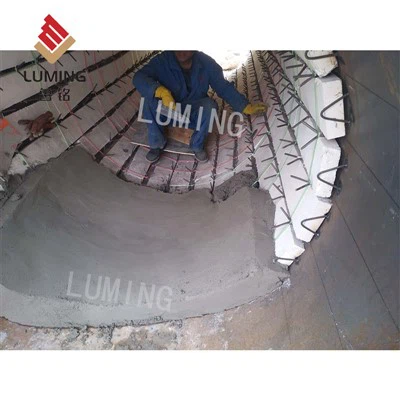
What are the different types of Lime Kilns?
As a supplier of lime kilns, I've had the privilege of witnessing the diverse applications and functionalities of these remarkable industrial machines. Lime kilns are essential in the production of lime, a versatile material used in various industries such as construction, agriculture, and environmental protection. In this blog post, I'll explore the different types of lime kilns, their unique features, and their applications.
1. Vertical Shaft Kilns
Vertical shaft kilns are one of the oldest and most widely used types of lime kilns. They consist of a tall, vertical shaft where limestone is fed from the top and heated by a combustion process. The limestone gradually descends through the shaft, undergoing calcination to produce lime.
Features
- High Efficiency: Vertical shaft kilns are known for their high thermal efficiency, as the counter - current flow of the limestone and the hot gases allows for effective heat transfer.
- Simple Design: Their design is relatively simple, which makes them easy to operate and maintain.
- Small Footprint: They require less land area compared to some other types of kilns, making them suitable for sites with limited space.
Applications
- Small - scale Lime Production: They are often used in small - to medium - scale lime production plants, especially in regions where the demand for lime is relatively low.
- Local Construction: In local construction projects, vertical shaft kilns can produce lime for mortar and plaster, providing a cost - effective solution for building materials.
2. Rotary Kilns
Rotary kilns are large, cylindrical kilns that rotate slowly around their longitudinal axis. Limestone is fed into one end of the kiln, and as the kiln rotates, the limestone moves towards the other end while being heated by the combustion of fuel.
Features
- Continuous Operation: Rotary kilns can operate continuously, allowing for high - volume lime production.
- Flexibility: They can handle a wide range of limestone qualities and particle sizes, making them suitable for different feedstock sources.
- Precise Temperature Control: The temperature inside the rotary kiln can be precisely controlled, which is crucial for producing high - quality lime.
Applications
- Large - scale Industrial Production: Rotary kilns are commonly used in large - scale lime production plants that supply lime to industries such as steelmaking, chemical manufacturing, and water treatment.
- Pelletizing: In the mining industry, Pelletizing Rotary Kiln is used to produce iron ore pellets. The lime produced in rotary kilns can be used as a binder in the pelletizing process.
3. Fluidized Bed Kilns
Fluidized bed kilns use a bed of limestone particles that are suspended in an upward - flowing stream of hot gas. The fluidization process creates a highly turbulent environment, which enhances heat and mass transfer.
Features
- Rapid Heating: The fluidized bed allows for rapid heating of the limestone particles, resulting in a shorter calcination time.
- Uniform Temperature Distribution: The turbulent flow ensures a uniform temperature distribution throughout the bed, leading to consistent lime quality.
- Low Emissions: Fluidized bed kilns can be designed to have low emissions of pollutants, making them more environmentally friendly.
Applications
- High - Purity Lime Production: They are suitable for producing high - purity lime, which is required in industries such as electronics and pharmaceuticals.
- Waste Treatment: Fluidized bed kilns can also be used for the treatment of waste materials, such as limestone sludge, by calcining them to produce useful lime products.
4. Multiple - Hearth Kilns
Multiple - hearth kilns consist of a series of stacked hearths, with the limestone moving from the top hearth to the bottom hearth through a series of openings. Each hearth has a different temperature zone, allowing for a staged calcination process.
Features
- Staged Calcination: The multiple - hearth design allows for a more controlled and staged calcination process, which can improve the quality of the lime produced.
- Energy Efficiency: By reusing the heat from the lower hearths to pre - heat the limestone in the upper hearths, multiple - hearth kilns can achieve high energy efficiency.
- Versatility: They can be used for different types of limestone and can be adjusted to produce lime with different properties.
Applications
- Specialty Lime Production: Multiple - hearth kilns are often used for the production of specialty limes, such as hydrated lime and dolomitic lime, which have specific applications in industries like agriculture and environmental remediation.
5. Other Specialized Kilns
In addition to the above - mentioned types, there are also some specialized lime kilns designed for specific applications. For example, Vanadium - titanium Kiln is used in the extraction and processing of vanadium - titanium ore, where lime is used as a fluxing agent. Roasting Kiln is another type of kiln that is used for roasting minerals and ores, often in combination with lime to enhance the roasting process.
Conclusion
The world of lime kilns is diverse, with each type offering unique features and advantages. Whether you are in need of a small - scale kiln for local construction or a large - scale industrial kiln for high - volume production, there is a lime kiln type that can meet your specific requirements. As a lime kiln supplier, I am committed to providing high - quality kilns and comprehensive solutions to our customers. If you are interested in purchasing a lime kiln or have any questions about our products, please feel free to contact us for further discussion and negotiation. We look forward to working with you to achieve your lime production goals.


References
- Perry, R. H., & Green, D. W. (1997). Perry's Chemical Engineers' Handbook. McGraw - Hill.
- Smolders, C. A. (2001). Handbook of Industrial Energy Analysis. Springer.
- Suda, T., & Kato, K. (2006). Lime Production Technology. Elsevier.