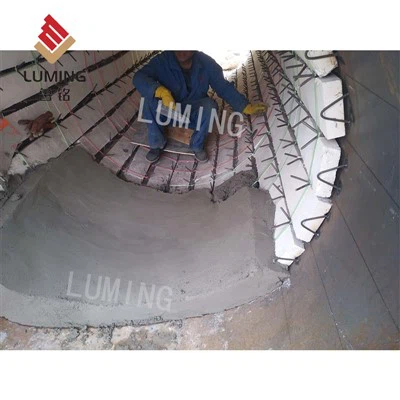
Hey there! As a supplier of refractory mortar, I've seen firsthand how crucial it is to ensure the quality of these materials. Refractory mortar plays a vital role in various high - temperature applications, like furnaces, kilns, and fireplaces. So, in this blog, I'll share with you some practical ways to test the quality of refractory mortar.
Appearance and Physical Inspection
First off, a simple visual inspection can tell you a lot. Take a close look at the physical state of the refractory mortar. It should be evenly mixed without any visible lumps or foreign particles. If you see clumps, it might indicate a problem during the manufacturing process, like uneven mixing or improper storage.
The color of the refractory mortar can also give you some clues. For example, a consistent color throughout the batch is a good sign. Any discoloration could mean that there are impurities in the raw materials or that the material has been exposed to unfavorable conditions.
Particle Size Analysis
Particle size matters big time when it comes to refractory mortar. You can use a sieve analysis to determine the particle size distribution. This involves passing a known quantity of the mortar through a series of sieves with different mesh sizes.
The right particle size distribution ensures good workability and proper packing of the mortar. If the particles are too large, the mortar might not bond well, and if they're too small, it could lead to issues like excessive shrinkage during drying. You can find standard particle size requirements for different types of refractory mortar in industry guidelines. For instance, Corundum Refractory Slurry usually has specific particle size ranges to achieve the best performance.
Chemical Composition Analysis
Knowing the chemical composition of refractory mortar is essential. Different applications require different chemical properties. For example, in a high - sulfur environment, you'd want a mortar that can resist sulfur attack.
There are several methods to analyze the chemical composition. X - ray fluorescence (XRF) is a common one. It can quickly and accurately determine the elemental composition of the mortar. Another option is inductively coupled plasma mass spectrometry (ICP - MS), which is more precise but also more expensive.
The chemical composition affects properties like refractoriness, thermal conductivity, and corrosion resistance. For example, a high alumina content in Mullite Mortar can enhance its refractoriness, making it suitable for very high - temperature applications.
Workability Testing
Workability refers to how easily the mortar can be mixed, placed, and shaped. One way to test workability is by the flow test. You take a measured amount of the mortar and place it in a special flow cone. Then you lift the cone, and the mortar spreads out. Measuring the diameter of the spread mortar gives you an idea of its flowability.
A mortar with good workability should spread evenly without excessive slump or separation. If the mortar is too stiff, it will be difficult to apply, and if it's too runny, it might not hold its shape. Workability is especially important on - site, as it can affect the installation time and quality.
Setting Time Testing
The setting time of refractory mortar is another critical factor. There are two main setting times: initial setting time and final setting time.
To test the initial setting time, you can use a Vicat apparatus. You insert a needle into the mortar, and the time when the needle starts to penetrate the mortar with difficulty is the initial setting time. The final setting time is determined when the needle can no longer penetrate the mortar at all.


Proper setting time is crucial for construction. If the setting time is too short, the mortar may set before it's fully placed, and if it's too long, it can delay the construction process. Different types of refractory mortar, such as Silicon Carbide Refractory Mud, have different recommended setting times based on their intended use.
Strength Testing
Strength is a key quality indicator for refractory mortar. Compressive strength is the most commonly tested strength property. You prepare test specimens according to standard procedures, usually in the shape of cubes or cylinders.
These specimens are then cured under specific conditions for a certain period before being tested in a compression testing machine. The machine applies a gradually increasing load until the specimen fails. The maximum load the specimen can withstand divided by its cross - sectional area gives you the compressive strength.
High - strength refractory mortar is essential for applications where the mortar needs to bear heavy loads or resist mechanical stress, such as in industrial furnaces.
Thermal Expansion and Contraction Testing
Refractory mortar is exposed to high temperatures, so it's important to know how it expands and contracts with temperature changes. You can use a dilatometer to measure thermal expansion and contraction.
The specimen is heated or cooled at a controlled rate, and the change in length is measured. A mortar with a high or inconsistent thermal expansion coefficient can cause cracks and failures in the refractory lining. Understanding the thermal behavior helps in selecting the right mortar for a particular application and ensuring the long - term stability of the structure.
Corrosion Resistance Testing
In many industrial environments, refractory mortar is exposed to corrosive substances. To test corrosion resistance, you can immerse test specimens in a corrosive medium, such as an acid or alkaline solution, for a specific period.
After the immersion, you evaluate the weight loss or surface damage of the specimens. The less the damage, the better the corrosion resistance of the mortar. This is especially important for applications in chemical plants, where the mortar may be in contact with aggressive chemicals.
Conclusion
Testing the quality of refractory mortar is a multi - faceted process. By conducting these various tests, you can ensure that the mortar meets the requirements of your specific application. At our company, we take quality control very seriously. We use these testing methods to guarantee that our products, whether it's Corundum Refractory Slurry, Silicon Carbide Refractory Mud, or Mullite Mortar, are of the highest quality.
If you're in the market for high - quality refractory mortar, don't hesitate to reach out for procurement and further discussion. We're here to assist you and ensure you get the best product for your needs.
References
- ASTM International. Standards related to refractory materials.
- Various industry research papers on refractory mortar testing and properties.