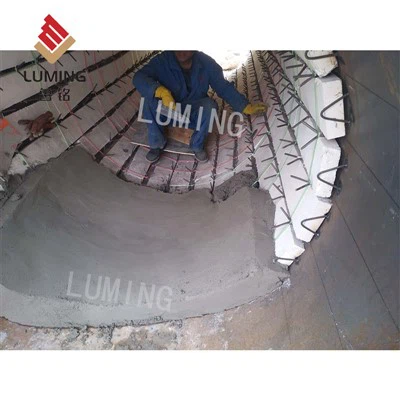
How much lime can a Lime Kiln produce? Well, that's a question I get asked a lot as a Lime Kiln supplier. And let me tell you, it's not a one - size - fits - all answer. There are a bunch of factors that play into how much lime a lime kiln can churn out.
First off, the type of lime kiln matters big time. There are different kinds, like the vertical shaft kiln, the rotary kiln, and the fluidized bed kiln. Each has its own unique way of operating and its own production capacity.
A vertical shaft kiln is a classic. It's been around for ages. These kilns are relatively simple in design. They work by having limestone fed in from the top, and as it moves down through the kiln, it gets heated up by the combustion of fuel. The heat breaks down the limestone into lime. The production capacity of a vertical shaft kiln can vary widely. Small - scale ones might produce anywhere from 10 to 50 tons of lime per day. These are often used by smaller operations or in areas where there's a need for a more localized supply of lime. On the other hand, larger vertical shaft kilns can crank out up to 200 tons of lime daily. They're great for medium - sized industries that need a consistent but not overly massive amount of lime.


Rotary kilns, on the other hand, are like the heavy - hitters in the lime production world. These bad boys are huge cylinders that rotate slowly while limestone and fuel are fed in. The rotation helps ensure even heating and a more efficient conversion of limestone to lime. Rotary kilns can have a much higher production capacity compared to vertical shaft kilns. Smaller rotary kilns can produce around 200 tons of lime per day, but the really big ones? They can go up to 1000 tons or more per day. These are the kinds of kilns you'd find in large industrial complexes or cement plants. Cement plants often use Cement Kiln which are similar in some ways to lime kilns, as lime is an important component in cement production.
Fluidized bed kilns are a bit different. They use a bed of hot gas to suspend and heat the limestone particles. This method allows for very efficient heat transfer and fast reaction times. The production capacity of fluidized bed kilns can range from 50 to 300 tons of lime per day. They're often used when you need a relatively high - speed production of lime with good quality control.
Another factor that affects lime production is the quality of the limestone. Not all limestone is created equal. Limestone with a high calcium carbonate content will produce more lime compared to limestone with a lot of impurities. If the limestone has a lot of clay, silica, or other contaminants, it can reduce the efficiency of the kiln and lower the overall lime production. You see, these impurities can react with the lime during the heating process, creating unwanted by - products and using up energy that could otherwise be used for lime production.
The type of fuel used in the kiln also plays a role. Common fuels include coal, natural gas, and oil. Each fuel has its own energy content and combustion characteristics. For example, natural gas burns very cleanly and can provide a high - intensity heat quickly. This can lead to more efficient lime production, especially in kilns that are designed to work well with natural gas. Coal, on the other hand, is a more traditional fuel. It has a lower cost in many areas, but it can produce more ash and pollutants. The amount of fuel you need to use also depends on the kiln's design and the production rate you're aiming for.
The operating conditions of the kiln are crucial too. The temperature inside the kiln needs to be carefully controlled. If it's too low, the limestone won't fully break down into lime. If it's too high, it can waste energy and potentially damage the kiln lining. The airflow in the kiln is also important. Proper airflow helps with the combustion of the fuel and the removal of the gases produced during the lime - making process.
Maintenance and operation of the kiln are also key. A well - maintained kiln will run more efficiently and produce more lime. Regular inspections, cleaning, and replacement of worn - out parts are essential. If a kiln has a faulty burner or a clogged ventilation system, it can significantly reduce the lime production.
As a Lime Kiln supplier, I've seen all sorts of scenarios. I've worked with customers who have small - scale operations and need a kiln that can produce just enough lime for their local needs. And I've also partnered with large industrial players who require a high - capacity kiln to meet their massive production demands.
For those in the zinc extraction industry, Zinc Extraction Kiln are also an important part of the process. Lime can be used in some zinc extraction methods, and having the right lime production capacity is crucial for the overall efficiency of the zinc extraction process.
If you're in the market for a lime kiln, whether you're a small business or a large corporation, it's important to consider all these factors. You need to think about your production goals, the quality of your raw materials, and your budget. We offer a wide range of Lime Kiln options to suit different needs. Our team of experts can help you choose the right kiln for your specific situation and provide you with all the support you need for installation, operation, and maintenance.
If you're interested in learning more about our lime kilns or want to discuss your lime production requirements, don't hesitate to reach out. We're here to help you get the most out of your lime production process. Whether you're just starting out or looking to upgrade your existing kiln, we've got the solutions for you.
References
- Smith, J. (2018). Lime Kiln Technology and Operations. Industrial Press.
- Johnson, R. (2020). The Impact of Limestone Quality on Lime Production. Journal of Industrial Minerals.
- Williams, A. (2019). Fuel Selection for Lime Kilns. Energy and Fuels Journal.