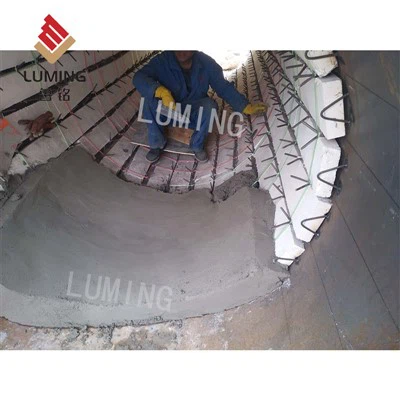
Fireclay bricks are a staple in many industrial applications, especially those involving high temperatures and molten metals. As a fireclay brick supplier, I've witnessed firsthand the intricate dance between these bricks and molten metals. In this blog, I'll delve into the science behind how fireclay bricks interact with molten metals, exploring the mechanisms, challenges, and benefits of this relationship.
Understanding Fireclay Bricks
Before we dive into the interaction with molten metals, let's take a moment to understand what fireclay bricks are. Fireclay bricks are made from a special type of clay that can withstand high temperatures without melting or deforming. They are composed mainly of alumina (Al₂O₃) and silica (SiO₂), with varying proportions depending on the specific application. The high alumina and silica content gives fireclay bricks their excellent refractory properties, making them suitable for use in furnaces, kilns, and other high-temperature environments.
There are different types of fireclay bricks available, each with its own unique characteristics and applications. For example, Fire Clay Tile is commonly used for lining walls and floors in industrial furnaces, while Fire Clay Block is often used for building larger structures such as furnace walls and partitions. Low-porosity Fireclay Brick is designed to have a lower porosity, which makes it more resistant to corrosion and erosion by molten metals.
Interaction Mechanisms
When fireclay bricks come into contact with molten metals, several interaction mechanisms can occur. These mechanisms can be broadly classified into physical and chemical interactions.


Physical Interactions
- Thermal Expansion: Molten metals are typically at very high temperatures, and when they come into contact with fireclay bricks, the bricks experience thermal expansion. This can cause stress within the bricks, leading to cracking and spalling if the expansion is not properly managed. To mitigate this, fireclay bricks are designed with a specific coefficient of thermal expansion that is compatible with the expected temperature range and the type of molten metal they will be in contact with.
- Mechanical Erosion: Molten metals can flow with high velocity and exert mechanical forces on the fireclay bricks. This can lead to erosion of the brick surface over time, especially in areas where the flow is turbulent. The erosion rate depends on factors such as the velocity of the molten metal, the viscosity of the metal, and the hardness and abrasion resistance of the fireclay brick.
Chemical Interactions
- Reaction with Oxides: Molten metals often contain oxides, which can react with the alumina and silica in fireclay bricks. For example, iron oxides in molten iron can react with the silica in the bricks to form silicates. These reactions can change the composition and structure of the brick surface, leading to degradation and reduced refractory performance.
- Penetration and Corrosion: Molten metals can penetrate into the pores of fireclay bricks, especially if the bricks have a high porosity. Once inside the pores, the metal can react with the brick material and cause corrosion. This can weaken the brick structure and eventually lead to its failure.
Challenges in Using Fireclay Bricks with Molten Metals
Despite their many advantages, using fireclay bricks with molten metals also presents several challenges.
- Corrosion Resistance: As mentioned earlier, molten metals can corrode fireclay bricks over time. This can be a significant problem in industries where the bricks are in continuous contact with molten metals, such as the steel and aluminum industries. To improve corrosion resistance, manufacturers often add special additives to the fireclay bricks or use advanced manufacturing techniques to reduce porosity.
- Thermal Shock Resistance: Fireclay bricks can experience thermal shock when they are exposed to rapid changes in temperature, such as when molten metal is poured into a furnace or when the furnace is shut down. Thermal shock can cause cracking and spalling of the bricks, which can reduce their lifespan and performance. To enhance thermal shock resistance, fireclay bricks are designed with a fine-grained structure and a low coefficient of thermal expansion.
- Compatibility with Different Metals: Different molten metals have different chemical compositions and properties, which can affect their interaction with fireclay bricks. For example, some metals may be more corrosive than others, while some may have a higher affinity for certain elements in the bricks. It is important to choose the right type of fireclay brick for the specific molten metal being used to ensure optimal performance and longevity.
Benefits of Using Fireclay Bricks with Molten Metals
Despite the challenges, there are also many benefits to using fireclay bricks with molten metals.
- High Temperature Resistance: Fireclay bricks can withstand extremely high temperatures, making them ideal for use in industries where molten metals are processed. They can maintain their structural integrity and refractory properties even at temperatures above 1000°C, which is essential for ensuring the safe and efficient operation of furnaces and other high-temperature equipment.
- Cost-Effectiveness: Compared to other types of refractory materials, fireclay bricks are relatively inexpensive. This makes them a cost-effective choice for many industrial applications, especially those where large quantities of refractory materials are required.
- Versatility: Fireclay bricks can be used in a wide range of applications involving molten metals, including steelmaking, aluminum smelting, and foundry operations. They can be easily shaped and installed, making them suitable for different types of furnaces and equipment.
Conclusion
In conclusion, the interaction between fireclay bricks and molten metals is a complex and dynamic process that involves both physical and chemical mechanisms. While there are challenges associated with using fireclay bricks with molten metals, such as corrosion and thermal shock, the benefits of high temperature resistance, cost-effectiveness, and versatility make them a popular choice in many industrial applications.
As a fireclay brick supplier, I understand the importance of providing high-quality products that can meet the specific needs of our customers. We offer a wide range of fireclay bricks, including Fire Clay Tile, Fire Clay Block, and Low-porosity Fireclay Brick, to ensure that our customers can find the right solution for their molten metal processing needs.
If you are interested in learning more about our fireclay bricks or would like to discuss your specific requirements, please don't hesitate to contact us. We look forward to the opportunity to work with you and help you find the best refractory solution for your business.
References
- "Refractory Materials: Properties, Selection, and Application" by John N. Marsh
- "Handbook of Refractory Technology" edited by Peter E. D. Morgan
- "High Temperature Materials and Technology" by R. C. Bradt