In the realm of industrial operations, coke ovens play a pivotal role in the production of coke, a key ingredient in steelmaking and other high - energy processes. As a leading Coke Oven supplier, I've witnessed firsthand the critical importance of refractory materials in ensuring the efficient and safe operation of these ovens. In this blog, we'll delve into the fascinating world of how refractory materials withstand the extreme high temperatures within a coke oven.
The Extreme Environment of a Coke Oven
Coke ovens are designed to convert coal into coke through a process called carbonization. This process occurs at extremely high temperatures, typically ranging from 1000°C to 1300°C (1832°F to 2372°F). At these temperatures, normal materials would quickly melt, deform, or break down. The interior of a coke oven is not only hot but also subject to chemical reactions, abrasion from moving coal and coke, and mechanical stresses from expansion and contraction during heating and cooling cycles.
Key Properties of Refractory Materials for Coke Ovens
Refractory materials are specifically engineered to withstand these harsh conditions. The following properties are crucial for their performance in a coke oven:

High Melting Point
The most obvious requirement is a high melting point. Refractory materials used in coke ovens have melting points well above the operating temperatures of the oven. For example, silica bricks, a common refractory material in coke ovens, have a melting point of around 1710°C (3110°F). This high melting point ensures that the material remains solid and maintains its structural integrity even under the intense heat.
Thermal Stability
Thermal stability refers to the ability of a material to resist changes in its physical and chemical properties when exposed to high temperatures. Refractory materials need to maintain their strength, density, and chemical composition over long periods of high - temperature operation. They should not undergo significant thermal expansion or contraction, which could lead to cracking and structural failure. Some refractory materials are designed with a low coefficient of thermal expansion to minimize these issues.
Chemical Resistance
Coke ovens generate a variety of chemical compounds during the carbonization process, including sulfur compounds, alkalis, and other corrosive substances. Refractory materials must be resistant to chemical attack to prevent degradation. For instance, alumina - based refractories are known for their good chemical resistance to many of the substances found in a coke oven environment.
Abrasion Resistance
As coal and coke are loaded and unloaded from the oven, there is significant abrasion on the refractory lining. The refractory materials need to be hard and tough enough to withstand this mechanical wear. Materials with high hardness, such as silicon carbide - based refractories, are often used in areas prone to abrasion, like the oven doors and charging holes.
Types of Refractory Materials Used in Coke Ovens
Several types of refractory materials are commonly used in coke ovens, each with its own advantages and applications:
Silica Bricks
Silica bricks are one of the most widely used refractory materials in coke ovens. They are made primarily of silica (SiO₂) and have excellent thermal stability at high temperatures. Silica bricks have a relatively low thermal conductivity, which helps to conserve heat within the oven. They also have good resistance to slag and chemical attack. However, they are brittle and can be prone to cracking if subjected to sudden temperature changes.
Fireclay Bricks
Fireclay bricks are made from clay minerals and have a lower cost compared to some other refractory materials. They have a moderate melting point and good thermal insulation properties. Fireclay bricks are often used in less critical areas of the coke oven, such as the outer walls and the flue passages.
High - Alumina Bricks
High - alumina bricks contain a higher percentage of alumina (Al₂O₃) compared to fireclay bricks. They have better thermal shock resistance, higher strength, and improved chemical resistance. High - alumina bricks are suitable for use in areas where the temperature is extremely high or where there is a greater risk of chemical attack, such as the combustion chambers.
Carbon - Based Refractories
Carbon - based refractories, such as graphite and carbon bricks, are used in some modern coke ovens. They have excellent thermal conductivity, which can help to improve the heat transfer efficiency within the oven. Carbon - based refractories also have good resistance to chemical attack and thermal shock. However, they are more expensive and require special handling to prevent oxidation.
The Role of Refractory Design in Withstanding High Temperatures
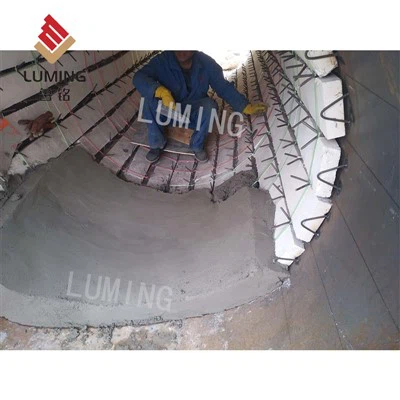
In addition to the properties of the refractory materials themselves, the design of the refractory lining in a coke oven is also critical. The lining is typically installed in multiple layers, with each layer serving a specific purpose.
Insulating Layers
The outer layers of the refractory lining are often insulating materials. These layers help to reduce the heat loss from the oven to the surrounding environment, improving energy efficiency. Insulating refractories have a low thermal conductivity, which means they do not conduct heat well. By reducing heat loss, the oven can maintain a more stable temperature and reduce the energy consumption required to keep the process going.
Working Layers
The inner layers, or working layers, are in direct contact with the hot gases and the coal/coke. These layers are made of high - quality refractory materials with excellent high - temperature resistance, chemical resistance, and abrasion resistance. The design of the working layers also takes into account the expansion and contraction of the materials during heating and cooling cycles. For example, expansion joints are often incorporated into the lining to allow for the thermal expansion of the refractory bricks without causing cracking.
Advanced Technologies and Innovations
The field of refractory materials for coke ovens is constantly evolving. New technologies and materials are being developed to improve performance and reduce costs.
Nanotechnology
Nanotechnology is being explored to enhance the properties of refractory materials. By incorporating nanoparticles into the refractory matrix, it is possible to improve the strength, thermal stability, and chemical resistance of the materials. Nanoparticles can fill the pores in the refractory material, making it more dense and less susceptible to chemical attack.
Composite Materials
Composite materials, which combine the advantages of different refractory materials, are also being developed. For example, a composite material might consist of a high - strength core surrounded by a layer of a more chemically resistant material. This allows for the optimization of the material's properties for different parts of the coke oven.
Related Products and Their Importance
As a Coke Oven supplier, we also offer related products such as the Pelletizing Rotary Kiln, Ferromanganese Kiln, and Vanadium - titanium Kiln. These kilns also rely on high - quality refractory materials to operate at high temperatures. The refractory lining in these kilns needs to withstand similar harsh conditions as in a coke oven, including high temperatures, chemical attack, and abrasion.
Conclusion and Call to Action
In conclusion, refractory materials are the unsung heroes of the coke oven industry. Their ability to withstand high temperatures, chemical attack, and mechanical wear is essential for the efficient and safe operation of coke ovens. As a Coke Oven supplier, we are committed to providing the highest - quality refractory materials and related products to our customers.
If you are in the market for a coke oven or related kiln products, and you want to ensure that you are getting the best refractory solutions, we invite you to contact us for a detailed discussion. Our team of experts can help you select the right refractory materials and design the optimal lining for your specific needs. Let's work together to achieve your industrial goals with reliable and high - performance refractory solutions.
References
- Schneider, H., & Singhal, R. (2008). Handbook of Refractory Technology. Wiley - VCH Verlag GmbH & Co. KGaA.
- NIST Chemistry WebBook, NIST Standard Reference Database Number 69, Eds. P.J. Linstrom and W.G. Mallard, National Institute of Standards and Technology, Gaithersburg MD, 20899, https://webbook.nist.gov (retrieved [date]).
- ASTM International. (2019). Standard Terminology Relating to Refractory Materials. ASTM C71 - 19.