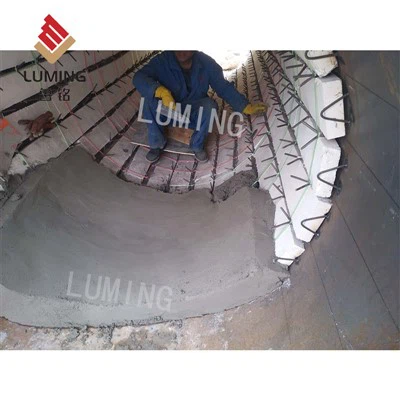
Hey there! I'm a supplier of Center-hole Bricks, and I've been getting a lot of questions lately about how these bricks perform in polluted environments. So, I thought I'd share some insights based on my experience and the latest research.
First off, let's talk about what Center-hole Bricks are. These are specialized bricks with a hole in the center, which gives them some unique properties compared to regular bricks. You can learn more about them on this page: Center-hole Brick. They're often used in industrial settings, like furnaces and kilns, where they need to withstand high temperatures and harsh conditions.
Now, when it comes to polluted environments, there are a few key factors to consider. Polluted environments can be filled with all sorts of nasty stuff, like chemicals, dust, and acidic gases. These pollutants can have a big impact on the performance and lifespan of building materials, including Center-hole Bricks.
One of the main concerns in a polluted environment is chemical corrosion. Some pollutants, like sulfur dioxide and nitrogen oxides, can react with the materials in the bricks. This can lead to the formation of new compounds that are weaker or more brittle than the original brick material. Over time, this corrosion can cause the bricks to crack, crumble, or lose their structural integrity.
However, Center-hole Bricks are designed to be pretty tough. They're usually made from high - quality ceramic materials that have good chemical resistance. The ceramic composition helps to protect the bricks from the corrosive effects of many common pollutants. For example, the ceramic matrix can act as a barrier, preventing the pollutants from penetrating deep into the brick and causing damage.
Another aspect to consider is the dust in polluted environments. Dust particles can settle on the surface of the bricks and accumulate over time. This might not seem like a big deal at first, but if the dust is abrasive, it can wear down the surface of the bricks. Also, if the dust contains reactive chemicals, it can start the corrosion process. But the smooth surface of Center - hole Bricks makes it a bit harder for dust to stick. And in industrial applications, there are often cleaning mechanisms in place to remove the dust regularly.


Acidic gases are also a major problem in polluted areas. These gases can dissolve in moisture on the brick surface and form acids. The acids can then react with the brick material, eating away at it. But again, the high - quality ceramics used in Center - hole Bricks are often resistant to acidic attacks. The chemical bonds in the ceramic structure are strong enough to withstand the acid for a long time.
Now, let's compare Center - hole Bricks with some other related products. Baffle Bricks are also used in similar industrial settings. While baffle bricks are great for directing the flow of gases and heat, Center - hole Bricks have the advantage of better chemical resistance in polluted environments. The center hole in the bricks also allows for better heat transfer, which can be a plus in some applications.
Ceramic Heat Accumulators are another related product. They're used to store and release heat. Center - hole Bricks can work in tandem with ceramic heat accumulators in industrial heating systems. In a polluted environment, the Center - hole Bricks can protect the heat accumulators from direct contact with pollutants, extending their lifespan.
In addition to their chemical resistance, Center - hole Bricks also have good thermal stability. In polluted industrial environments, there are often large temperature fluctuations. The ability of Center - hole Bricks to expand and contract without cracking is crucial. The center hole in the bricks actually helps with this. It provides some room for the brick to expand when heated, reducing the internal stress that could lead to cracking.
In real - world applications, I've seen Center - hole Bricks perform really well in polluted environments. For example, in some power plants where there are high levels of sulfur dioxide emissions, the Center - hole Bricks in the furnaces have lasted for years with minimal damage. This is a testament to their durability and performance.
But of course, proper installation and maintenance are also key. When installing Center - hole Bricks, it's important to make sure they're properly sealed. This can prevent pollutants from seeping into the gaps between the bricks. Regular inspections are also necessary to catch any signs of damage early on. If a brick is starting to show signs of corrosion or wear, it can be replaced before it causes a bigger problem.
So, if you're in an industry that operates in a polluted environment and you're looking for a reliable building material for your furnaces, kilns, or other high - temperature equipment, Center - hole Bricks are a great option. They offer a combination of chemical resistance, thermal stability, and good structural performance.
If you're interested in learning more about how Center - hole Bricks can meet your specific needs in a polluted environment, or if you're ready to start a procurement discussion, I'd love to hear from you. Just reach out, and we can talk about the best solutions for your project.
References
- "Ceramic Materials and Their Applications in Harsh Environments" - Journal of Industrial Ceramics
- "The Effects of Pollutants on Building Materials" - Environmental Science Review