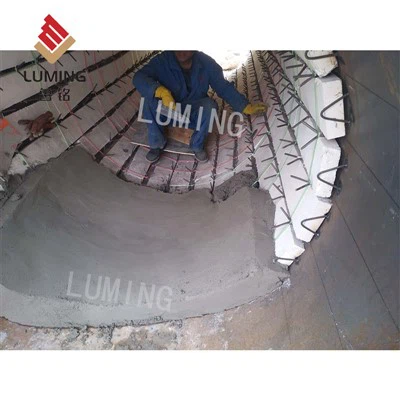
Do tank opening bricks absorb moisture? This is a question that many of us in the industry and our customers often ponder. As a supplier of Tank Opening Brick, I've delved deep into this topic to provide accurate and useful information.
The Composition and Structure of Tank Opening Bricks
To understand whether tank opening bricks absorb moisture, we first need to look at their composition and structure. Tank opening bricks are typically made from high - quality refractory materials. These materials are carefully selected for their ability to withstand high temperatures, chemical corrosion, and mechanical stress.
The main components of tank opening bricks may include alumina, silica, and other refractory oxides. These substances are combined in specific proportions and then formed into bricks through a series of manufacturing processes such as pressing, firing, and heat treatment. The firing process is crucial as it determines the density and porosity of the bricks.


A well - fired tank opening brick has a relatively low porosity. Porosity refers to the amount of empty space within the brick. If a brick has high porosity, it means there are more tiny holes or channels that can allow moisture to penetrate. In the case of tank opening bricks, manufacturers aim to keep the porosity as low as possible to enhance their performance in harsh industrial environments.
Moisture Absorption Mechanisms
Moisture absorption in materials generally occurs through two main mechanisms: capillary action and adsorption.
Capillary action is the process by which liquids are drawn into small spaces or pores due to the surface tension of the liquid and the adhesive forces between the liquid and the solid surface. In bricks with high porosity, capillary action can cause moisture to be drawn into the brick from the surrounding environment. For example, if a tank opening brick is exposed to a humid atmosphere, water molecules can be pulled into the pores of the brick through capillary action.
Adsorption, on the other hand, is the adhesion of molecules of a gas or liquid to the surface of a solid. Even in bricks with low porosity, the surface of the brick can adsorb water molecules from the air. However, the amount of moisture adsorbed through this mechanism is usually much less compared to capillary action.
Factors Affecting Moisture Absorption of Tank Opening Bricks
Several factors can influence whether and how much moisture tank opening bricks absorb.
Porosity
As mentioned earlier, porosity is a key factor. Bricks with higher porosity are more likely to absorb moisture. During the manufacturing process, strict quality control measures are taken to ensure that the porosity of tank opening bricks is within an acceptable range. A low - porosity brick will have fewer channels for moisture to enter, thus reducing the risk of moisture absorption.
Surface Finish
The surface finish of the brick also plays a role. A smooth and dense surface finish can reduce the area available for moisture adsorption. Some tank opening bricks are treated with special coatings or glazes to create a more impermeable surface. These coatings can act as a barrier, preventing moisture from coming into contact with the brick's surface and reducing the potential for absorption.
Environmental Conditions
The environment in which the tank opening bricks are used or stored has a significant impact on moisture absorption. In a highly humid environment, the bricks are more likely to absorb moisture. For example, in coastal areas where the air has a high relative humidity, the risk of moisture absorption is greater compared to arid regions. Temperature can also affect moisture absorption. Warmer temperatures can increase the rate of evaporation, but they can also increase the kinetic energy of water molecules, making them more likely to interact with the brick surface.
Testing for Moisture Absorption
To accurately determine whether tank opening bricks absorb moisture, various testing methods are available.
One common method is the immersion test. In this test, a sample of the brick is immersed in water for a specific period of time. The weight of the brick is measured before and after immersion. The increase in weight indicates the amount of moisture absorbed by the brick. Another test is the moisture sorption test, which measures the amount of moisture adsorbed by the brick when exposed to a controlled - humidity environment over a certain period.
These tests are important not only for quality control during manufacturing but also for providing customers with reliable information about the performance of the tank opening bricks. As a supplier, we conduct these tests regularly to ensure that our products meet the highest standards.
Implications of Moisture Absorption in Tank Opening Bricks
If tank opening bricks absorb moisture, it can have several implications.
Structural Integrity
Moisture absorption can lead to expansion and contraction of the brick as the water freezes and thaws. This repeated expansion and contraction can cause cracks and damage to the brick structure, reducing its strength and durability. In industrial tanks, where the bricks are subjected to high temperatures and mechanical stress, any compromise in the structural integrity of the tank opening bricks can pose a serious safety risk.
Chemical Reactions
Moisture can also trigger chemical reactions within the brick. For example, if the brick contains certain reactive components, the presence of water can accelerate corrosion or other chemical processes. This can lead to the degradation of the brick and a reduction in its ability to withstand high temperatures and chemical corrosion.
Insulation Properties
Tank opening bricks are often used for their insulation properties. Moisture absorption can reduce the insulation effectiveness of the bricks. Water has a higher thermal conductivity than most refractory materials, so the presence of moisture can increase the heat transfer through the brick, leading to energy losses and potential overheating of the tank.
Preventing Moisture Absorption
To prevent moisture absorption in tank opening bricks, several measures can be taken.
Proper Storage
During storage, it is important to keep the bricks in a dry environment. They should be stored off the ground and covered to protect them from rain and humidity. If possible, the storage area should be climate - controlled to maintain a low relative humidity.
Installation Considerations
During installation, proper sealing and waterproofing techniques should be used. For example, using a high - quality refractory mortar that has good waterproofing properties can help prevent moisture from seeping into the joints between the bricks. Additionally, ensuring that the tank is properly ventilated can reduce the humidity inside the tank and minimize the risk of moisture absorption.
Conclusion
In conclusion, while tank opening bricks are designed to have low moisture absorption characteristics, they can still absorb moisture under certain conditions. The composition, structure, surface finish, and environmental factors all play a role in determining the extent of moisture absorption. As a supplier of Tank Opening Brick, we are committed to providing high - quality products that minimize the risk of moisture absorption.
If you are in the market for tank opening bricks, we invite you to contact us for more information and to discuss your specific requirements. Our team of experts is ready to assist you in choosing the right tank opening bricks for your application. We can provide detailed product specifications, test results, and installation guidance to ensure that you get the best performance from our products.
References
- ASTM International. (Year). Standard test methods for water absorption, bulk density, apparent porosity, and true porosity of burned refractory brick and shapes by boiling water. ASTM C20.
- Refractory Handbook. (Publisher, Year). A comprehensive guide to refractory materials and their properties.