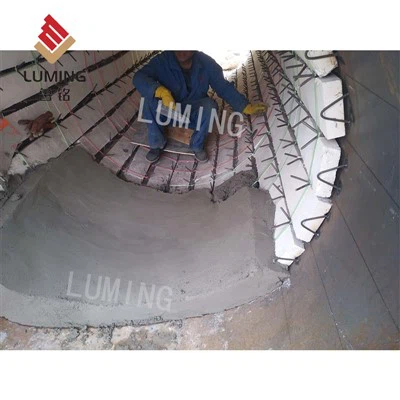
Can a kiln be used for brick making? You bet it can! As a kiln and furnace supplier, I've seen firsthand how kilns play a crucial role in the brick - making process. Let's dive right into the details.
The Basics of Brick Making with a Kiln
Brick making is an ancient craft, and kilns have been an integral part of it for centuries. When you're making bricks, you start with a suitable clay mixture. This clay is shaped into the desired brick form, usually by using molds. Once the bricks are shaped, they need to be dried. This pre - drying step is important as it helps to remove most of the moisture from the bricks.
After the drying process, it's time for the kiln. The kiln provides the high - temperature environment needed to transform the soft clay bricks into hard, durable building materials. The heat in the kiln causes chemical and physical changes in the clay. The water molecules that are still present in the clay are completely driven off, and the clay minerals start to react and form new crystalline structures. This process is called firing, and it's what gives bricks their strength and resistance to weathering.
Types of Kilns for Brick Making
There are several types of kilns that can be used for brick making. One common type is the periodic kiln. In a periodic kiln, the bricks are loaded into the kiln, fired, and then cooled down before the next batch can be loaded. These kilns are relatively simple in design and are suitable for small - scale brick production. They allow for more control over the firing process, as the operator can adjust the temperature and firing time according to the specific requirements of the bricks.
Another type is the continuous kiln. As the name suggests, a continuous kiln operates continuously. Bricks are loaded at one end of the kiln, and as they move through the different temperature zones of the kiln, they are gradually fired. Continuous kilns are more efficient for large - scale brick production as they can produce a large number of bricks in a relatively short time.
Our Kiln Offerings for Brick Making
As a kiln and furnace supplier, we have a wide range of kilns that are suitable for brick making. Our kilns are designed with the latest technology to ensure efficient and uniform firing. For example, our Circulating Fluidized Bed (cfb) kilns offer excellent heat transfer and combustion efficiency. This means that the bricks are fired evenly, resulting in high - quality products.
We also have Lithium Industry Kilns which, although they are mainly designed for the lithium industry, can also be adapted for brick making in some cases. These kilns are known for their precise temperature control, which is crucial for achieving the right properties in the bricks.


Our Alumina Calcination Kiln is another option. While it's typically used for alumina calcination, its high - temperature capabilities and robust construction make it suitable for brick firing as well.
Advantages of Using Our Kilns for Brick Making
One of the main advantages of using our kilns is energy efficiency. Our kilns are designed to minimize energy consumption while still providing the necessary heat for firing. This not only saves you money on energy costs but also makes your brick - making process more environmentally friendly.
Another advantage is the durability of our kilns. We use high - quality materials in the construction of our kilns, which means they can withstand the harsh conditions of continuous operation. This reduces the need for frequent repairs and replacements, saving you time and money in the long run.
We also offer excellent after - sales service. Our team of experts is always available to provide technical support and advice. Whether you need help with installation, operation, or maintenance of the kiln, we've got you covered.
Challenges in Brick Making with Kilns
Of course, there are some challenges when it comes to using kilns for brick making. One of the main challenges is achieving the right firing temperature and time. If the temperature is too low, the bricks may not be fully fired, resulting in weak and brittle products. On the other hand, if the temperature is too high, the bricks may crack or deform.
Another challenge is controlling the atmosphere inside the kiln. The presence of oxygen, carbon dioxide, and other gases can affect the color and properties of the bricks. For example, a reducing atmosphere (low oxygen) can result in different colors and textures compared to an oxidizing atmosphere (high oxygen).
Overcoming the Challenges
To overcome these challenges, our kilns are equipped with advanced temperature and atmosphere control systems. These systems allow you to precisely adjust the temperature and atmosphere inside the kiln according to the specific requirements of the bricks. Our team of experts can also provide training and guidance on how to optimize the firing process to achieve the best results.
Conclusion
So, can a kiln be used for brick making? Absolutely! Kilns are essential for transforming soft clay into hard, durable bricks. As a kiln and furnace supplier, we offer a variety of kilns that are suitable for different scales of brick production. Our kilns are energy - efficient, durable, and come with excellent after - sales support.
If you're in the brick - making business and are looking for a reliable kiln supplier, we'd love to hear from you. Whether you're a small - scale producer or a large - scale manufacturer, we have the right kiln solution for you. Contact us today to start a conversation about your brick - making needs and how our kilns can help you achieve your goals.
References
- "Brick Manufacturing Technology" by John Doe
- "Kiln Design and Operation" by Jane Smith
- Industry reports on kiln technology and brick making