


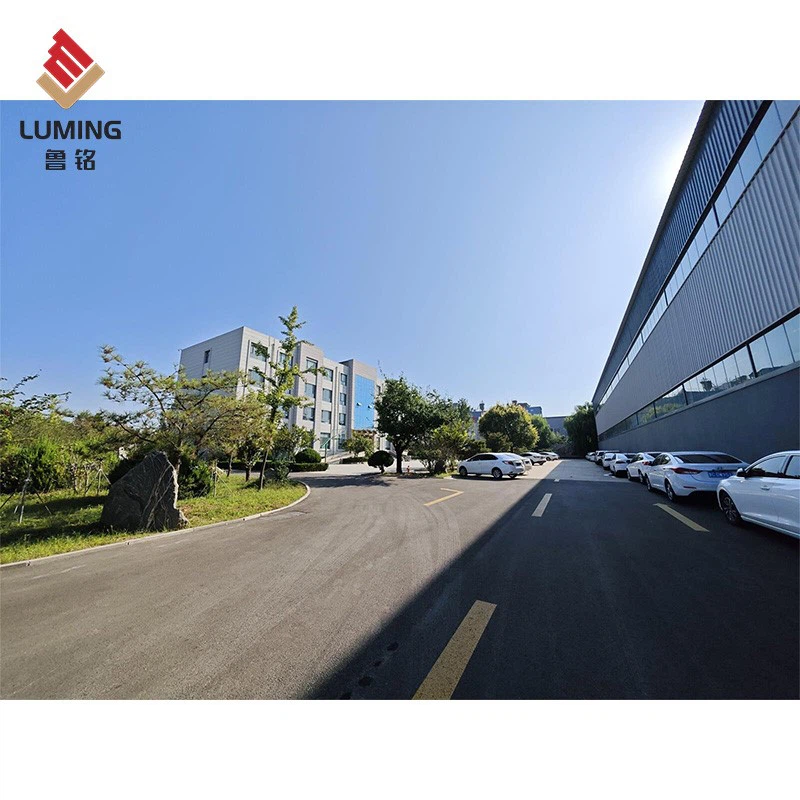
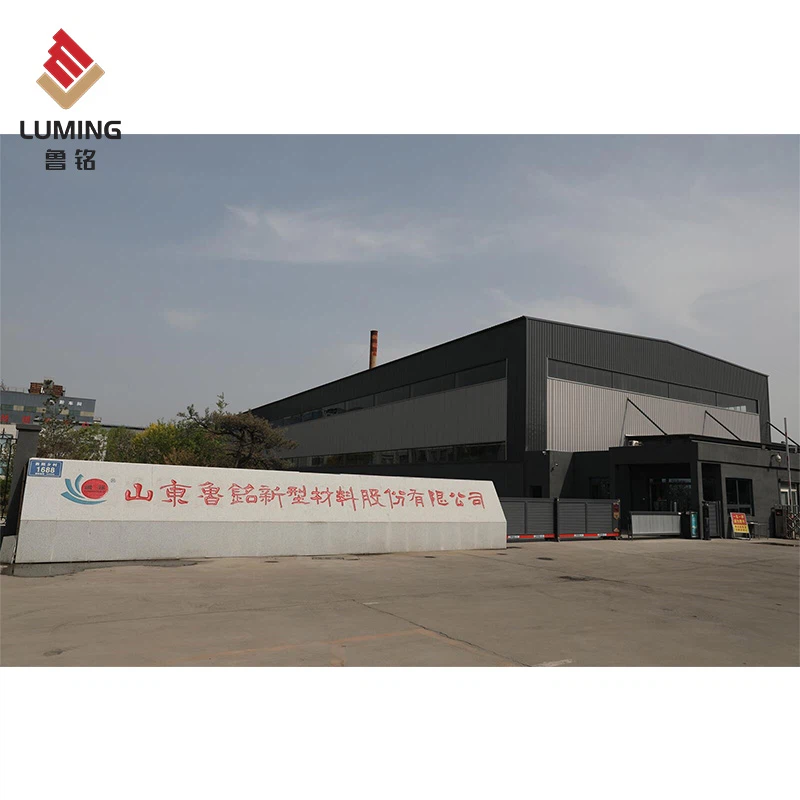
Shandong Luming New Materials Technology Co., Ltd. is one of the leading manufacturers and suppliers of sintered magnesia brick in China. We have world-leading production equipment and strong manufacturing capabilities. Please feel free to buy premium sintered magnesia brick at competitive price from our factory.
Sintered Magnesia Brick is an important basic refractory material, with periclase as its main crystal phase and a magnesium oxide (MgO) content usually above 90%. It's produced through high-temperature sintering and possesses a series of excellent properties, making it widely used in high-temperature industrial fields.
Production Process of Sintered Magnesia Bricks
The production of magnesia refractory brick typically involves the following key steps:
Raw Material Preparation:
1).The primary raw material is sintered magnesia clinker (also known as magnesia grog), which is usually produced by calcining natural magnesite (magnesium carbonate) or seawater magnesia at high temperatures. For high-purity products, high-purity sintered magnesia or fused magnesia is used.
2).Depending on product requirements, other auxiliary materials like binders, stabilizers, and antioxidants may be added.
Crushing and Grinding: Lump magnesia clinker is crushed and then ground into fine powders of different particle sizes using ball mills to meet batching requirements. Combining different particle sizes helps improve the density of the brick body.
Batching and Mixing: Various raw materials are precisely weighed and mixed according to strict formula ratios.Thorough mixing is performed in a mixer to ensure uniform distribution of raw materials and full integration with the binder, forming a plastic body.
Forming: The mixed material is pressed into brick blanks of specific shapes and sizes using hydraulic presses.
Drying: The pressed brick blanks are sent to a drying kiln to remove moisture.
High-Temperature Firing: The bricks are fired at high temperatures (typically 1600–1800°C) in tunnel kilns to achieve densification and form a stable crystal structure.
Inspection and Packaging: The finished bricks undergo quality inspection (e.g., for dimensions, density, and refractoriness) and are packaged for shipment if they meet standards.
Technical Data of Magnesite Refractory Brick
|
Item |
Unit |
Ordinary Sintered Magnesia Bricks |
High-Purity Sintered Magnesia Bricks |
Direct-Bonded Magnesia Bricks |
|
MgO |
% |
85- 90 |
≥ 96 |
≥ 95 |
|
CaO |
% |
≤ 2.5 |
≤ 1.5 |
≤ 1.5 |
|
SiO₂ |
% |
≤ 3.5 |
≤ 1 |
≤ 2.5 |
|
Fe₂O₃ |
% |
≤ 1.0 |
≤ 0.5 |
≤ 0.8 |
|
Al₂O₃ |
% |
≤ 0.5 |
≤ 0.3 |
≤ 0.5 |
|
Bulk Density |
g/cm³ |
2.85-2.95 |
2.95-3.05 |
≥ 3.15 |
|
Apparent Porosity |
% |
16-20 |
15-18 |
≤ 17 |
|
Cold Crushing Strength |
MPa |
≥ 50 |
≥ 60 |
≥ 60 |
|
Refractoriness Under Load |
℃ |
≥ 1500 |
≥ 1650 |
≥ 1600 |
|
Permanent Linear Change on Reheating |
% |
± 0.5 (1600℃, 2h) |
± 0.3 (1700℃, 2h) |
± 0.3 (1700℃, 2h) |
|
Thermal Shock Resistance (1100°C, water cooling, ) |
Cycles |
2-4 |
3-5 |
5-8 |
|
Refractoriness |
℃ |
≥ 2000 |
≥ 2000 |
≥ 2000 |
|
Thermal Conductivity ( 1000°C) |
W/m·K |
2.5-3.5 |
2-3 |
2-3 |


Characteristics of Magnesium Oxide Bricks
The main characteristics of magnesium oxide bricks stem from their high magnesium oxide content and dense crystal structure:
High Refractoriness
Magnesium oxide refractory bricks have a refractoriness exceeding 2000°C due to MgO's high melting point (2800°C). Therefore, they can maintain structural stability at extremely high temperatures, with their refractoriness under load generally above 1550°C.
01
Excellent Resistance to Alkaline Corrosion
Magnesium oxide is an alkaline substance,So sintered magnesia bricks resist corrosion from alkaline slags, iron oxides, and high-calcium fluxes, making them ideal for areas exposed to alkaline media.
02
Good High-Temperature Volume Stability
At high temperatures, the volume changes of magnesia bricks are minimal, which helps maintain the integrity of the furnace lining and extends its service life.
03
Good Thermal Conductivity
High thermal conductivity, and relatively large thermal expansion coefficient, Suitable for heat transfer in high-temperature equipment.
04
High Density and Low Porosity
High bulk density≥ 3.1 g/cm³ and low apparent porosity≤ 20% making them good mechanical strength and resistance to penetration, suitable for continuous operation in industrial kilns.
05
High Mechanical Strength
High-pressure molding and high-temperature firing result in a dense structure with high compressive strength and good wear resistance. Their compressive strength typically ranges from 40-80MPa.
06
Poor Thermal Shock Resistance
Due to the high thermal expansion coefficient of magnesium oxide (13.5×10⁻⁶/°C), sintered magnesia bricks have poor thermal shock resistance and are prone to cracking under rapid temperature changes.
07
Susceptibility to Hydration
Free MgO in sintered magnesia readily reacts with water to form magnesium hydroxide (Mg(OH)₂), causing the brick to pulverize, so moisture-proof storage is required.
08
Applications of Magnesium Brick
Due to their excellent high-temperature resistance and resistance to alkaline slag corrosion, magnesium bricks are widely used in the following industrial fields:
1.Iron and Steel Industry:
1).Steelmaking Furnace Linings: They are primary materials for linings of electric arc furnaces, converters, and refining furnaces, especially at the slag line, which is crucial for extending furnace life.
2).Ladles: Used as linings for steel ladles, particularly in areas exposed to steel slag, to resist slag corrosion.
3).Hot Metal Mixers: Used as lining material for hot metal mixers.
4).Converter bottoms are often built with sintered magnesia bricks containing higher impurities.
2.Non-ferrous Metal Smelting: Linings for copper, nickel, lead, aluminum and other non-ferrous metal smelting furnaces due to their strong resistance to slags containing iron and silicon.
3.Cement Industry: Linings for the burning zone and transition zone of cement rotary kilns, resisting high-temperature clinker and alkaline atmosphere corrosion.
4.Glass Industry: Checker bricks in the regenerators of glass melting furnaces, enduring high temperatures and corrosion from alkaline volatiles.
5.Lime Kilns: Used as linings for lime kilns.
6.Chemical and Petrochemical Industries: Used in kilns exposed to alkaline media, such as magnesium compound production and alkali recovery furnaces.
7.Other High-Temperature Industrial Furnaces:Various heating furnaces, tunnel kilns, and other industrial furnaces that require resistance to high temperatures and alkaline corrosion.
Packaging and Shipping of Sintered Magnesia Brick
1.Packed on wooden pallets with moisture-proof film to prevent damage.
2.Packed on wooden box.
3.Keep in dry, ventilated areas.
Our Company


FAQ
Hot Tags: sintered magnesia brick, China sintered magnesia brick manufacturers, suppliers, factory, Magnesia-chrome Bricks, Magnesia-carbon Bricks, Magnesia-alumina Bricks, Sintered Magnesia Brick, magnesium brick, Fused Magnesia Brick


