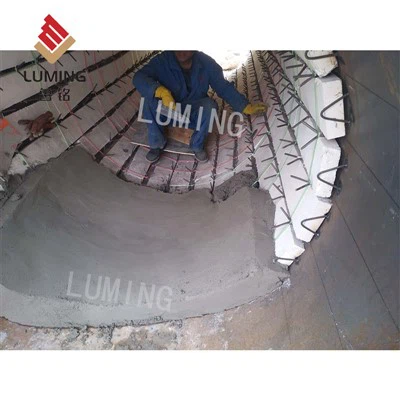
Hey there! I'm a supplier of Baffle Brick, and today I wanna chat about a question that often pops up: Will painting baffle bricks affect their performance?
Let's start by understanding what baffle bricks are and what they do. Baffle bricks are an important part of many industrial heating systems, especially those related to Regenerative Burner System. They help control the flow of hot gases, distribute heat evenly, and improve the overall efficiency of the heating process. Think of them as traffic controllers for heat, making sure everything runs smoothly in a furnace or a similar industrial setup.
Now, painting might seem like a simple cosmetic change. You might want to paint baffle bricks to give them a fresh look, or maybe to mark them for identification purposes. But the question is, does it mess with their performance?


The Science Behind Baffle Brick Performance
To answer that, we need to dig a bit into the science of how baffle bricks work. These bricks are made from special materials that can withstand high temperatures. They have specific physical and chemical properties that are crucial for their function. For example, their porosity allows them to absorb and release heat effectively. This is similar to how a Ceramic Heat Accumulator stores and releases thermal energy.
The surface of a baffle brick also plays a role. It needs to be smooth enough to allow the hot gases to flow over it without too much resistance. Any change to the surface, like adding a layer of paint, could potentially affect this flow.
Potential Effects of Painting
1. Heat Transfer
One of the main concerns is how painting might affect heat transfer. Paint is usually a poor conductor of heat compared to the materials baffle bricks are made of. When you apply a layer of paint, it can act as an insulator. This means that the heat transfer between the hot gases and the baffle brick might be reduced. As a result, the baffle brick might not be able to absorb and release heat as efficiently as it should. This could lead to uneven heating in the furnace and a decrease in the overall efficiency of the Regenerative Burner System.
2. Chemical Reactions
Another issue is the potential for chemical reactions. At high temperatures, the paint could break down and release harmful chemicals. These chemicals could react with the baffle brick material or the hot gases in the furnace. This not only affects the performance of the baffle brick but could also cause damage to other parts of the heating system. For example, the released chemicals could corrode the metal components in the furnace.
3. Surface Roughness
Painting can also change the surface roughness of the baffle brick. A rough surface can increase the resistance to the flow of hot gases. This means that the gases might not be able to move through the furnace as easily, which can disrupt the normal operation of the system. It could also lead to higher energy consumption as the system has to work harder to push the gases through.
When Painting Might Be Okay
However, there are some cases where painting baffle bricks might not have a significant impact on their performance. If the paint is specifically designed for high - temperature applications and has good heat - conducting properties, it might be possible to paint the baffle bricks without causing too many problems. But even in this case, it's important to test the paint thoroughly before applying it to a large number of baffle bricks.
Testing and Evaluation
Before you decide to paint your baffle bricks, it's a good idea to do some testing. You can take a small sample of the baffle brick and paint it. Then, subject it to similar conditions as it would experience in the actual furnace. Measure the heat transfer, the flow of gases, and any changes in the physical properties of the brick over time. This will give you a better idea of whether painting will affect the performance.
Conclusion
In conclusion, painting baffle bricks can potentially have a negative impact on their performance. The heat - transfer properties, chemical stability, and surface characteristics of the baffle bricks are all important for their proper function. While there might be some situations where painting is okay, it's crucial to be cautious and do proper testing first.
If you're in the market for high - quality baffle bricks or have any questions about their performance, don't hesitate to reach out. We're here to help you make the best decisions for your industrial heating needs. Whether you're looking to optimize your Regenerative Burner System or need more information about Ceramic Heat Accumulator, we've got the expertise and the products to support you. Let's start a conversation and see how we can work together to improve your operations.
References
- Industrial Heating Handbook: Covers the basics of heat transfer and the function of baffle bricks in heating systems.
- Journal of High - Temperature Materials and Processes: Contains research on the effects of surface coatings on high - temperature materials.