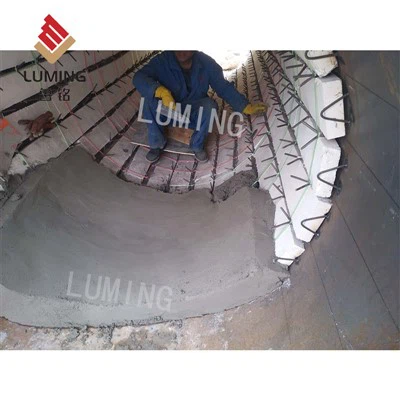
Hey there, friends! As a supplier of refractory mortar, I've seen firsthand the diverse needs of different industries. Refractory mortar is a crucial component in many high - temperature applications, and there are several types available in the market. Today, I'll walk you through the various types to help you understand which one might be the best fit for your project.
1. Fireclay Refractory Mortar
Let's start with Fireclay Refractory Mortar. This is one of the most commonly used types of refractory mortar. It's made primarily from fireclay, which is a type of clay that can withstand high temperatures.
Fireclay refractory mortar has a relatively low cost, making it a popular choice for budget - conscious projects. It has good thermal insulation properties, which means it can help keep heat in and reduce energy loss. This is especially important in applications like kilns, fireplaces, and furnaces.
The installation of fireclay refractory mortar is also quite straightforward. It can be easily mixed with water to form a paste - like consistency, which is then applied between the refractory bricks. It bonds well with the bricks, providing a stable structure even under high - temperature conditions.
If you're interested in learning more about fireclay refractory mortar, you can check out Fireclay Refractory Mortar.
2. Mullite Mortar
Next up is Mullite Mortar. Mullite is a mineral that has excellent high - temperature properties. Mullite mortar is known for its high strength and low thermal expansion.
Under high temperatures, many materials tend to expand, which can cause cracks and structural problems. But mullite mortar has a very low coefficient of thermal expansion, which means it can maintain its shape and integrity even when exposed to extreme heat.
This type of mortar is often used in applications where high - strength and dimensional stability are required, such as in the lining of industrial furnaces and glass melting tanks. It also has good resistance to chemical corrosion, making it suitable for environments where it might come into contact with various chemicals.
To get more detailed information about mullite mortar, have a look at Mullite Mortar.
3. Magnesia Refractory Mud
Magnesia Refractory Mud is another important type of refractory mortar. It's mainly composed of magnesium oxide (MgO). Magnesia has a very high melting point, which gives magnesia refractory mud excellent high - temperature resistance.
This type of mortar is particularly well - suited for applications in the steel industry. In steelmaking, the temperatures are extremely high, and magnesia refractory mud can hold up under these intense conditions. It helps to line the steel ladles, converters, and other steelmaking equipment.
Magnesia refractory mud also has good resistance to slag and metal penetration. Slag is a by - product in steelmaking, and if it penetrates the refractory lining, it can cause damage and reduce the lifespan of the equipment. The ability of magnesia refractory mud to resist slag penetration is a major advantage.
If you want to know more about magnesia refractory mud, visit Magnesia Refractory Mud.
4. Alumina - Silica Refractory Mortar
Alumina - silica refractory mortar is a combination of alumina (Al₂O₃) and silica (SiO₂). The ratio of alumina to silica can vary, which allows for customization depending on the specific requirements of the application.
This type of mortar offers a good balance between high - temperature resistance and mechanical strength. It has better thermal shock resistance compared to some other types of refractory mortar. Thermal shock occurs when there is a rapid change in temperature, which can cause the material to crack. Alumina - silica refractory mortar can withstand these sudden temperature changes, making it suitable for applications like heat treatment furnaces.
5. High - Alumina Refractory Mortar
High - alumina refractory mortar contains a high percentage of alumina (usually more than 45%). The high alumina content gives it superior high - temperature resistance and excellent mechanical properties.
It can withstand very high temperatures and is often used in applications where extreme heat is generated, such as in power plants and cement kilns. High - alumina refractory mortar also has good abrasion resistance, which means it can resist wear and tear caused by the movement of materials inside the equipment.


6. Chromite - Containing Refractory Mortar
Chromite - containing refractory mortar includes chromite, which is an iron - chromium oxide mineral. This type of mortar has good resistance to basic slag and high - temperature corrosion.
It's commonly used in the non - ferrous metal industry, especially in the smelting of copper, nickel, and other metals. The chromite in the mortar helps to protect the lining from the corrosive effects of the molten metals and slag.
Choosing the Right Refractory Mortar
When it comes to choosing the right refractory mortar for your project, there are several factors to consider. First and foremost is the operating temperature. You need to select a mortar that can withstand the maximum temperature your application will reach.
The chemical environment is also important. If your project involves contact with chemicals, acids, or alkalis, you'll need a mortar that has good chemical resistance.
Mechanical factors such as abrasion and thermal shock should not be overlooked. If the equipment will experience a lot of movement or sudden temperature changes, you'll need a mortar that can handle these conditions.
As a refractory mortar supplier, I've dealt with all sorts of projects, and I know how important it is to get the right product. Whether you're building a small fireplace or a large industrial furnace, choosing the appropriate refractory mortar is crucial for the success and longevity of your project.
Why Choose Us
We take pride in offering high - quality refractory mortar products. Our products are made from the best raw materials and are produced using advanced manufacturing processes. We have a team of experts who can provide you with professional advice on which type of refractory mortar is the best for your specific needs.
We also offer competitive prices and excellent customer service. We understand that every project is unique, and we're committed to working closely with you to ensure you get the right product at the right price.
If you're in the market for refractory mortar, don't hesitate to reach out. We're here to help you make the best decision for your project. Whether you have questions about the different types of refractory mortar or need a custom - made solution, we've got you covered. Let's have a chat about your requirements and see how we can work together to achieve your goals.
References
- "Refractory Materials Handbook"
- Industry reports on refractory products and applications.