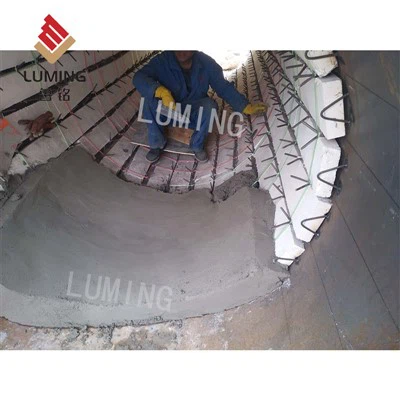
What materials are used to make refractory anchors?
As a refractory anchor supplier, I've encountered numerous inquiries regarding the materials employed in the production of these essential components. Refractory anchors play a pivotal role in securing refractory linings in high - temperature environments, such as furnaces, kilns, and incinerators. The choice of material is crucial as it directly impacts the performance, durability, and safety of the entire refractory system. In this blog, I'll delve into the common materials used to make refractory anchors and their unique properties.
Stainless Steel
Stainless steel is one of the most widely used materials for refractory anchors. It offers a combination of excellent corrosion resistance, high - temperature strength, and weldability. There are several grades of stainless steel suitable for refractory applications, with 304 and 310 being particularly popular.
Grade 304 stainless steel is a general - purpose austenitic stainless steel. It contains approximately 18% chromium and 8% nickel. This grade provides good resistance to oxidation and corrosion in moderately high - temperature environments, typically up to around 870°C (1600°F). It is cost - effective and easy to fabricate, making it a common choice for many industrial applications where the temperature requirements are not extremely high. You can find more details about Stainless Steel Anchors.
Grade 310 stainless steel, on the other hand, is designed for higher - temperature applications. It has a higher chromium (24 - 26%) and nickel (19 - 22%) content. This composition gives it superior oxidation resistance at temperatures up to 1150°C (2100°F). The increased chromium content forms a stable oxide layer on the surface of the anchor, which protects it from further oxidation and degradation. Grade 310 stainless steel anchors are often used in petrochemical furnaces, heat - treating furnaces, and other high - temperature industrial processes.
Heat - Resistant Alloys
In addition to stainless steel, heat - resistant alloys are also commonly used for refractory anchors in extremely high - temperature environments. Alloys such as Inconel and Hastelloy are well - known for their outstanding high - temperature strength and corrosion resistance.
Inconel is a family of nickel - chromium - based superalloys. Inconel 600, for example, contains about 72% nickel, 14 - 17% chromium, and 6 - 10% iron. It has excellent resistance to oxidation and carburization at high temperatures, making it suitable for use in chemical processing plants, power generation facilities, and aerospace applications. Inconel anchors can withstand temperatures up to 1093°C (2000°F) and maintain their mechanical properties under severe thermal cycling conditions.
Hastelloy is another group of nickel - based alloys that offer exceptional corrosion resistance in aggressive chemical environments. Hastelloy C - 276, with its high molybdenum, chromium, and tungsten content, is highly resistant to pitting, crevice corrosion, and stress - corrosion cracking. It can be used in applications where the refractory lining is exposed to corrosive gases and liquids at high temperatures, such as in waste incinerators and sulfuric acid plants.
Carbon Steel
Carbon steel is a more economical option for refractory anchors in applications where the temperature requirements are relatively low. It is composed primarily of iron and carbon, with small amounts of other elements. Mild carbon steel, with a carbon content of less than 0.3%, is commonly used.
Carbon steel anchors are suitable for temperatures up to around 400 - 500°C (750 - 930°F). However, they are prone to oxidation and corrosion at higher temperatures. To improve their performance, carbon steel anchors can be coated with protective layers, such as zinc or aluminum. Galvanized carbon steel anchors, for example, have a zinc coating that provides a sacrificial layer of protection against rust.
Refractory Anchor Brick
Refractory anchor bricks are made from special refractory materials. These bricks are designed to not only anchor the refractory lining but also provide additional insulation. They are typically made from materials such as fireclay, high - alumina, or silicon carbide. You can learn more about Refractory Anchor Brick.
Fireclay refractory anchor bricks are made from a mixture of clay and other refractory minerals. They have good thermal shock resistance and are suitable for use in applications with moderate temperature variations. High - alumina refractory anchor bricks, which contain a high percentage of alumina (Al₂O₃), offer better high - temperature strength and resistance to chemical attack. Silicon carbide refractory anchor bricks have excellent thermal conductivity and high - temperature strength, making them ideal for use in high - heat - flux applications, such as in blast furnaces and ceramic kilns.
Ceramic Fibers
Ceramic fibers are also used in the production of some types of refractory anchors. These fibers are made from alumina, silica, or a combination of both. Ceramic fiber anchors are lightweight and have excellent insulation properties. They can withstand high temperatures, often up to 1600°C (2910°F), and are resistant to thermal shock.
Ceramic fiber anchors are commonly used in applications where weight reduction and energy efficiency are important, such as in aerospace and automotive industries. They are also used in some industrial furnaces to reduce heat loss and improve the overall thermal performance of the refractory lining.
Factors Affecting Material Selection
When choosing the material for refractory anchors, several factors need to be considered. The first and most important factor is the operating temperature of the application. Different materials have different temperature limits, and selecting a material that can withstand the maximum temperature of the environment is crucial to ensure the long - term performance of the refractory anchor.
The chemical environment is another important consideration. If the refractory lining is exposed to corrosive gases, liquids, or chemicals, a material with good corrosion resistance, such as stainless steel or heat - resistant alloys, should be selected.


Thermal cycling is also a significant factor. In applications where the temperature fluctuates frequently, a material with good thermal shock resistance, such as ceramic fibers or some types of refractory bricks, may be more suitable.
Cost is also an important consideration. While high - performance materials like heat - resistant alloys offer excellent properties, they are often more expensive. In some cases, a more cost - effective material like carbon steel or fireclay refractory bricks may be sufficient, especially for applications with lower temperature and less severe operating conditions.
Conclusion
In conclusion, there are a variety of materials available for making refractory anchors, each with its own unique properties and advantages. Stainless steel, heat - resistant alloys, carbon steel, refractory anchor bricks, and ceramic fibers are all commonly used, depending on the specific requirements of the application. As a refractory anchor supplier, I understand the importance of selecting the right material to ensure the optimal performance and durability of the refractory system.
If you are in need of refractory anchors for your project, I encourage you to contact me for a detailed discussion. We can work together to select the most suitable material based on your specific operating conditions, temperature requirements, and budget. Let's collaborate to ensure the success of your high - temperature applications.
References
- ASM Handbook Volume 13A: Corrosion: Fundamentals, Testing, and Protection. ASM International.
- Perry's Chemical Engineers' Handbook. McGraw - Hill Education.
- Refractory Materials: Properties, Testing, and Selection. CRC Press.