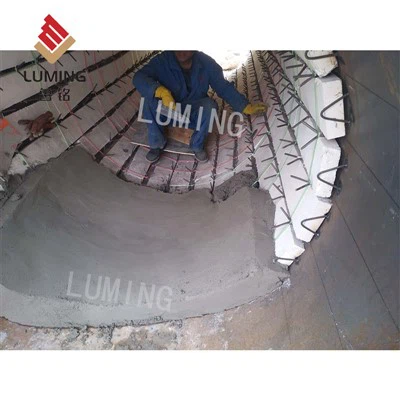
When it comes to the industrial sector, especially in industries related to high - temperature processes such as glass manufacturing, steelmaking, and ceramics production, spray nozzle bricks play a crucial role. As a supplier of Spray Nozzle Bricks, I am often asked about the price range of these essential components. In this blog, I will delve into the various factors that influence the price of spray nozzle bricks and provide an overview of the typical price range.


Factors Affecting the Price of Spray Nozzle Bricks
1. Material Quality
The material used in the production of spray nozzle bricks is one of the most significant factors determining their price. Spray nozzle bricks can be made from a variety of materials, including high - alumina, silicon carbide, and zirconia. High - alumina bricks are relatively more affordable. They offer good thermal stability and resistance to chemical attack, which makes them suitable for many general industrial applications. The price of high - alumina spray nozzle bricks can start from a relatively low point, depending on the alumina content. Higher alumina content usually means better performance but also a higher price.
Silicon carbide spray nozzle bricks, on the other hand, are known for their excellent thermal conductivity, high mechanical strength, and resistance to abrasion. These properties make them ideal for applications where high - temperature and high - wear conditions are present, such as in some advanced steel - making processes. However, the production process of silicon carbide is more complex and costly, which results in a higher price for silicon carbide spray nozzle bricks compared to high - alumina ones.
Zirconia spray nozzle bricks are the most expensive among these materials. Zirconia has outstanding thermal insulation properties, high melting point, and excellent chemical stability. They are often used in very high - end applications where extreme temperature and chemical resistance are required, like in some specialized ceramic firing processes.
2. Manufacturing Process
The manufacturing process also has a significant impact on the price. Precision - made spray nozzle bricks that require advanced manufacturing techniques, such as computer - controlled machining and high - pressure molding, will be more expensive. These processes ensure a high level of dimensional accuracy and product quality, which is crucial for applications where the spray nozzle brick needs to fit precisely into a specific system.
For example, some spray nozzle bricks are produced using isostatic pressing, which can create a more uniform density and structure within the brick. This results in better performance but also adds to the production cost. On the contrary, bricks made using simpler manufacturing methods, such as hand - molding or basic extrusion, may be more affordable but may not offer the same level of quality and precision.
3. Size and Complexity
The size and complexity of the spray nozzle brick design are important price - determining factors. Larger bricks generally require more raw materials and more energy during the manufacturing process, which leads to a higher price. Additionally, if the brick has a complex shape, such as a non - standard hole pattern or a unique external contour, it will be more difficult to manufacture. Specialized molds and machining operations may be required, increasing the production cost and, consequently, the price of the product.
4. Quantity Ordered
The quantity of spray nozzle bricks ordered also affects the price. When customers place large - scale orders, suppliers can often offer more favorable prices. This is because large - scale production allows for economies of scale. The cost of raw materials can be negotiated at a lower rate, and the fixed costs associated with production, such as equipment setup and labor, can be spread over a larger number of units. In contrast, small - quantity orders may have a higher unit price due to the relatively high proportion of fixed costs.
Typical Price Range of Spray Nozzle Bricks
Based on the above factors, the price range of spray nozzle bricks can vary widely. For basic high - alumina spray nozzle bricks with standard sizes and simple designs, the price can range from $10 to $50 per piece. These are suitable for many common industrial applications where the requirements for temperature and chemical resistance are not extremely high.
Silicon carbide spray nozzle bricks, due to their superior performance and more complex production process, usually cost between $50 and $200 per piece. They are commonly used in industries where high - temperature and high - wear resistance are essential, such as in some metal - smelting and glass - melting furnaces.
Zirconia spray nozzle bricks, being the most high - end option, can have a price range starting from $200 per piece and going up to several hundred dollars, depending on the size, complexity, and specific performance requirements. These bricks are typically used in very specialized and high - tech industrial applications.
It's important to note that these price ranges are approximate and can be affected by market fluctuations, such as changes in the cost of raw materials and energy prices.
Related Products and Their Roles
In addition to Spray Nozzle Bricks, there are other related products that are often used in the same industrial systems. Center - hole Brick is one such product. Center - hole bricks are used in regenerative burner systems to provide a passage for the flow of gas or air. They work in conjunction with spray nozzle bricks to ensure the efficient operation of the burner. The price of center - hole bricks also varies depending on factors similar to those of spray nozzle bricks, such as material, size, and manufacturing process.
Another related product is the Ceramic Heat Accumulator. Ceramic heat accumulators are used to store and release heat in regenerative systems. They can improve the energy efficiency of industrial furnaces by recovering and reusing waste heat. The price of ceramic heat accumulators is also influenced by their material quality, size, and design complexity.
Conclusion
As a supplier of Spray Nozzle Bricks, I understand that customers are always looking for the best balance between price and performance. The price of spray nozzle bricks is determined by multiple factors, including material quality, manufacturing process, size and complexity, and the quantity ordered. By understanding these factors, customers can make more informed decisions when purchasing spray nozzle bricks.
If you are in the market for spray nozzle bricks or related products, I encourage you to contact me for a detailed quotation. We can discuss your specific requirements and provide you with a customized solution that meets your needs and budget. Whether you need a small quantity for a test project or a large - scale order for continuous production, I am here to assist you.
References
- Industrial Ceramics Handbook: Properties, Applications, and Manufacturing Processes
- Proceedings of the International Conference on High - Temperature Materials and Processes