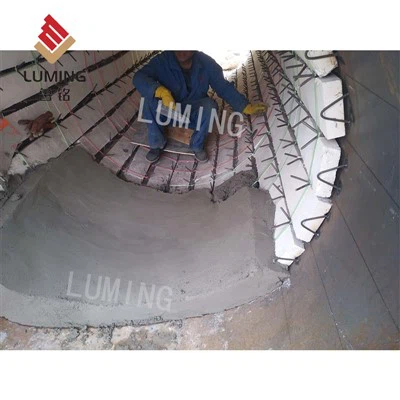
As a seasoned provider of kilns and furnaces, I've witnessed firsthand the critical role insulation materials play in the efficiency and performance of these industrial workhorses. In this blog, I'll delve into the world of insulation materials used in kilns, exploring their types, properties, and applications.
The Importance of Insulation in Kilns
Kilns are designed to reach and maintain high temperatures for various industrial processes, such as firing ceramics, melting metals, and calcining minerals. Without proper insulation, a significant amount of heat would be lost to the surroundings, resulting in increased energy consumption, longer processing times, and higher operating costs. Insulation materials help to minimize heat loss, improve energy efficiency, and maintain a stable temperature inside the kiln, ensuring consistent product quality and reducing environmental impact.
Types of Insulation Materials
There are several types of insulation materials commonly used in kilns, each with its own unique properties and advantages. Let's take a closer look at some of the most popular options:
Fibrous Insulation
Fibrous insulation materials, such as ceramic fiber and mineral wool, are made up of fine fibers that trap air and provide excellent thermal insulation. Ceramic fiber is a high-temperature insulation material that can withstand temperatures up to 2300°F (1260°C). It is lightweight, flexible, and easy to install, making it a popular choice for kiln linings. Mineral wool, on the other hand, is a more affordable option that can withstand temperatures up to 1200°F (650°C). It is commonly used for low-temperature kilns and as a backup insulation material.
Refractory Bricks
Refractory bricks are made from high-temperature-resistant materials, such as fireclay, silica, and alumina. They are dense, heavy, and have excellent thermal conductivity, making them ideal for lining the interior of kilns. Refractory bricks come in a variety of shapes and sizes, and can be customized to fit the specific requirements of a kiln. They are also resistant to chemical corrosion and mechanical wear, ensuring long-lasting performance.
Insulating Firebricks
Insulating firebricks (IFBs) are a type of lightweight refractory brick that are designed to provide both thermal insulation and structural support. They are made from a combination of refractory materials and insulating fibers, and have a lower density and higher porosity than traditional refractory bricks. IFBs can withstand temperatures up to 2000°F (1093°C), and are commonly used for the walls and roofs of kilns.
Castable Refractories
Castable refractories are a type of refractory material that are supplied in a dry powder form and mixed with water or a liquid binder before use. They can be poured or troweled into place, making them ideal for filling irregular shapes and gaps in a kiln. Castable refractories can withstand temperatures up to 3000°F (1649°C), and are commonly used for the floors and hearths of kilns.
Properties of Insulation Materials
When selecting an insulation material for a kiln, it is important to consider several properties, including thermal conductivity, density, porosity, and chemical resistance. Let's take a closer look at each of these properties:
Thermal Conductivity
Thermal conductivity is a measure of how easily heat can pass through a material. A material with a low thermal conductivity is a good insulator, as it resists the flow of heat. Insulation materials with a low thermal conductivity help to minimize heat loss from a kiln, improving energy efficiency and reducing operating costs.
Density
Density is a measure of the mass per unit volume of a material. A material with a high density is typically heavier and more durable than a material with a low density. However, a high-density material may also have a higher thermal conductivity, which can reduce its insulating properties. When selecting an insulation material for a kiln, it is important to find a balance between density and thermal conductivity.
Porosity
Porosity is a measure of the amount of void space in a material. A material with a high porosity has a lot of air pockets, which can help to trap heat and improve its insulating properties. However, a high-porosity material may also be more prone to damage from mechanical stress and chemical corrosion. When selecting an insulation material for a kiln, it is important to consider the porosity of the material and its resistance to damage.
Chemical Resistance
Chemical resistance is a measure of how well a material can withstand exposure to chemicals and other corrosive substances. In a kiln, insulation materials may be exposed to a variety of chemicals, such as acids, alkalis, and salts. A material with good chemical resistance is less likely to be damaged by these substances, ensuring long-lasting performance.
Applications of Insulation Materials
The type of insulation material used in a kiln depends on several factors, including the temperature range, the size and shape of the kiln, and the specific application. Let's take a closer look at some of the most common applications of insulation materials in kilns:


Lime Kiln
A Lime Kiln is a type of kiln used to produce lime from limestone. Lime kilns typically operate at temperatures between 1800°F (982°C) and 2200°F (1204°C), and require a high-temperature insulation material to minimize heat loss. Ceramic fiber and refractory bricks are commonly used for the lining of lime kilns, as they can withstand the high temperatures and chemical corrosion associated with the lime production process.
Ferronickel Kiln
A Ferronickel Kiln is a type of kiln used to produce ferronickel, a nickel-iron alloy. Ferronickel kilns typically operate at temperatures between 2200°F (1204°C) and 2600°F (1427°C), and require a high-temperature insulation material to minimize heat loss. Castable refractories and refractory bricks are commonly used for the lining of ferronickel kilns, as they can withstand the high temperatures and mechanical stress associated with the ferronickel production process.
Alumina Calcination Kiln
An Alumina Calcination Kiln is a type of kiln used to produce alumina, a white powder used in the production of aluminum. Alumina calcination kilns typically operate at temperatures between 1800°F (982°C) and 2200°F (1204°C), and require a high-temperature insulation material to minimize heat loss. Insulating firebricks and ceramic fiber are commonly used for the lining of alumina calcination kilns, as they can withstand the high temperatures and chemical corrosion associated with the alumina production process.
Conclusion
Insulation materials play a critical role in the efficiency and performance of kilns. By minimizing heat loss, improving energy efficiency, and maintaining a stable temperature inside the kiln, insulation materials help to ensure consistent product quality and reduce operating costs. When selecting an insulation material for a kiln, it is important to consider several properties, including thermal conductivity, density, porosity, and chemical resistance. The type of insulation material used in a kiln depends on several factors, including the temperature range, the size and shape of the kiln, and the specific application.
If you are in the market for a kiln or furnace, or need assistance with selecting the right insulation material for your application, please don't hesitate to contact us. Our team of experts is available to answer your questions and provide you with the information you need to make an informed decision.
References
- "Insulation Materials for High-Temperature Applications." ASM International, 2019.
- "Refractory Materials: Properties, Applications, and Selection." The American Ceramic Society, 2018.
- "Kiln Design and Operation." The American Ceramic Society, 2017.