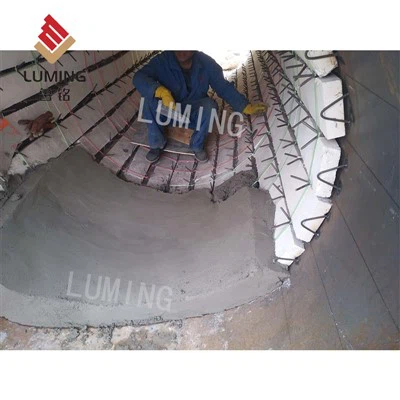
As a supplier of Lime Kilns, I understand the critical importance of effective waste management strategies in the operation of these industrial facilities. Lime Kilns are used to produce quicklime (calcium oxide) by heating limestone (calcium carbonate) at high temperatures. This process generates various types of waste, including solid residues, gaseous emissions, and heat losses. Implementing proper waste management strategies not only helps to minimize the environmental impact but also improves the overall efficiency and profitability of the Lime Kiln operation.


Solid Waste Management
One of the primary solid wastes generated in a Lime Kiln is the spent limestone or dolomite, which is left after the calcination process. This waste material, also known as kiln dust, contains a significant amount of calcium oxide and other minerals. There are several ways to manage this solid waste:
Recycling and Reuse
Kiln dust can be recycled back into the Lime Kiln process. By mixing the kiln dust with fresh limestone, the calcium oxide content can be reused, reducing the need for additional raw materials. This not only conserves natural resources but also lowers the production cost. Some Lime Kiln operators have successfully implemented this recycling strategy, achieving significant savings in raw material consumption.
Landfill Disposal
If recycling is not feasible, kiln dust can be disposed of in a landfill. However, this option should be considered as a last resort due to the potential environmental impact. Before landfill disposal, the kiln dust should be properly treated to reduce its reactivity and prevent leaching of harmful substances into the soil and groundwater. This may involve stabilizing the kiln dust with binders or other additives.
Beneficial Use in Other Industries
Kiln dust can also be used as a raw material in other industries. For example, it can be used in the production of cement, where it can replace a portion of the clinker. This not only reduces the demand for cement production but also provides an alternative market for the kiln dust. Additionally, kiln dust can be used in soil stabilization projects, where it can improve the engineering properties of the soil.
Gaseous Emission Management
The Lime Kiln process generates several gaseous emissions, including carbon dioxide (CO2), sulfur dioxide (SO2), nitrogen oxides (NOx), and particulate matter (PM). These emissions can have a significant impact on the environment and human health. Therefore, it is essential to implement effective gaseous emission management strategies:
Combustion Optimization
One of the most effective ways to reduce gaseous emissions is to optimize the combustion process in the Lime Kiln. This involves ensuring proper air-fuel ratio, temperature control, and residence time. By optimizing the combustion process, the amount of unburned fuel and pollutants can be minimized. Advanced combustion control systems can be installed to monitor and adjust the combustion parameters in real-time, improving the efficiency and reducing emissions.
Flue Gas Treatment
Flue gas treatment technologies can be used to remove pollutants from the exhaust gases before they are released into the atmosphere. There are several types of flue gas treatment technologies available, including scrubbers, catalytic converters, and electrostatic precipitators. Scrubbers are commonly used to remove SO2 and PM from the flue gas by contacting the gas with a liquid absorbent. Catalytic converters can be used to reduce NOx emissions by converting them into nitrogen and water. Electrostatic precipitators are used to remove PM from the flue gas by charging the particles and collecting them on electrodes.
Carbon Capture and Storage (CCS)
CCS is a technology that can be used to capture CO2 emissions from the Lime Kiln and store them underground. This technology has the potential to significantly reduce the carbon footprint of the Lime Kiln operation. However, CCS is still a relatively new and expensive technology, and its widespread implementation faces several challenges, including high capital costs, technical feasibility, and public acceptance.
Heat Recovery and Energy Management
The Lime Kiln process is energy-intensive, and a significant amount of heat is lost during the operation. Therefore, implementing heat recovery and energy management strategies can help to improve the energy efficiency of the Lime Kiln and reduce the operating cost.
Waste Heat Recovery
Waste heat recovery systems can be installed to capture the heat from the exhaust gases and other waste streams in the Lime Kiln. This recovered heat can be used for various purposes, such as preheating the raw materials, generating steam, or heating the process water. There are several types of waste heat recovery systems available, including heat exchangers, boilers, and thermoelectric generators.
Energy Efficiency Improvements
In addition to waste heat recovery, other energy efficiency improvements can be made to the Lime Kiln operation. This may include upgrading the insulation of the kiln, optimizing the process control system, and using energy-efficient equipment. By implementing these energy efficiency measures, the energy consumption of the Lime Kiln can be reduced, resulting in lower operating costs and environmental impact.
Conclusion
Effective waste management strategies are essential for the sustainable operation of a Lime Kiln. By implementing proper solid waste management, gaseous emission management, heat recovery, and energy management strategies, the environmental impact of the Lime Kiln can be minimized, and the overall efficiency and profitability of the operation can be improved. As a Lime Kiln supplier, we are committed to providing our customers with the latest technologies and solutions for waste management and energy efficiency. If you are interested in learning more about our Lime Kiln products and waste management strategies, please contact us for a detailed discussion and procurement negotiation.
References
- Smith, J. (2018). Waste Management in the Lime Industry. Journal of Environmental Management, 220, 345-352.
- Johnson, R. (2019). Gaseous Emission Control in Lime Kilns. Chemical Engineering Journal, 365, 123-132.
- Williams, M. (2020). Heat Recovery and Energy Management in Lime Kilns. Energy Conversion and Management, 210, 112345.