What are the installation requirements for a Ferromanganese Kiln?
As a supplier of Ferromanganese Kilns, I've witnessed firsthand the importance of proper installation. A well - installed Ferromanganese Kiln not only ensures efficient operation but also extends the lifespan of the equipment. In this blog, I'll delve into the key installation requirements for a Ferromanganese Kiln.
Site Selection
The first step in installing a Ferromanganese Kiln is choosing the right site. The site should be large enough to accommodate the kiln and its associated equipment, such as conveyors, crushers, and dust collectors. A general rule of thumb is to have a site that is at least twice the footprint of the kiln itself to allow for easy access, maintenance, and future expansion.
The ground at the installation site must be level and stable. Uneven ground can cause stress on the kiln structure, leading to premature wear and tear or even structural failure. Geotechnical surveys are often conducted to assess the soil conditions. If the soil is soft or unstable, appropriate foundation reinforcement measures, such as piling or soil compaction, may be required.
Accessibility is another crucial factor. The site should be easily accessible for the delivery of raw materials and the transportation of finished products. It should also have good road or rail connections to facilitate the movement of heavy equipment during installation and maintenance.
Foundation Preparation
Once the site is selected, the next step is to prepare the foundation. The foundation for a Ferromanganese Kiln is typically a reinforced concrete slab. The thickness and reinforcement of the slab depend on the size and weight of the kiln. For a large - scale Ferromanganese Kiln, the slab may be up to 1 - 2 meters thick and reinforced with steel bars to withstand the heavy load.
The foundation must be designed to dissipate the heat generated by the kiln. Special heat - resistant insulation materials can be used under the slab to prevent heat transfer to the ground. Additionally, the foundation should have proper drainage to prevent water accumulation, which can cause corrosion and damage to the kiln structure.


Kiln Assembly
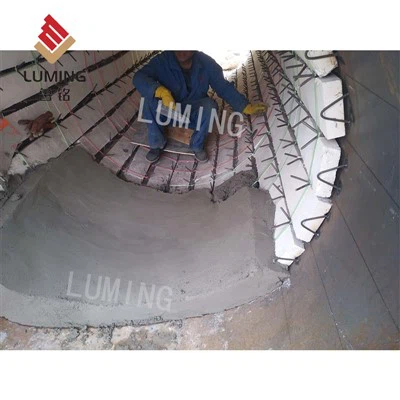
Before assembly, all the components of the Ferromanganese Kiln should be inspected for any damage or defects. The kiln shell, which is usually made of high - quality steel, should be checked for proper dimensions and straightness. The refractory lining, which protects the kiln shell from high temperatures, should be carefully installed. The refractory bricks should be laid in a precise pattern to ensure a tight fit and prevent heat leakage.
The rotating parts of the kiln, such as the drive system and the tires, need to be installed with high precision. The drive system, which consists of motors, gears, and couplings, should be properly aligned to ensure smooth rotation of the kiln. The tires, which support the kiln on the rollers, should be installed at the correct position and with the right clearance to prevent excessive wear.
Auxiliary Equipment Installation
A Ferromanganese Kiln is not a standalone device. It requires a series of auxiliary equipment to operate effectively. These include a feeding system, a dust collection system, and a cooling system.
The feeding system is responsible for delivering the raw materials, such as manganese ore and coke, into the kiln. It should be installed in a way that ensures a continuous and uniform feed rate. The dust collection system is essential for environmental protection. It captures the dust generated during the operation of the kiln and prevents it from being released into the atmosphere. The cooling system, which cools the kiln shell and the products, should be properly connected to ensure efficient heat dissipation.
Electrical and Control System Installation
The electrical system of a Ferromanganese Kiln provides power to all the equipment, including the motors, heaters, and sensors. The wiring should be installed in accordance with the electrical codes and standards. All the electrical components should be properly grounded to prevent electrical hazards.
The control system is the brain of the kiln. It monitors and controls various parameters, such as temperature, pressure, and feed rate. The control system should be installed and calibrated accurately to ensure stable and efficient operation of the kiln. Advanced control systems can use sensors and feedback loops to adjust the operating parameters automatically, improving the quality of the products and reducing energy consumption.
Safety Considerations
Safety is of utmost importance during the installation of a Ferromanganese Kiln. All the installation workers should be provided with appropriate personal protective equipment (PPE), such as helmets, safety glasses, and gloves. Safety barriers should be set up around the installation site to prevent unauthorized access.
Fire prevention measures should be in place. Since the kiln operates at high temperatures, there is a risk of fire. Fire - extinguishing equipment, such as fire extinguishers and sprinkler systems, should be installed in the vicinity of the kiln. Additionally, proper ventilation should be provided to remove any flammable gases or vapors that may be generated during the installation and operation of the kiln.
Comparison with Other Types of Kilns
It's interesting to compare the installation requirements of a Ferromanganese Kiln with other types of kilns, such as Cement Kiln, Lithium Industry Kilns, and Glass Kiln. While all kilns share some common installation requirements, such as site selection and foundation preparation, there are also some differences.
Cement kilns are usually larger and heavier than Ferromanganese Kilns, requiring more extensive foundation reinforcement. Lithium industry kilns often operate at lower temperatures but may have more stringent requirements for environmental protection due to the nature of the lithium - related processes. Glass kilns need to maintain a very precise temperature distribution, which may require more sophisticated control systems and insulation materials.
Conclusion
Installing a Ferromanganese Kiln is a complex process that requires careful planning, precise execution, and strict adherence to safety standards. By following the installation requirements outlined above, you can ensure that your Ferromanganese Kiln operates efficiently and reliably.
If you're considering purchasing a Ferromanganese Kiln, I encourage you to contact us for more information. Our team of experts can provide you with detailed installation guidance and support throughout the process. We are committed to providing high - quality kilns and excellent after - sales service to meet your specific needs.
References
- "Kiln Design and Operation Handbook" by Industrial Kiln Association
- "Ferromanganese Production Technology" by Metallurgical Research Institute
- "Safety Guidelines for Kiln Installation" by Occupational Safety and Health Administration