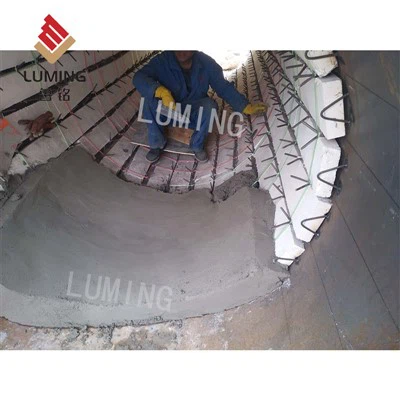
Ensuring the stable operation of a Ferromanganese Kiln is crucial for both the efficiency of the production process and the quality of the final product. As a Ferromanganese Kiln supplier, I have witnessed firsthand the challenges that operators face in maintaining consistent performance. In this blog post, I will share some key strategies and best practices that can help you achieve stable operation of your Ferromanganese Kiln.
1. Raw Material Quality and Preparation
The quality of raw materials is the foundation of stable kiln operation. High - quality manganese ore, coke, and fluxes are essential. Manganese ore should have a stable chemical composition, with consistent levels of manganese, iron, silica, and other impurities. Variations in ore quality can lead to fluctuations in the kiln's thermal balance and chemical reactions.
Coke, which serves as a reducing agent and a source of heat, must also meet specific quality standards. It should have high fixed - carbon content, low ash content, and appropriate particle size distribution. The Coke Oven is often used to produce high - quality coke for the Ferromanganese Kiln. Ensuring proper coking conditions in the Coke Oven can significantly improve the quality of the coke used in the kiln.
Before feeding the raw materials into the kiln, proper preparation is necessary. Ore and fluxes should be crushed and screened to achieve a uniform particle size. This helps to ensure even distribution of the materials in the kiln and promotes efficient chemical reactions. Additionally, the moisture content of the raw materials should be controlled, as excessive moisture can cause problems such as clumping and uneven heating in the kiln.
2. Kiln Design and Installation
The design of the Ferromanganese Kiln plays a vital role in its stable operation. A well - designed kiln should have appropriate dimensions, including the diameter, length, and slope, to ensure proper material flow and heat transfer. The refractory lining of the kiln is also crucial. It should be made of high - quality refractory materials that can withstand the high temperatures and chemical corrosion in the kiln environment.
During the installation process, strict quality control is necessary. The kiln should be installed on a solid foundation to prevent any movement or vibration during operation. Proper alignment of the kiln components, such as the rotating cylinder and the drive system, is essential to ensure smooth and stable rotation. Any misalignment can lead to uneven wear of the kiln lining and mechanical failures.
3. Thermal Management
Maintaining a stable thermal environment in the Ferromanganese Kiln is one of the most critical aspects of its operation. The temperature in the kiln should be carefully controlled to ensure complete reduction of manganese ore and proper melting of the ferromanganese alloy.
The combustion process in the kiln is a key factor in thermal management. The amount of fuel (coke) and air supplied to the kiln should be precisely regulated to achieve the desired temperature profile. Too much fuel can lead to overheating and excessive energy consumption, while too little fuel can result in incomplete reduction and low - quality product.
Monitoring and control systems are essential for thermal management. Temperature sensors should be installed at various points in the kiln to continuously monitor the temperature. Based on the temperature readings, the fuel and air supply can be adjusted in real - time to maintain a stable thermal environment.
4. Process Control and Automation
Implementing advanced process control and automation systems can greatly enhance the stability of the Ferromanganese Kiln operation. These systems can monitor and control various parameters, such as temperature, pressure, material flow rate, and gas composition.
Automated control systems can adjust the operating parameters of the kiln based on pre - set algorithms and real - time data. For example, if the temperature in the kiln drops below a certain level, the system can automatically increase the fuel supply. This helps to maintain a consistent production process and reduces the risk of human error.
In addition to process control, automation can also be used for material handling. Automated conveyors and feeders can ensure a continuous and uniform supply of raw materials to the kiln, which is essential for stable operation.


5. Maintenance and Inspection
Regular maintenance and inspection are essential for the long - term stable operation of the Ferromanganese Kiln. A comprehensive maintenance plan should be developed, including routine inspections, preventive maintenance, and major overhauls.
Routine inspections should be carried out daily or weekly to check for any signs of wear, damage, or abnormal operation. This includes inspecting the refractory lining, the drive system, the seals, and the gas and water cooling systems. Any issues detected during the inspections should be addressed immediately to prevent further damage.
Preventive maintenance tasks, such as lubrication of moving parts, tightening of bolts, and replacement of worn - out components, should be performed at regular intervals. Major overhauls of the kiln should be scheduled every few years to replace the refractory lining and carry out a thorough inspection and repair of all kiln components.
6. Operator Training and Safety
Well - trained operators are crucial for the stable operation of the Ferromanganese Kiln. Operators should have a good understanding of the kiln's working principles, operating procedures, and safety regulations.
Training programs should cover topics such as raw material handling, kiln startup and shutdown procedures, process control, and maintenance. Operators should also be trained to respond to emergency situations, such as equipment failures and gas leaks.
Safety is of utmost importance in the operation of the Ferromanganese Kiln. Operators should be provided with appropriate personal protective equipment (PPE), such as heat - resistant clothing, safety glasses, and respirators. Safety protocols should be strictly enforced to prevent accidents and ensure the well - being of the operators.
7. Comparison with Other Kilns
It is also beneficial to compare the Ferromanganese Kiln with other types of kilns, such as the Strontium Salt Kiln and the Zinc Extraction Kiln. While the basic principles of kiln operation are similar, each type of kiln has its own unique requirements and challenges.
For example, the Strontium Salt Kiln is mainly used for the production of strontium salts, and it requires precise control of the reaction temperature and gas atmosphere to ensure the quality of the final product. The Zinc Extraction Kiln, on the other hand, is designed to extract zinc from zinc ores, and it has different material flow and heat transfer characteristics compared to the Ferromanganese Kiln.
By understanding the similarities and differences between these kilns, operators can gain valuable insights and apply relevant best practices to improve the operation of the Ferromanganese Kiln.
Conclusion
Ensuring the stable operation of a Ferromanganese Kiln requires a comprehensive approach that covers raw material quality, kiln design, thermal management, process control, maintenance, operator training, and safety. By implementing the strategies and best practices outlined in this blog post, you can significantly improve the efficiency and reliability of your Ferromanganese Kiln.
If you are interested in purchasing a Ferromanganese Kiln or need further advice on its operation and maintenance, please feel free to contact us. We are committed to providing high - quality kilns and professional technical support to help you achieve optimal production results.
References
- Smith, J. (2018). Kiln Technology and Operation. Industrial Press.
- Johnson, R. (2019). Thermal Engineering in Metallurgical Kilns. CRC Press.
- Brown, A. (2020). Process Control in Industrial Kilns. Elsevier.