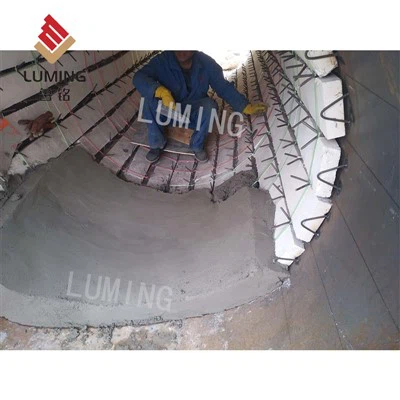
Enhancing heat transfer in a Ferronickel Kiln is a critical aspect for optimizing the production process of ferronickel, a key alloy used in stainless - steel manufacturing. As a Ferronickel Kiln supplier, we understand the importance of efficient heat transfer in these industrial kilns. In this blog, we will explore various strategies and techniques to enhance heat transfer in a Ferronickel Kiln.
Understanding the Basics of Heat Transfer in Ferronickel Kilns
Before delving into the methods of enhancing heat transfer, it is essential to understand the basic mechanisms of heat transfer in a Ferronickel Kiln. There are three primary modes of heat transfer: conduction, convection, and radiation.
Conduction is the transfer of heat through a solid material. In a Ferronickel Kiln, heat is conducted through the kiln lining and the charge (the mixture of raw materials). The rate of conduction depends on the thermal conductivity of the materials involved. For example, a high - quality refractory lining with good thermal conductivity can facilitate better heat transfer to the charge.
Convection involves the transfer of heat by the movement of fluids (gases or liquids). In the kiln, hot gases rise and transfer heat to the cooler parts of the kiln and the charge. The design of the kiln's gas flow system, such as the arrangement of burners and exhaust ports, can significantly affect convective heat transfer.
Radiation is the transfer of heat in the form of electromagnetic waves. High - temperature sources in the kiln, like the flame from the burners, radiate heat to the surrounding materials. The emissivity of the surfaces in the kiln plays a crucial role in radiative heat transfer.
Strategies for Enhancing Heat Transfer
1. Optimizing the Kiln Design
- Lining Material Selection: Choosing the right lining material is fundamental. A lining with high thermal conductivity can improve conductive heat transfer. For instance, some advanced refractory materials have been developed that not only withstand high temperatures but also transfer heat efficiently. These materials can reduce the temperature gradient across the lining, ensuring more heat reaches the charge.
- Kiln Geometry: The shape and size of the kiln can impact heat transfer. A well - designed kiln should have a geometry that promotes uniform gas flow and heat distribution. For example, a kiln with a proper aspect ratio (length to diameter) can enhance convective heat transfer by allowing hot gases to circulate more effectively around the charge.
2. Improving Burner Performance
- Burner Type and Placement: Selecting the appropriate burner type is crucial. High - efficiency burners can produce a more intense and uniform flame, increasing radiative heat transfer. The placement of burners also matters. They should be positioned in a way that the flame covers the maximum area of the charge, ensuring even heating. For example, multiple burners can be arranged in a circular pattern around the kiln to provide a more uniform heat source.
- Fuel Quality and Combustion Control: Using high - quality fuel is essential for efficient combustion. Proper combustion control systems can ensure that the fuel is burned completely, releasing more heat. This not only improves heat transfer but also reduces emissions. For instance, advanced combustion control systems can adjust the air - fuel ratio in real - time based on the kiln's operating conditions.
3. Enhancing Gas Flow
- Airflow Management: Controlling the airflow in the kiln is vital for convective heat transfer. A well - designed ventilation system can ensure that fresh air is supplied to the burners for combustion and that hot gases are removed efficiently. This can prevent the formation of stagnant zones in the kiln, where heat transfer is poor. For example, adjustable dampers can be used to regulate the airflow rate and direction.
- Gas Recirculation: In some cases, recirculating a portion of the hot exhaust gases back into the kiln can enhance heat transfer. This can increase the temperature of the incoming air and fuel, reducing the energy required for heating. However, proper filtration and control systems are needed to prevent the recirculation of harmful substances.
4. Using Heat Transfer Augmentation Devices
- Heat Exchangers: Installing heat exchangers in the kiln system can recover waste heat from the exhaust gases. This recovered heat can be used to pre - heat the incoming air or fuel, improving the overall energy efficiency of the kiln. For example, a recuperative heat exchanger can transfer heat from the hot exhaust gases to the incoming combustion air.
- Fins and Extended Surfaces: Adding fins or extended surfaces to the kiln walls or the charge can increase the surface area available for heat transfer. This enhances both conductive and convective heat transfer. For instance, fins can be attached to the kiln lining to increase the contact area between the lining and the hot gases.
Case Studies
Let's look at some real - world examples of how these strategies have been implemented to enhance heat transfer in Ferronickel Kilns.
In a large - scale ferronickel production plant, the kiln design was optimized by changing the lining material to a high - performance refractory. This led to a significant reduction in the lining temperature and an increase in the heat transfer rate to the charge. As a result, the production efficiency increased by 15%, and the energy consumption decreased by 10%.
Another plant improved burner performance by upgrading to high - efficiency burners and implementing a sophisticated combustion control system. The new burners produced a more intense and stable flame, increasing radiative heat transfer. This improvement led to a more uniform temperature distribution in the kiln and a 12% increase in the quality of the ferronickel produced.
Comparison with Other Kiln Types
It's interesting to compare Ferronickel Kilns with other types of industrial kilns, such as Ferromanganese Kiln and Zinc Extraction Kiln. While the basic principles of heat transfer are similar, each kiln type has its unique requirements.
Ferromanganese Kilns, for example, often operate at different temperature ranges and deal with different raw materials. The heat transfer mechanisms in these kilns may be more focused on specific chemical reactions involved in the production of ferromanganese.
Zinc Extraction Kilns have their own set of challenges, such as the need to handle volatile zinc compounds. The design and heat transfer strategies in these kilns are tailored to ensure efficient zinc extraction while maintaining safety.
Conclusion
Enhancing heat transfer in a Ferronickel Kiln is a multi - faceted process that involves optimizing the kiln design, improving burner performance, enhancing gas flow, and using heat transfer augmentation devices. By implementing these strategies, ferronickel producers can improve production efficiency, reduce energy consumption, and enhance the quality of the final product.
As a Ferronickel Kiln supplier, we are committed to providing our customers with state - of - the - art kilns and solutions for heat transfer optimization. If you are interested in improving the heat transfer efficiency of your Ferronickel Kiln or are looking to purchase a new kiln, we invite you to contact us for a detailed discussion and personalized solutions.


References
- Incropera, F. P., & DeWitt, D. P. (2002). Fundamentals of Heat and Mass Transfer. Wiley.
- Ozisik, M. N. (1993). Heat Transfer - A Basic Approach. McGraw - Hill.
- Perry, R. H., & Green, D. W. (1997). Perry's Chemical Engineers' Handbook. McGraw - Hill.