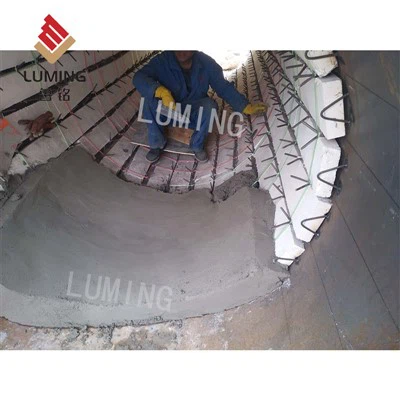
Controlling the heating temperature in a coke oven is a critical aspect of the coking process, directly impacting the quality of coke produced and the overall efficiency of the operation. As a reputable Coke Oven Link: Coke Oven supplier, we understand the intricacies involved in maintaining optimal temperature conditions. In this blog, we will delve into the various methods and strategies for effectively controlling the heating temperature in a coke oven.
Understanding the Importance of Temperature Control
The coking process involves heating coal in the absence of air to convert it into coke, a porous and strong carbonaceous material used primarily in the steel industry. The quality of coke is highly dependent on the heating temperature and the heating rate. If the temperature is too low, the coal may not fully carbonize, resulting in a coke with poor strength and reactivity. On the other hand, if the temperature is too high, the coke may become over - carbonized, leading to excessive cracking and a decrease in yield.


Moreover, precise temperature control helps in reducing energy consumption. By maintaining the optimal temperature, we can ensure that the energy input is used efficiently, minimizing waste and lowering operational costs. It also extends the lifespan of the coke oven by reducing thermal stress on the refractory lining, which can be damaged by extreme temperature fluctuations.
Factors Affecting Heating Temperature in a Coke Oven
Before discussing the control methods, it is essential to understand the factors that influence the heating temperature in a coke oven.
Coal Properties
The type and quality of coal used play a significant role in the heating process. Different coals have different volatile matter contents, calorific values, and coking properties. Coals with higher volatile matter contents release more heat during pyrolysis, which can affect the temperature distribution in the oven. For example, bituminous coal, which is commonly used in coking, has a relatively high volatile matter content compared to anthracite.
Gas Supply
The type and flow rate of the heating gas are crucial factors. Coke oven gas, blast furnace gas, or a mixture of both can be used as the heating medium. The calorific value of the gas determines the amount of heat released during combustion. A higher flow rate of gas generally leads to a higher heating rate and temperature, but it also needs to be balanced to avoid over - heating.
Oven Design and Refractory Materials
The design of the coke oven, including the size, shape, and layout of the heating flues, affects the heat transfer and temperature distribution. Well - designed ovens ensure uniform heating throughout the coal charge. The refractory materials used in the oven lining also impact the temperature control. High - quality refractory materials with good insulation properties can help maintain a stable temperature and reduce heat loss.
Methods of Controlling Heating Temperature
Gas Flow Regulation
One of the most common methods of controlling the heating temperature is by regulating the gas flow. This can be achieved through the use of valves and flow meters. By adjusting the opening of the valves, the amount of gas entering the heating flues can be controlled. For example, if the temperature in a particular section of the oven is too low, the gas flow to that section can be increased. Conversely, if the temperature is too high, the gas flow can be reduced.
Modern coke ovens are often equipped with automated control systems that continuously monitor the temperature and adjust the gas flow accordingly. These systems use sensors placed at strategic locations in the oven to measure the temperature and send signals to the control valves. This ensures a more precise and timely response to temperature changes.
Air - to - Gas Ratio Control
The air - to - gas ratio is another important parameter in controlling the combustion process and, consequently, the heating temperature. For complete combustion of the gas, the correct amount of air needs to be supplied. If there is too little air, incomplete combustion occurs, resulting in the formation of carbon monoxide and a lower heat release. If there is too much air, the excess air absorbs heat and reduces the efficiency of the heating process.
To control the air - to - gas ratio, air dampers are used to regulate the amount of air entering the combustion chamber. In some advanced systems, oxygen sensors are installed to measure the oxygen content in the flue gas. Based on the oxygen level, the air dampers are adjusted to maintain the optimal air - to - gas ratio.
Pre - heating of Gas and Air
Pre - heating the gas and air before they enter the combustion chamber can significantly improve the heating efficiency and temperature control. Pre - heating increases the initial temperature of the reactants, which leads to a more rapid and complete combustion. This can be achieved using heat exchangers, which transfer heat from the hot flue gas to the incoming gas and air.
For example, in a regenerative coke oven, the hot flue gas passes through a regenerator filled with refractory bricks. The bricks absorb the heat from the flue gas and then transfer it to the incoming gas and air during the next cycle. This not only increases the heating temperature but also reduces the energy consumption by utilizing the waste heat.
Temperature Monitoring and Feedback
Continuous temperature monitoring is essential for effective temperature control. Thermocouples and infrared sensors are commonly used to measure the temperature at different locations in the coke oven, such as the flue gas temperature, the oven wall temperature, and the coal charge temperature.
The data collected from these sensors is sent to a control system, which compares the measured temperature with the setpoint temperature. If there is a deviation, the control system adjusts the gas flow, air - to - gas ratio, or other relevant parameters to bring the temperature back to the desired level. This feedback control loop ensures that the temperature remains stable throughout the coking process.
Advanced Technologies for Temperature Control
In recent years, several advanced technologies have been developed to improve the temperature control in coke ovens.
Computational Fluid Dynamics (CFD)
CFD is a powerful tool for simulating the fluid flow, heat transfer, and combustion processes in a coke oven. By creating a virtual model of the oven, engineers can analyze the temperature distribution, gas flow patterns, and combustion efficiency under different operating conditions. This allows for the optimization of the oven design and the development of more effective temperature control strategies.
Artificial Intelligence (AI) and Machine Learning
AI and machine learning algorithms can be used to analyze the large amount of data collected from the temperature sensors and other monitoring devices. These algorithms can identify patterns and trends in the data and predict future temperature changes. Based on these predictions, the control system can make proactive adjustments to the gas flow, air - to - gas ratio, and other parameters, improving the overall temperature control and process efficiency.
Conclusion
Controlling the heating temperature in a coke oven is a complex but essential task. By understanding the factors that affect the temperature, implementing appropriate control methods, and leveraging advanced technologies, we can ensure the production of high - quality coke while minimizing energy consumption and extending the lifespan of the oven.
As a leading Coke Oven Link: Coke Oven supplier, we are committed to providing our customers with state - of - the - art coke oven solutions that incorporate the latest temperature control technologies. Our coke ovens are designed to offer precise temperature control, high efficiency, and reliable performance.
If you are in the market for a new coke oven or looking to upgrade your existing one, we invite you to contact us for a detailed discussion. Our team of experts will be happy to assist you in selecting the right solution for your specific needs and help you optimize your coking process. We also offer a wide range of related products such as Lime Kiln Link: Lime Kiln and Lithium Industry Kilns Link: Lithium Industry Kilns. Let's work together to achieve greater efficiency and productivity in your operations.
References
- Smith, J. (2018). "Coke Oven Technology and Operation." Industrial Furnace Handbook.
- Johnson, A. (2019). "Advanced Temperature Control Strategies in Coking Processes." Journal of Chemical Engineering.
- Williams, B. (2020). "Computational Fluid Dynamics in Coke Oven Design." International Journal of Thermal Sciences.