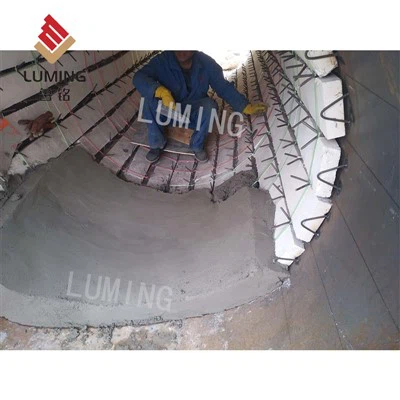
As a supplier of high alumina bricks, I've witnessed firsthand the remarkable properties and applications of these refractory materials. High alumina bricks are widely used in various industrial furnaces and kilns due to their excellent thermal and mechanical properties. However, understanding how the strength of high alumina bricks changes during use is crucial for ensuring the efficiency and longevity of industrial operations. In this blog post, I will delve into the factors that influence the strength change of high alumina bricks in service and provide insights into maintenance and performance.
Initial Strength and Composition
High alumina bricks are primarily composed of alumina (Al₂O₃), silica (SiO₂), and other minor components. The content of alumina significantly affects the initial strength of the bricks. Generally, higher alumina content leads to greater strength and better thermal resistance. For example, High Alumina Refractory Brick with an alumina content of over 70% exhibits superior strength and can withstand higher temperatures compared to those with lower alumina content.
The manufacturing process also plays a vital role in determining the initial strength. High - quality raw materials, precise mixing, and proper firing techniques are essential to produce high - strength bricks. During the firing process, the chemical and physical reactions within the bricks form a stable crystal structure, which contributes to their strength and durability.
Factors Affecting Strength Change During Use
Temperature
One of the most significant factors influencing the strength of high alumina bricks during use is temperature. When the bricks are exposed to high temperatures in industrial furnaces, thermal expansion and contraction occur. Repeated thermal cycling can cause internal stresses within the bricks, leading to micro - cracks. As the number of thermal cycles increases, these micro - cracks may propagate, resulting in a reduction in the overall strength of the bricks.
At extremely high temperatures, the crystal structure of high alumina bricks may undergo phase transformations. For example, mullite, a common crystal phase in high alumina bricks, may decompose or react with other components at high temperatures, which can also affect the strength. However, if the temperature is within the designed operating range, high alumina bricks can maintain relatively stable strength. High Aluminum Brick is designed to resist high - temperature environments, but proper temperature control is still necessary to ensure its long - term performance.
Chemical Reactions
In industrial applications, high alumina bricks may come into contact with various chemical substances, such as molten metals, slags, and gases. These chemicals can react with the components of the bricks, causing chemical corrosion. For instance, acidic slags can react with the alumina in the bricks, dissolving the alumina and weakening the brick structure.
On the other hand, some basic substances may also react with the silica in the bricks, leading to the formation of low - melting - point compounds. These compounds can soften the bricks at high temperatures, reducing their strength and load - bearing capacity. Therefore, understanding the chemical environment in which the bricks are used and selecting the appropriate type of high alumina bricks are crucial to minimize chemical corrosion. High Alumina Fire Bricks are often engineered to have good chemical resistance, but regular inspection and maintenance are still required.
Mechanical Stress
During the operation of industrial furnaces, high alumina bricks are subjected to various mechanical stresses, such as pressure, impact, and vibration. For example, in a blast furnace, the bricks need to support the weight of the charge materials and resist the mechanical impact during the charging process. Over time, these mechanical stresses can cause cracks and damage to the bricks, resulting in a decrease in strength.
Improper installation can also lead to uneven stress distribution on the bricks, which can accelerate the reduction of strength. Therefore, ensuring proper installation and reinforcement of high alumina bricks is essential to withstand mechanical stress and maintain their strength.
Monitoring Strength Changes
To ensure the safe and efficient operation of industrial furnaces, it is necessary to monitor the strength changes of high alumina bricks regularly. Non - destructive testing methods, such as ultrasonic testing and X - ray diffraction, can be used to detect internal cracks and changes in the crystal structure of the bricks.
Visual inspection is also a simple and effective method. By observing the surface condition of the bricks, such as the presence of cracks, spalling, and erosion, we can roughly estimate the degree of strength reduction. If significant damage is found, immediate measures should be taken, such as replacing the damaged bricks or adjusting the operating conditions of the furnace.


Maintenance and Prolonging Service Life
Proper maintenance can significantly prolong the service life of high alumina bricks and maintain their strength. Here are some maintenance measures:
- Temperature Control:Maintain the furnace temperature within the designed range of the high alumina bricks to reduce thermal stress and phase transformations.
- Chemical Protection: Use appropriate protective coatings or linings to prevent chemical corrosion. Regularly clean the furnace to remove corrosive substances.
- Mechanical Support: Ensure proper mechanical support and reinforcement of the bricks to reduce the impact of mechanical stress. Strengthen the furnace structure if necessary.
Contact for Purchase and Consultation
As a leading supplier of high alumina bricks, we are committed to providing high - quality products and professional services. Our high alumina bricks are manufactured with strict quality control and advanced technology, ensuring excellent performance and long service life.
If you are interested in our High Alumina Refractory Brick, High Aluminum Brick, or High Alumina Fire Bricks, please feel free to contact us for more information. We are eager to discuss your specific requirements and provide you with the best solutions for your industrial applications.
References
- "Refractories Handbook" by Peter J. F. Harris
- "High - Temperature Materials and Technologies" edited by C. Gupta