Hey folks! I'm working with a cement kiln supply company, and today I wanna take you through how a cement kiln operates. It's a super interesting process that's at the heart of the cement - making industry.


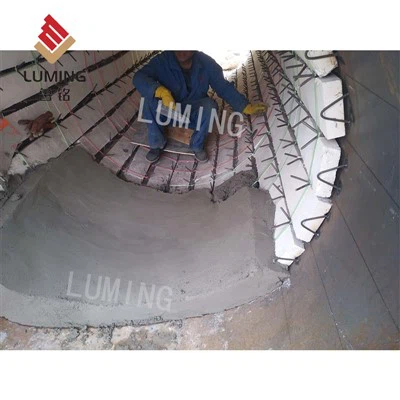
First off, let's talk about the basic components of a cement kiln. A typical cement kiln consists of a long, cylindrical rotating drum, usually made of steel and lined with refractory bricks. These bricks are crucial as they can withstand the extremely high temperatures inside the kiln. There are also pre - heaters, calciner, and a cooler.
The whole process starts with the raw materials. The main raw materials for cement production are limestone, clay, and sometimes other additives. These raw materials are first crushed and ground into a fine powder. This powder is then fed into the pre - heater. The pre - heater is a series of cyclones that use the hot exhaust gases from the kiln to pre - heat the raw materials. As the raw materials move through the cyclones, they start to heat up, and some of the chemical reactions begin. This pre - heating step is really important as it saves a lot of energy in the overall process.
Once the raw materials are pre - heated, they enter the calciner. In the calciner, a significant chemical reaction takes place. The limestone in the raw materials breaks down into calcium oxide (lime) and carbon dioxide. This process is called calcination. The calciner is usually fired with fuel, such as coal or natural gas, to provide the heat needed for this reaction. The carbon dioxide produced during calcination is released into the atmosphere, which is one of the environmental concerns associated with cement production.
After calcination, the partially reacted materials enter the rotary kiln. The rotary kiln is the core of the cement - making process. It rotates slowly, typically at a speed of about 1 - 3 revolutions per minute. As it rotates, the materials move from the upper end of the kiln to the lower end. Inside the kiln, the temperature can reach up to 1450 degrees Celsius. At this high temperature, the remaining chemical reactions occur, and the materials form clinker. Clinker is a nodular material that is the main intermediate product in cement production.
The clinker then exits the kiln and enters the cooler. The cooler uses air to rapidly cool the clinker. This not only solidifies the clinker but also recovers some of the heat from the clinker. The hot air from the cooler is then recycled back into the kiln or the calciner, which further improves the energy efficiency of the process.
Once the clinker is cooled, it is ground with gypsum to produce cement. The gypsum controls the setting time of the cement. The final product is then ready to be packaged and shipped to construction sites.
Now, let me tell you a bit about the types of cement kilns. There are two main types: wet process kilns and dry process kilns. Wet process kilns were the first type of kilns used in cement production. In a wet process kiln, the raw materials are mixed with water to form a slurry. This slurry is then fed into the kiln. The advantage of the wet process is that it can handle a wider range of raw materials. However, it is also more energy - intensive because a large amount of energy is needed to evaporate the water in the slurry.
Dry process kilns, on the other hand, are more commonly used today. In a dry process kiln, the raw materials are ground into a dry powder and then fed directly into the pre - heater. Dry process kilns are more energy - efficient than wet process kilns because they don't have to evaporate water. They also have a higher production capacity.
As a cement kiln supplier, we offer a variety of kilns to meet different customer needs. Whether you're looking for a small - scale kiln for a local cement plant or a large - scale industrial kiln, we've got you covered. And we're not just limited to cement kilns. We also supply other types of kilns and furnaces, like the Zinc Extraction Kiln, Coke Oven, and Ferronickel Kiln. These products are designed with the latest technology to ensure high efficiency and reliability.
If you're in the market for a cement kiln or any of our other products, don't hesitate to reach out. We can provide you with detailed information about our products, including specifications, pricing, and installation services. Our team of experts is always ready to answer your questions and help you make the best decision for your business. Whether you're just starting out in the cement industry or looking to upgrade your existing equipment, we're here to support you every step of the way.
In conclusion, the operation of a cement kiln is a complex but fascinating process. It involves a series of chemical reactions and energy - intensive steps. As a supplier, we're committed to providing high - quality kilns that can optimize the cement - making process and help our customers achieve their production goals. So, if you're interested in our products, feel free to contact us for more details and let's start a great business relationship.
References
- “Cement Manufacturing Process.” World Cement Association.
- “Kiln Technology in Cement Production.” International Journal of Cement Research.